
Banana Peels, Eggshells and Coffee Grounds: Which Kitchen Fertilizers Really Work
An honest look at popular kitchen scrap fertilizers, what nutrients they actually supply, and the right way to use each one.
On this page
Social media is full of tricks for feeding plants with kitchen leftovers: banana peel water for flowers, eggshells against blossom end rot, coffee grounds for everything. Some of these ideas are sound, some are half true, and a few can do more harm than good. This guide looks at the most popular kitchen fertilizers one by one and explains how to use them in a way that actually helps your plants.
First, how plant nutrients work
Plants need three major nutrients in large amounts, written as N-P-K on fertilizer bags:
- Nitrogen (N) for leafy, green growth.
- Phosphorus (P) for roots, flowers and fruit.
- Potassium (K) for overall vigor, water regulation and fruit quality.
They also need calcium, magnesium and sulfur in moderate amounts, plus small amounts of micronutrients such as iron and zinc.
An important detail is that most nutrients in raw scraps are locked inside organic matter. Plants cannot absorb them until soil microbes break that material down. That is why the same peel can be useless when you drop it on a pot and useful when it goes through a compost pile first.
Banana peels
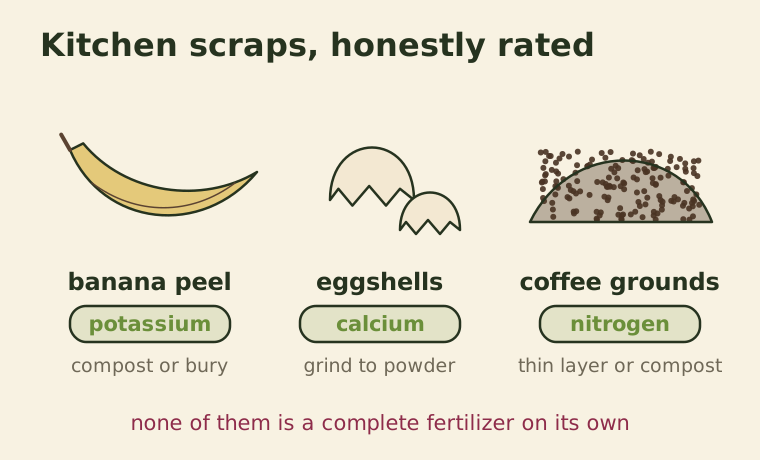
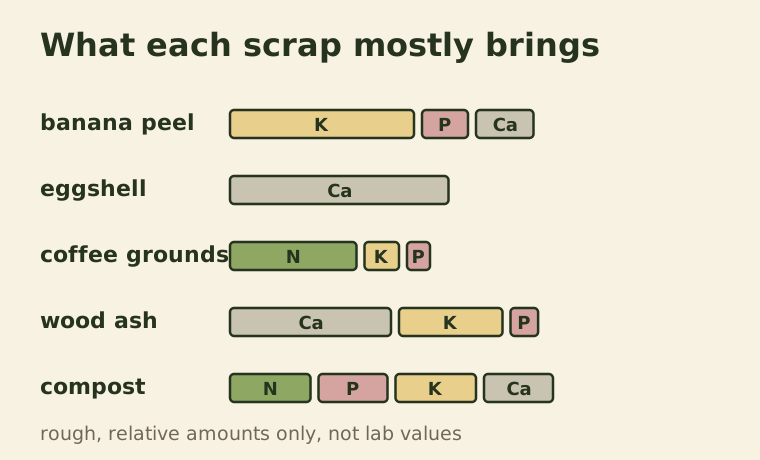
What they offer: Banana peels are relatively rich in potassium and contain small amounts of phosphorus, calcium and magnesium.
The myth: "Banana water", made by soaking peels in water for a day or two, is often sold online as a powerful flower booster. In reality only a small fraction of the potassium dissolves in that time, and the liquid is very weak. It will not hurt plants, but it will not do much either.
What works: Chop peels into small pieces and add them to compost, or bury them a few centimeters deep around roses, tomatoes and peppers, at least a hand's width from the stem. Dried and ground peel can be mixed into potting soil in small amounts.
What to avoid: Laying whole peels on the soil surface. They attract fruit flies and fungus gnats, and in some areas, rodents.
Eggshells
What they offer: Eggshells are almost entirely calcium carbonate, the same compound as garden lime. They supply calcium and can slowly raise soil pH a little.
The myth: Eggshells are often recommended to prevent blossom end rot in tomatoes. Blossom end rot is linked to calcium, but in most gardens the soil already contains enough. The problem is usually uneven watering, which stops the plant moving calcium into the fruit. Eggshells break down very slowly, often taking months or years, so they cannot fix a problem in this season's tomatoes.
What works: Rinse, dry and grind shells as finely as possible, ideally to a powder in an old coffee grinder. Mix the powder into compost or soil for long-term calcium. Fine powder breaks down far faster than crushed pieces. In a worm bin, ground eggshells also help balance acidity.
About slugs: Crushed shells are often said to deter slugs. Garden trials have generally found little or no effect, so do not rely on them.
Coffee grounds
What they offer: Used grounds contain about 2 percent nitrogen, plus small amounts of potassium and phosphorus. They also add organic matter.
The myth: Coffee grounds are often said to make soil very acidic. Used grounds are close to neutral, because most of the acid ends up in the drink. They will not noticeably acidify soil for blueberries or azaleas.
What works: Add grounds to the compost pile as a green material. You can also spread them thinly on soil, no thicker than about one centimeter, and mix them in or cover them with mulch.
What to avoid: Thick layers on top of soil. Fine grounds pack into a crust that blocks water and air, and some studies have found that large amounts of fresh grounds can slow the growth of certain plants and seedlings. Composting them first avoids the problem.
Quick reference
| Scrap | Main nutrient | Speed | Best way to use |
|---|---|---|---|
| Banana peel | Potassium | Medium | Compost, or chop and bury near roots |
| Eggshell | Calcium | Very slow | Grind to powder, add to compost or soil |
| Coffee grounds | Nitrogen | Medium | Compost, or a thin layer mixed into soil |
| Tea leaves | Nitrogen | Medium | Compost, check bags for plastic |
| Vegetable cooking water (unsalted) | Small amounts of minerals | Fast | Cooled, to water pots |
| Wood ash | Potassium, calcium | Fast | Sparingly, see our wood ash guide |
Ones to skip
- Milk is sometimes sprayed on plants. It has some studied uses against powdery mildew on leaves, but poured on soil it can sour and smell.
- Sugar water feeds soil microbes, not plants, and attracts ants.
- Citrus peels in large amounts slow down worm bins and compost, so add them in moderation.
- Cooked food with oil or salt brings pests and salt into the soil.
The bigger picture
Each of these scraps supplies one or two nutrients. A plant needs the full set. That is why the simplest and most reliable way to use kitchen waste as fertilizer is to compost it all together. The pile mixes the potassium from peels, the nitrogen from grounds and the calcium from shells into one balanced material, and microbes convert them into forms plants can use.
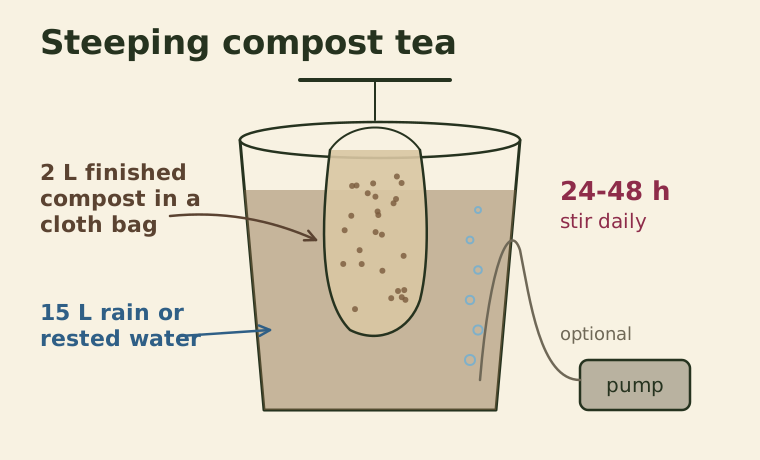
If you want a faster liquid boost, brew finished compost into compost tea. And if your plants show a specific problem, such as yellow leaves or poor fruiting, a simple soil test from a garden center or local extension service is far more useful than guessing with scraps.
Keep reading
-
 Zero Waste Home
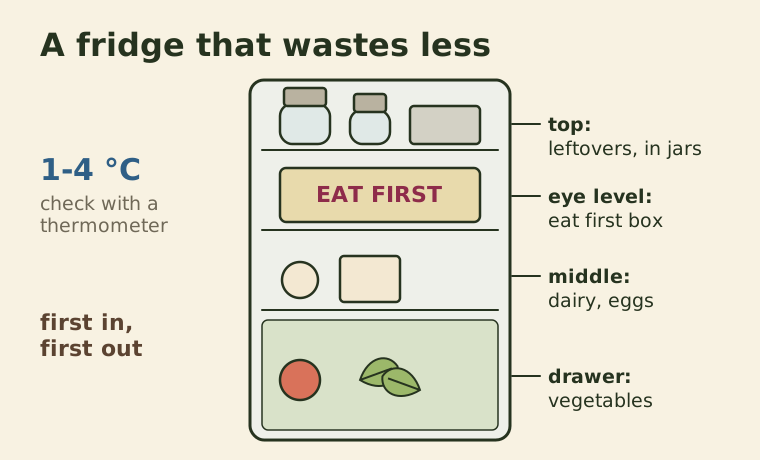
How to Reduce Food Waste at Home: Plan, Store, Use Up
Where household food waste comes from, how to shop and store to prevent it, what date labels really mean, and how to use up scraps before composting.
-
 Natural Fertilizers
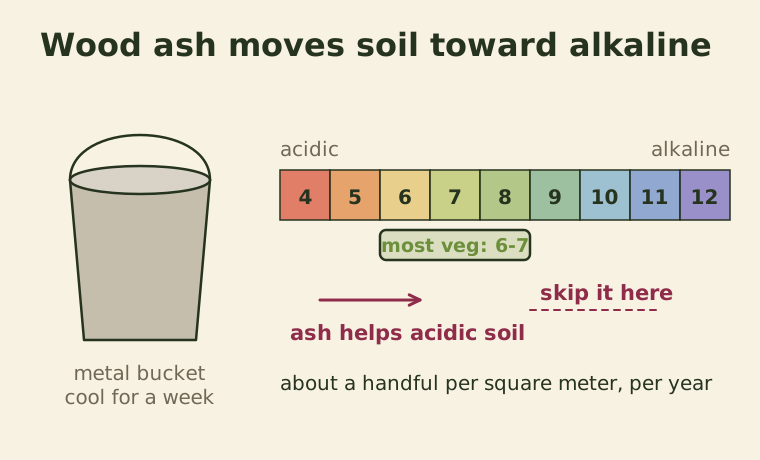
Using Wood Ash in the Garden: Benefits, Limits and Safe Amounts
Wood ash adds potassium and raises soil pH. Here's how much to use, which plants like it, which don't, and how to handle it safely.
-
 Natural Fertilizers
How to Make Compost Tea: Simple Steeped and Aerated Methods
Two ways to turn finished compost into a liquid feed, how to dilute and apply it, and the hygiene rules that keep it safe for food crops.