

Natural Fertilizers
Feeding plants with what you already have: teas, peels, ash and manure.
-
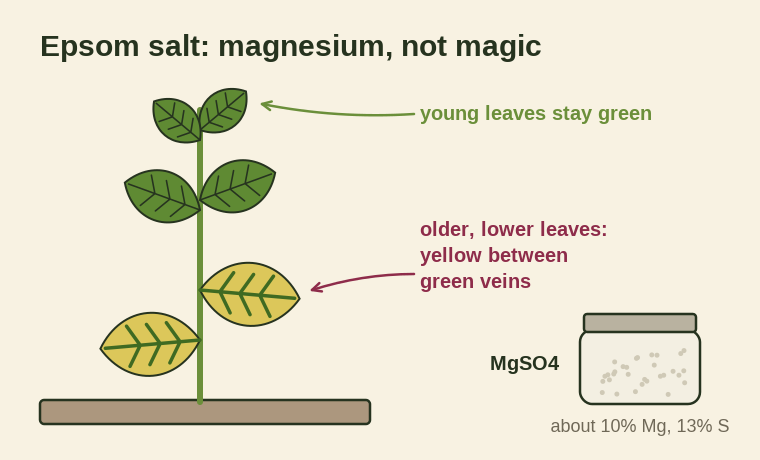
Epsom Salt in the Garden: What It Really Does and When to Use It
Epsom salt supplies magnesium and sulfur, not miracles. What magnesium does, how to spot a real deficiency, which popular claims are myths, and the risks of overuse.
-
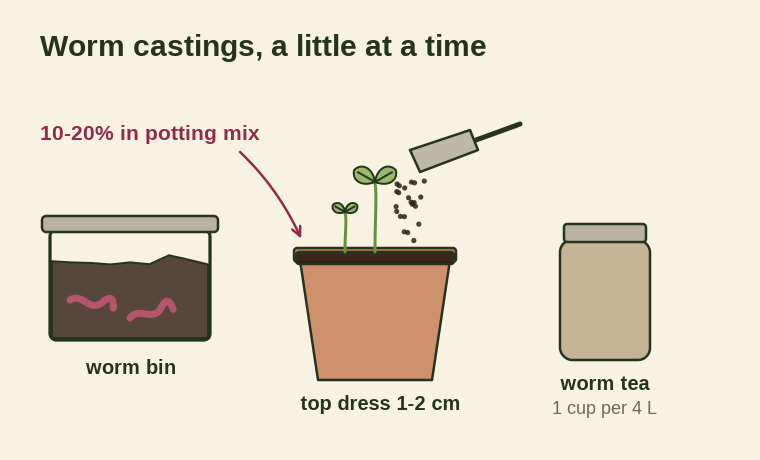
How to Use Worm Castings: Top Dressing, Potting Mix and Worm Tea
Worm castings are a gentle, living soil improver. How much to add to pots, beds and seed mixes, how to make worm tea, and what to check when buying a bag.
-
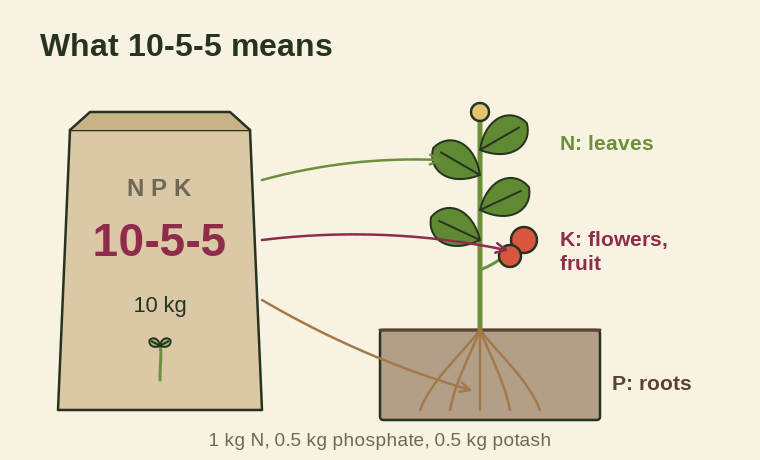
How to Read a Fertilizer Label: N-P-K Numbers Explained Simply
What the three N-P-K numbers on a fertilizer bag mean, what nitrogen, phosphorus and potassium do, why organic numbers look low, and how to spot deficiencies.
-

How to Use Manure in the Garden Safely: Types, Aging and Amounts
Chicken, horse, cow and rabbit manure compared, why fresh manure can burn plants, how to age it, how much to use, and the food safety rules for vegetable beds.
-
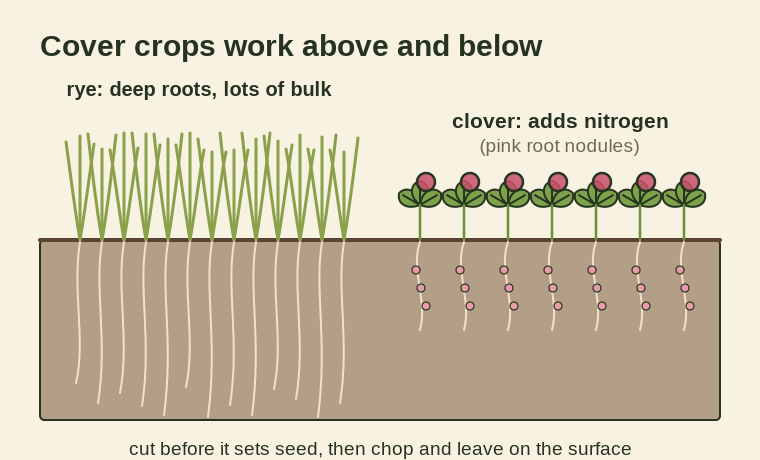
Cover Crops and Green Manure: How to Feed Your Soil With Plants
Sow clover, rye, vetch or buckwheat between crops to protect bare soil, add nitrogen and organic matter, and cut weeds. Which to grow, when, and how to turn them in.
-
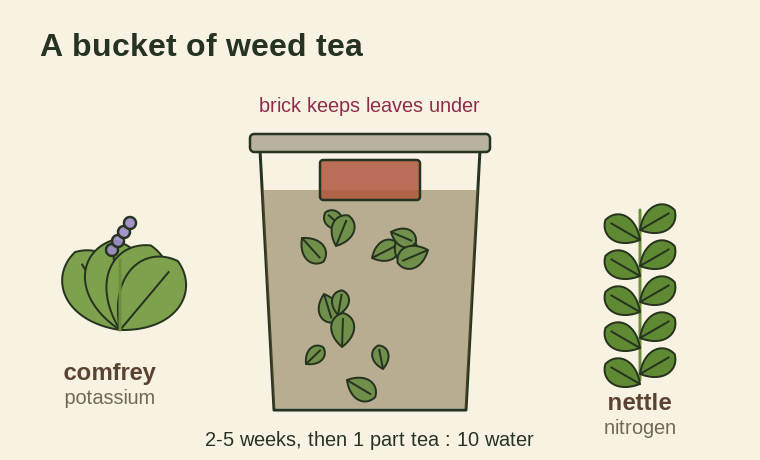
Comfrey and Nettle Tea: Homemade Liquid Fertilizers From Weeds
How to brew liquid plant feed from comfrey and stinging nettle, which crops each one suits, dilution rates, and how to handle the smell.
-
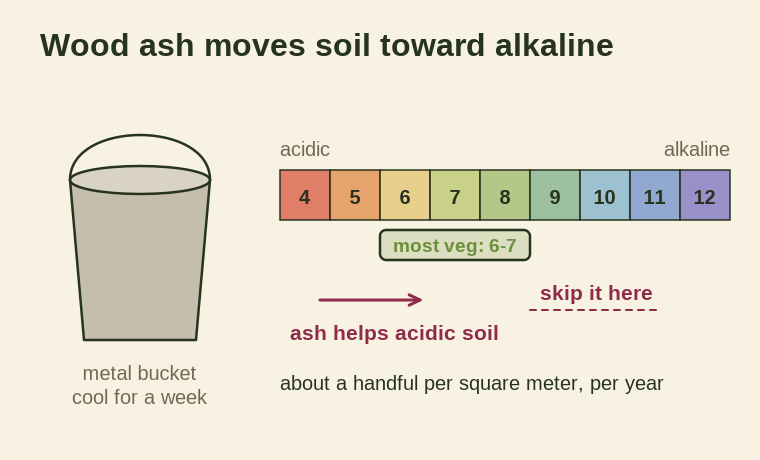
Using Wood Ash in the Garden: Benefits, Limits and Safe Amounts
Wood ash adds potassium and raises soil pH. Here's how much to use, which plants like it, which don't, and how to handle it safely.
-
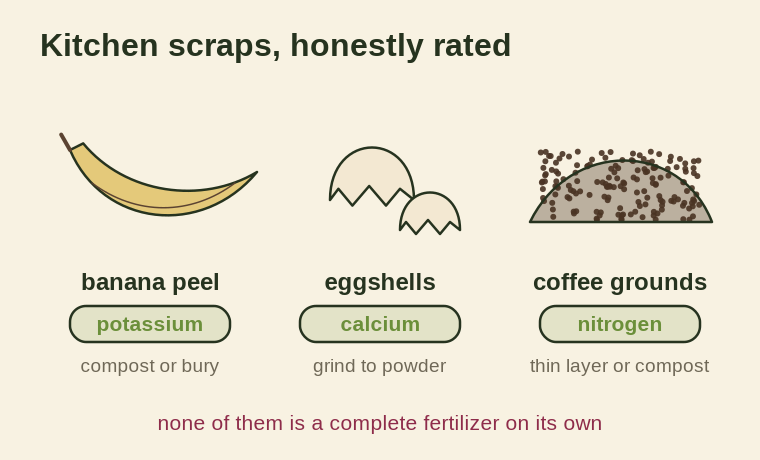
Banana Peels, Eggshells and Coffee Grounds: Which Kitchen Fertilizers Really Work
An honest look at popular kitchen scrap fertilizers, what nutrients they actually supply, and the right way to use each one.
-
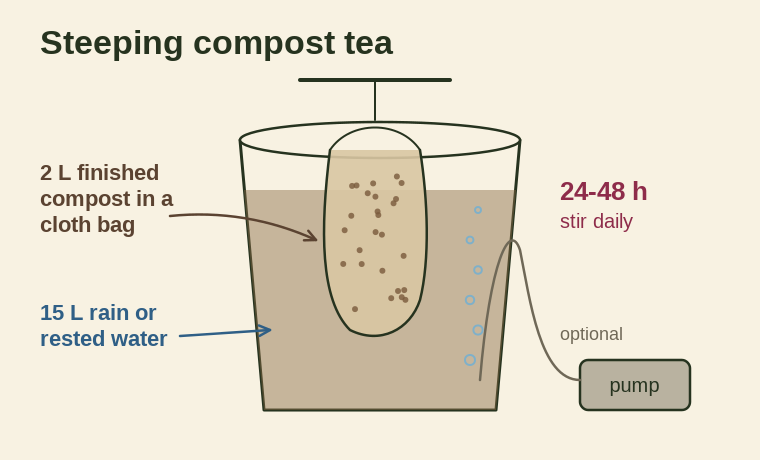
How to Make Compost Tea: Simple Steeped and Aerated Methods
Two ways to turn finished compost into a liquid feed, how to dilute and apply it, and the hygiene rules that keep it safe for food crops.