
Using Wood Ash in the Garden: Benefits, Limits and Safe Amounts
Wood ash adds potassium and raises soil pH. Here's how much to use, which plants like it, which don't, and how to handle it safely.
On this page
If you have a wood stove, fireplace or fire pit, you probably end up with buckets of fine gray ash. Gardeners have used wood ash for centuries, and it can be genuinely useful. It is also easy to overdo, because ash is strongly alkaline. Used carelessly, it can push soil pH so high that plants struggle to absorb nutrients.
This guide explains what wood ash contains, when it helps, and how to use it without causing problems.
What's in wood ash
The exact composition depends on the type of wood and how hot the fire burned, but hardwood ash typically contains:
- Calcium: usually the largest component, often 20 percent or more, mostly as calcium carbonate and calcium oxide.
- Potassium: around 3 to 7 percent. This is where the old word "potash" comes from, since people used to leach ash in pots to extract it.
- Phosphorus and magnesium: smaller amounts, around 1 to 2 percent each.
- Micronutrients: traces of iron, manganese, zinc and others.
Wood ash contains essentially no nitrogen, because nitrogen is lost as gas when wood burns.
The most important property is its effect on pH. Wood ash has a liming effect roughly half as strong as garden lime, and it acts faster because part of it is very soluble.
When wood ash helps
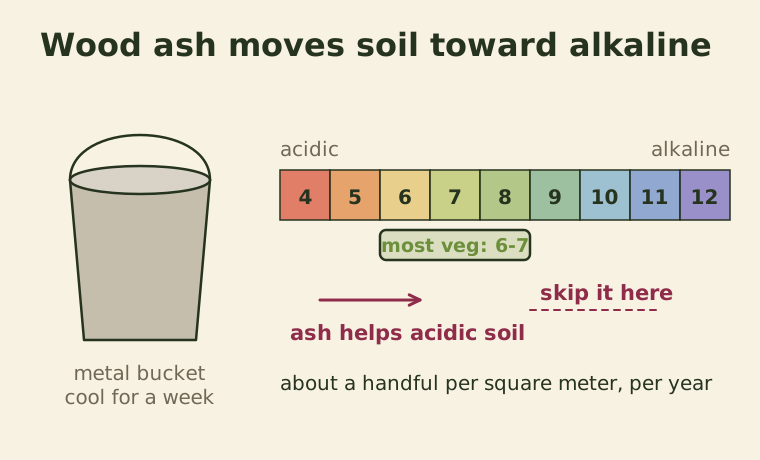
Ash is most useful in soils that are acidic, below a pH of about 6.0. In those soils it raises the pH toward the range most vegetables prefer (6.0 to 7.0) while adding potassium and calcium.
Before adding ash, test your soil. Inexpensive pH test kits and meters are available at garden centers, and many local agricultural extension services or universities offer lab tests that also measure nutrient levels. If your soil already sits at 7.0 or higher, skip the ash, because it will make things worse.
How much to use
General guidance for acidic soil is about 5 to 10 kilograms of ash per 100 square meters per year, which works out to a light dusting of roughly a handful per square meter. Spread it evenly, the way you would scatter flour on a counter, and rake it into the top few centimeters of soil.
| Situation | Suggested amount | Notes |
|---|---|---|
| Acidic vegetable bed (pH below 6) | About 1 handful per m² per year | Retest pH yearly |
| Neutral soil (pH 6.5–7) | Very little or none | Can add tiny amounts to compost instead |
| Alkaline soil (pH above 7) | None | Ash will raise pH further |
| Compost pile | A thin dusting per layer | Helps balance acidic materials |
| Containers and seedlings | Avoid | Too easy to overdose in small volumes |
It is better to apply too little than too much. Lowering pH again is slow and difficult.
Plants that like it and plants that don't
Plants that often benefit in acidic soil include cabbage family crops (broccoli, cabbage, kale), onions and garlic, peas and beans, beets, spinach and lawns that suffer from moss in acidic conditions.
Plants to keep ash away from: blueberries, rhododendrons, azaleas, camellias, heathers and other acid-loving plants. Potatoes are also best kept away from fresh ash, because higher pH encourages potato scab, a skin disease that roughens the tubers.
Safety and handling
- Only use ash from clean wood. Never use ash from painted, stained or pressure-treated wood, plywood, particleboard, colored paper, plastic, charcoal briquettes or coal. These can contain heavy metals and other contaminants.
- Let it cool completely. Ash can hold live embers for days. Store it in a metal bucket with a lid, away from anything flammable, for at least a week before using it.
- Protect your skin and eyes. Wet wood ash is caustic. Wear gloves, avoid windy days, and consider a dust mask and glasses.
- Keep it dry until use. Rain washes the potassium out quickly, so store ash under cover.
- Do not mix ash directly with nitrogen fertilizers or fresh manure. The high pH causes nitrogen to escape as ammonia gas.
Other good uses for wood ash
Beyond the vegetable bed, ash has some practical uses around the garden:
- In the compost pile: A thin dusting between layers can help neutralize acidic materials such as citrus and pine needles. Keep the total small.
- On icy paths: It adds grip without the salt that harms soil and plants. Keep it away from carpets and floors, since it tracks indoors easily.
- For cleaning glass: A damp cloth dipped in fine ash cleans soot from fireplace glass doors. Wear gloves.
The bottom line
Wood ash is a free source of potassium and calcium that works well in acidic soils, used sparingly and with a pH test to guide you. It is not a complete fertilizer, since it contains no nitrogen, and it is not suitable for every plant or every soil. Think of it as a correction tool rather than a regular feed, and combine it with compost and other balanced sources like those in our guide to kitchen scrap fertilizers.
Keep reading
-
 Growing Food
10 Easiest Vegetables to Grow for Beginners (and How Not to Kill Them)
Ten forgiving crops for a first vegetable garden, with spacing, time to harvest and the one mistake to avoid for each.
-
 Natural Fertilizers
Banana Peels, Eggshells and Coffee Grounds: Which Kitchen Fertilizers Really Work
An honest look at popular kitchen scrap fertilizers, what nutrients they actually supply, and the right way to use each one.
-
 Composting
How to Start Composting at Home: A Beginner's Setup That Actually Works
Choose a bin, find the right spot, learn the two ingredients that matter, and get your first finished compost in three to six months.