
How to Make Compost Tea: Simple Steeped and Aerated Methods
Two ways to turn finished compost into a liquid feed, how to dilute and apply it, and the hygiene rules that keep it safe for food crops.
On this page
Compost tea is finished compost steeped in water. The water picks up soluble nutrients and some of the microbial life from the compost, and you pour it on soil or around plants as a gentle liquid feed. It is a good way to stretch a small amount of compost across many pots, and it reaches roots faster than a solid top-dressing.
There are a lot of strong claims online about compost tea curing diseases or replacing all other fertilizer. The research on those claims is mixed. What is well supported is simpler: compost tea is a mild, low-cost liquid feed that adds a little nutrition and organic matter to the soil. Approached that way, it is easy to make and worth doing.
What you need
- Finished, mature compost or worm castings. It should smell earthy and contain no recognizable food scraps.
- A clean bucket of about 20 liters.
- A cloth bag, old pillowcase or paint strainer bag to hold the compost.
- Dechlorinated water. Rainwater is ideal. Tap water can be left standing in an open bucket for 24 hours so chlorine dissipates, although this does not remove chloramine, which some cities use.
- Optional: an aquarium air pump with an air stone, and a spoonful of unsulfured molasses.
Method 1: Simple steeped tea
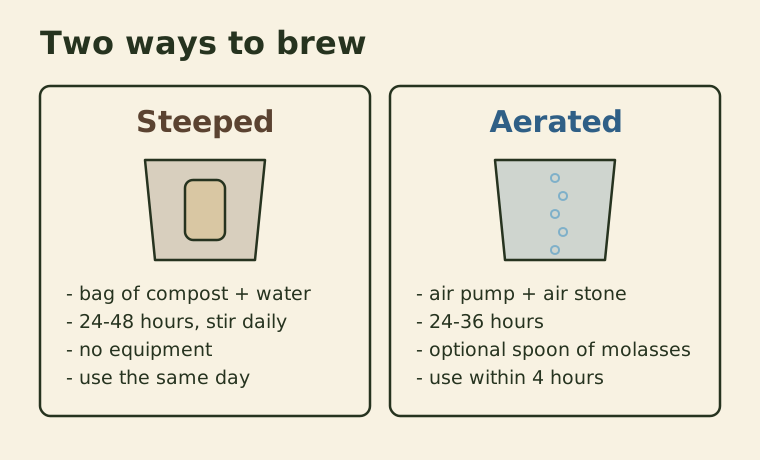
This is the easiest version and needs no equipment.
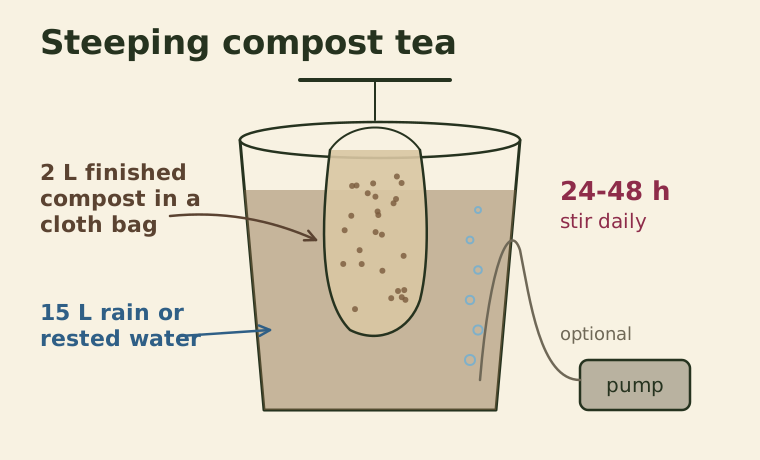
- Fill the cloth bag with about 2 liters of compost and tie it closed.
- Put it in the bucket and add about 15 liters of water.
- Leave it in the shade for 24 to 48 hours, stirring once or twice a day to add a little oxygen.
- Lift the bag out and squeeze it. Return the spent compost to your garden or pile.
- Use the liquid the same day.
Steeped tea will be the color of weak coffee. It should smell earthy, not sour.
Method 2: Aerated tea
Aerated compost tea uses a pump to bubble air through the water. The constant oxygen favors aerobic microbes and keeps the brew from turning anaerobic and smelly.
- Set up the bucket with water and the air stone at the bottom. Run the pump for an hour first if you are using tap water.
- Hang the compost bag in the water, or add compost loose if you plan to strain it afterward.
- Add a tablespoon of unsulfured molasses as a food source for the microbes. This is optional.
- Run the pump for 24 to 36 hours, keeping the bucket out of direct sun.
- Remove the bag, strain if needed, and use the tea within a few hours, while it is still fresh and oxygenated.
How to dilute and apply
| Use | Dilution | How often |
|---|---|---|
| Soil drench for vegetables and flowers | Use as is, or 1 part tea to 1 part water | Every 2 to 3 weeks in the growing season |
| Seedlings and young transplants | 1 part tea to 3–4 parts water | Every 2 weeks |
| Houseplants | 1 part tea to 2 parts water | Once a month in spring and summer |
| Lawn patches | Use as is, with a watering can | Once or twice a season |
Pour it around the base of plants onto moist soil rather than onto dry soil, so it soaks in instead of running off. Early morning or evening is best, out of hot sun.
Food safety rules
Compost tea is made with organic material and can grow bacteria, especially if molasses is added. To keep things safe:
- Apply tea to the soil, not to the leaves of crops you will eat raw, such as lettuce, herbs or strawberries.
- Stop applying to edible crops at least two weeks before harvest.
- Use clean buckets and bags, and wash them well between batches.
- Never use compost that contains manure from cats, dogs or humans, and avoid fresh livestock manure.
- If a batch smells sour, rotten or like sewage, pour it on a part of the garden away from food crops, or onto the compost pile, and start again.
Is it better than plain compost?
Not necessarily. Solid compost adds more organic matter and feeds the soil for longer. Tea's advantages are speed and reach. It is useful for containers where you cannot dig in compost, for giving transplants a gentle start, and for spreading a small amount of compost over a bigger area.
A balanced approach is to top-dress beds with compost once or twice a year, and use tea in between for containers and hungry crops. If you need more nitrogen for leafy growth, look at other natural options too, like those in our guide to kitchen scrap fertilizers.
Common questions
Can I store compost tea? Not for long. Aerated tea is best used within four hours. Steeped tea can be kept for a day in a covered bucket in the shade, but it loses quality and may turn sour.
Can I use worm castings instead of compost? Yes, and they make an excellent tea. Use about half the amount, since castings are more concentrated.
Is the liquid from the bottom of a worm bin the same thing? No. That is leachate, liquid that drained through partly decomposed food. It can be used heavily diluted on ornamental plants, but it is not the same as tea brewed from finished castings.
Do I need molasses? No. It feeds bacteria and makes the brew more active, but it also increases the risk of the tea going sour. Skip it if you are unsure.
Compost tea is not magic, but it is a practical way to get more out of every bucket of compost you make.
Keep reading
-
 Natural Fertilizers
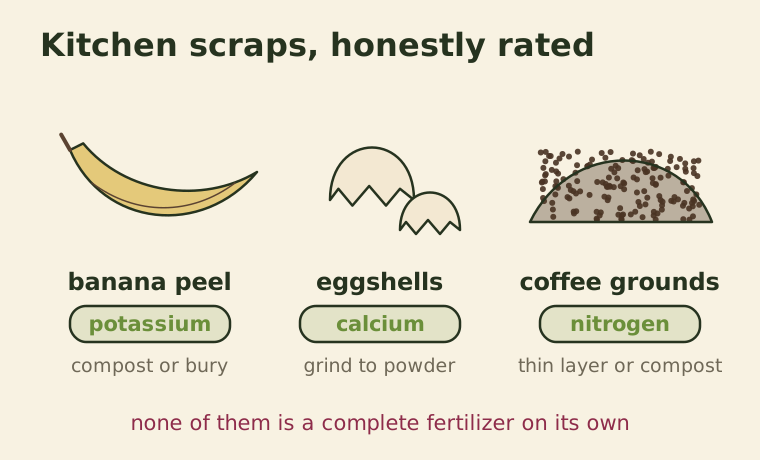
Banana Peels, Eggshells and Coffee Grounds: Which Kitchen Fertilizers Really Work
An honest look at popular kitchen scrap fertilizers, what nutrients they actually supply, and the right way to use each one.
-
 Small-Space Gardening
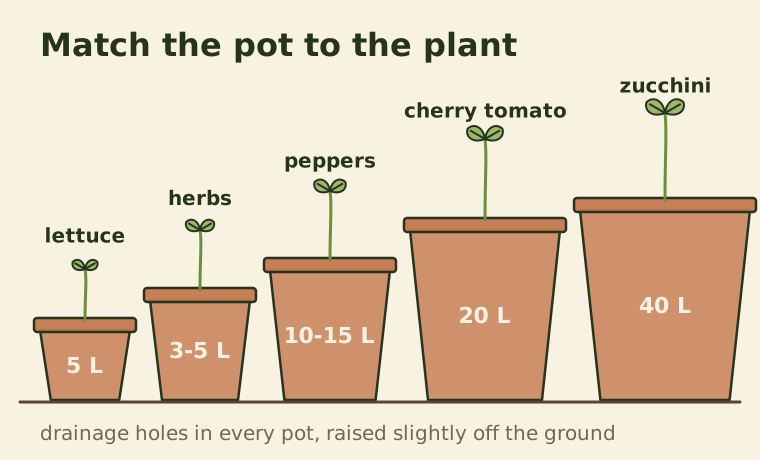
Growing Vegetables in Containers: Pot Sizes, Soil Mix and Watering
How big each pot should be, how to mix a potting soil that doesn't compact, and a watering routine that keeps container crops healthy.
-
 Composting
How to Start Composting at Home: A Beginner's Setup That Actually Works
Choose a bin, find the right spot, learn the two ingredients that matter, and get your first finished compost in three to six months.