
How to Reduce Food Waste at Home: Plan, Store, Use Up
Where household food waste comes from, how to shop and store to prevent it, what date labels really mean, and how to use up scraps before composting.
On this page
According to the United Nations Environment Programme, households throw away a large share of all food wasted worldwide, more than restaurants or shops. In many countries, that adds up to roughly 75 to 80 kilograms per person per year. Wasted food also means wasted water, land, energy and money, and food rotting in landfill releases methane, a powerful greenhouse gas.
Most household food waste comes from three causes: buying more than we use, storing food poorly, and not knowing what to do with leftovers. Each has a simple fix.
Step 1: Plan before you shop
- Check what you have. Look in the fridge, freezer and cupboard before writing a shopping list. Plan meals around what needs using up.
- Plan a few meals, not every meal. Planning four or five dinners leaves room for leftovers and changes of plan.
- Write a list and stick to it. Impulse buys and multi-buy offers on perishables are a major source of waste.
- Buy perishables in smaller amounts, more often, if you can get to a shop easily.
- Shop for real portions. A typical adult portion of dry rice or pasta is about 75 to 100 grams. Measuring for a week or two recalibrates your eye.
Step 2: Store food so it lasts
Storing food correctly can add days or weeks to its life.
| Food | Best storage | Tip |
|---|---|---|
| Leafy greens and herbs | Fridge, in a container with a damp cloth | Herbs like parsley can stand in a glass of water |
| Berries | Fridge, unwashed, in a single layer | Wash just before eating |
| Tomatoes | Counter until ripe, then fridge if needed | Cold dulls the flavor of unripe tomatoes |
| Bananas | Counter, away from other fruit | They release ethylene, which ripens other produce |
| Potatoes and onions | Cool, dark, dry place, stored separately | Together, potatoes sprout faster |
| Bread | Counter for 2–3 days, then freeze in slices | The fridge makes bread stale faster |
| Cheese | Fridge, wrapped in paper or wax wrap | Plastic wrap traps moisture and encourages mold |
| Cooked leftovers | Fridge within 2 hours of cooking | Eat within 3–4 days, or freeze |
Organize the fridge
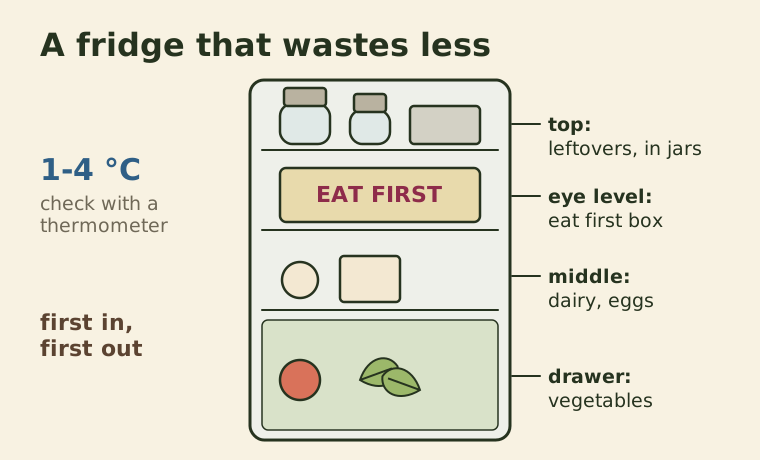
- Keep the fridge at or below 5 °C, ideally between 1 and 4 °C. A cheap fridge thermometer helps.
- Use first in, first out: move older items to the front when you unpack new shopping.
- Create an "eat first" box at eye level for leftovers, open jars and produce that needs using soon.
- Store leftovers in clear containers, such as glass jars, so you can see them.
Step 3: Understand date labels
Confusion about date labels causes a lot of perfectly good food to be thrown away. Wording varies between countries, but the principle is usually the same:
- "Use by" is about safety. It appears on perishable foods like fresh meat, fish and some dairy. Do not eat food after this date, even if it looks and smells fine. You can usually freeze it up to the use-by date.
- "Best before" is about quality. Food is generally safe after this date, but may be less fresh, crisp or flavorful. Use your senses to judge items like crackers, cereals, canned goods and pasta.
- "Sell by" or "display until" are instructions for shops, not shoppers.
When in doubt about safety, especially with meat, fish, dairy, cooked rice or foods for vulnerable people, follow official food safety advice and throw it out.
Step 4: Use the freezer properly
The freezer is the best food waste tool in the kitchen.
- Freeze bread, cooked grains, soups, stews, grated cheese, ripe bananas (peeled) and chopped herbs in oil.
- Label everything with the contents and date.
- Freeze in portion sizes so you only defrost what you need.
- Defrost in the fridge, not on the counter.
Step 5: Use up what's left
- Vegetable odds and ends: soups, stir-fries, frittatas, fried rice and pasta sauces absorb almost anything.
- Stale bread: breadcrumbs, croutons, bread pudding or French toast.
- Overripe fruit: smoothies, banana bread, compote or freeze for later.
- Wilting herbs: pesto, chimichurri or herb oil.
- Vegetable scraps: freeze for homemade stock, as described in our kitchen swaps guide.
- Leftover rice: fried rice the next day, but only if it was cooled quickly and refrigerated.
Make one meal a week a "use it up" meal, built from whatever needs eating.
Step 6: Compost what can't be eaten
Peels, cores, eggshells, coffee grounds and tea leaves will always be left over. Composting them keeps them out of landfill, where they would produce methane, and turns them into a resource for growing more food. Start with our guide to composting at home. Many municipalities also run food waste collections.
Track it for two weeks
If you want to see where your waste is coming from, keep a simple note on the fridge for two weeks: what you threw away and why. Most households find a pattern quickly, like bagged salad that wilts before it is eaten, or bread that goes stale. Fix the top two and you will cut most of your food waste.
Keep reading
-
 Zero Waste Home
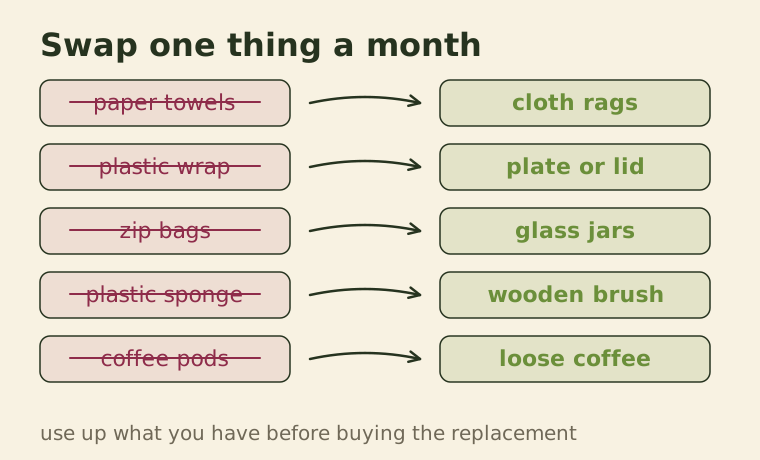
12 Zero Waste Kitchen Swaps That Are Actually Easy to Keep Up
Simple replacements for the most common disposables in the kitchen, ordered from easiest to more committed, and the habits that make them stick.
-
 Reuse & Upcycling
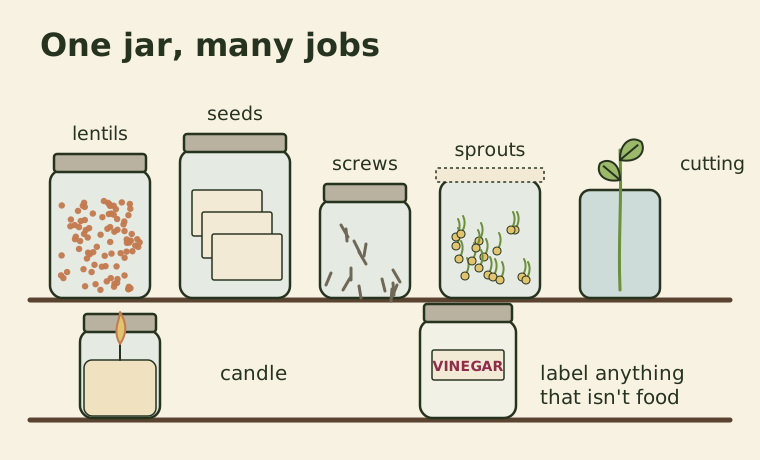
15 Practical Ways to Reuse Glass Jars Around the House
How to remove labels and smells from jars, plus fifteen genuinely useful second jobs for them in the kitchen, garden and workshop.
-
 Composting
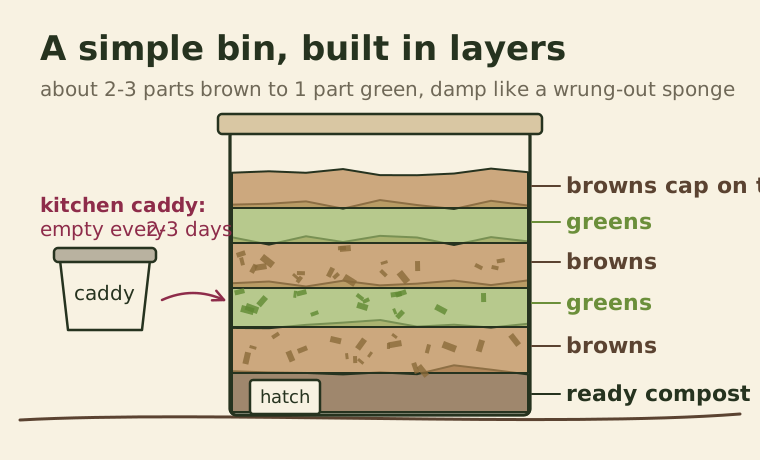
How to Start Composting at Home: A Beginner's Setup That Actually Works
Choose a bin, find the right spot, learn the two ingredients that matter, and get your first finished compost in three to six months.