
Cover Crops and Green Manure: How to Feed Your Soil With Plants
Sow clover, rye, vetch or buckwheat between crops to protect bare soil, add nitrogen and organic matter, and cut weeds. Which to grow, when, and how to turn them in.
On this page
Bare soil is unhappy soil. Left uncovered between crops, it is battered by rain, baked by sun, washed away in storms and quickly colonized by weeds. Nutrients leach out, and the soil life that keeps it healthy goes hungry.
Cover crops solve this by keeping living roots in the ground when you are not growing food. When those plants are cut down and returned to the soil, they become green manure: a free, homegrown fertilizer and soil conditioner. Farmers have used this technique for thousands of years, and it works just as well in a small vegetable bed.
What cover crops do
- Protect the surface from erosion and compaction by heavy rain.
- Add organic matter when the plants are cut and left to decompose.
- Hold nutrients that would otherwise wash out over winter, then release them when the plants break down.
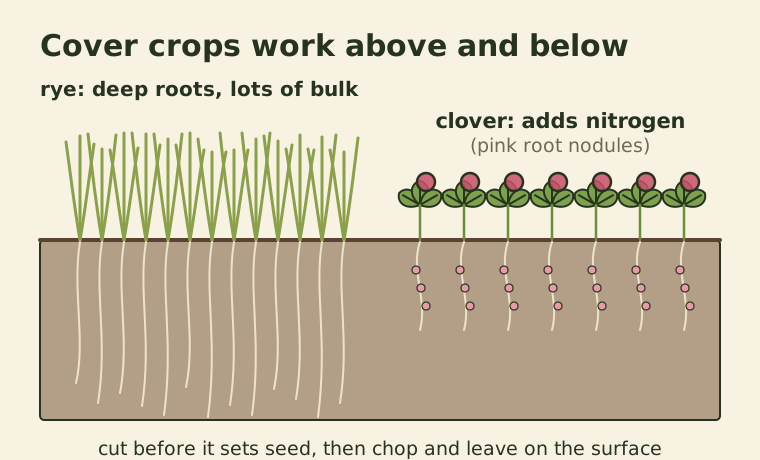
- Add nitrogen if you use legumes such as clover, vetch, peas or beans. Bacteria in nodules on their roots take nitrogen from the air and fix it into a form plants can use.
- Smother weeds by covering the ground densely.
- Improve soil structure, as roots open channels deep into the soil.
- Feed pollinators if some plants are allowed to flower, as buckwheat and phacelia do.
Choosing a cover crop
| Plant | Type | Sow | Main benefit | Notes |
|---|---|---|---|---|
| Crimson clover | Legume | Late summer to early autumn | Nitrogen, flowers for bees | Easy to turn in |
| Winter field beans | Legume | Autumn | Nitrogen, deep roots | Large seeds, easy to sow by hand |
| Hairy vetch | Legume | Late summer to autumn | Lots of nitrogen | Can become tangled; cut before seeding |
| Winter rye (cereal rye) | Grass | Autumn | Huge root mass, weed suppression | Very hardy; can be tough to dig in |
| Oats | Grass | Late summer | Quick cover, biomass | Usually killed by hard frost, leaving a mulch |
| Buckwheat | Broadleaf | Late spring to summer | Fast cover in 4–6 weeks, bees | Frost-tender; good between summer crops |
| Phacelia | Broadleaf | Spring to late summer | Bees, fine roots | Pretty blue flowers |
| Mustard | Brassica | Late summer | Fast cover | Avoid before cabbage-family crops |
A mix of a legume and a grass, such as rye with vetch or oats with peas, is a classic combination. The grass gives bulk and support, and the legume adds nitrogen.
Availability varies by region, so check what local seed suppliers sell as "green manure" mixes. They are usually inexpensive and come in bulk packs.
When to sow
There are two main windows in a home garden:
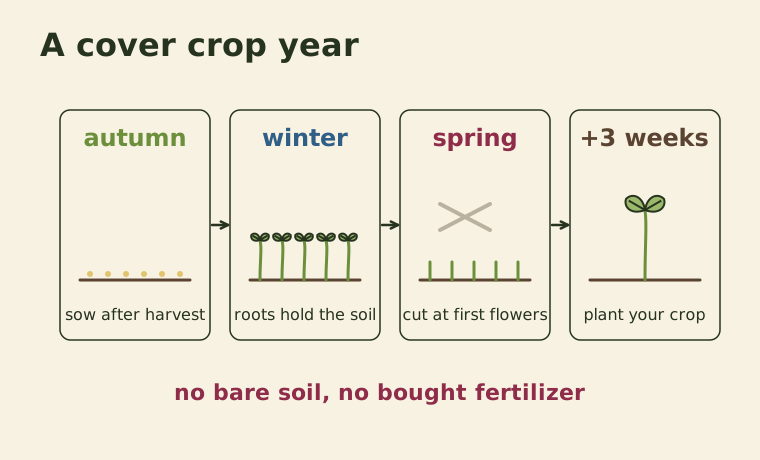
- Autumn to spring: sow after the last summer crops come out. Hardy cover crops like rye, field beans, vetch and clover protect the soil through winter.
- Short summer gaps: sow buckwheat, phacelia or mustard in any bed that will be empty for 6 to 8 weeks between crops.
In frost-free climates, think in terms of the rainy and dry seasons instead. Sow cover crops in beds that will rest for a season.
How to sow
- Clear the bed of old crops and large weeds.
- Rake the surface to a rough tilth. It doesn't need to be as fine as for vegetable seeds.
- Broadcast the seed evenly by hand. Larger seeds such as beans can be sown in rows or pressed in individually, about 10 to 15 centimeters apart.
- Rake lightly to cover the seed, then water if the soil is dry.
- Protect from birds with netting for the first couple of weeks if needed.
Follow the sowing rate on the packet. Cover crops are sown much more densely than vegetables.
Turning it in: cut, chop and wait
The key is to cut the cover crop before it sets seed, ideally when it starts to flower. At that point it holds the most nutrients and is still soft enough to break down quickly.
- Cut the plants at ground level with shears, a scythe or a mower on a high setting.
- Chop them up into short pieces with a spade or shears.
- Choose your method: - Dig in lightly: fork the chopped plants into the top 10 to 15 centimeters of soil. - No-dig: leave the chopped plants on the surface as a mulch, and cover them with cardboard or a sheet for a few weeks. Worms will pull the material down for you.
- Wait two to four weeks before sowing or planting. Decomposing green material can briefly tie up nitrogen and release compounds that stop small seeds from germinating. Transplanted seedlings are less affected than direct-sown seeds.
Matching cover crops to the next crop
- Before hungry crops such as tomatoes, squash, corn and cabbage, use a legume to boost nitrogen.
- Before root crops such as carrots and parsnips, avoid very heavy green manures, which can cause forked roots. Buckwheat or phacelia are lighter options.
- Avoid mustard and other brassicas before cabbage-family crops, because they share pests and diseases.
Cover crops in small spaces
Even a single raised bed or a large container can benefit. Sow a pinch of clover or buckwheat in an empty pot over winter, then chop the plants and mix them into the soil before planting in spring. It is a small-scale version of the same idea, and it keeps potting mix alive between seasons.
How they fit with other natural fertilizers
Cover crops do not replace compost, but they complement it well. Compost adds a dose of organic matter all at once, while green manure grows its own organic matter in place and captures nutrients that would otherwise be lost. Together with compost and liquid feeds such as comfrey tea, they cover most of what a home vegetable garden needs without buying fertilizer at all.
Start with one bed this autumn. Sow a simple clover or a rye and vetch mix, leave it through winter, and compare that bed with a bare one next spring. The difference in the soil is usually easy to see and feel.
Keep reading
-
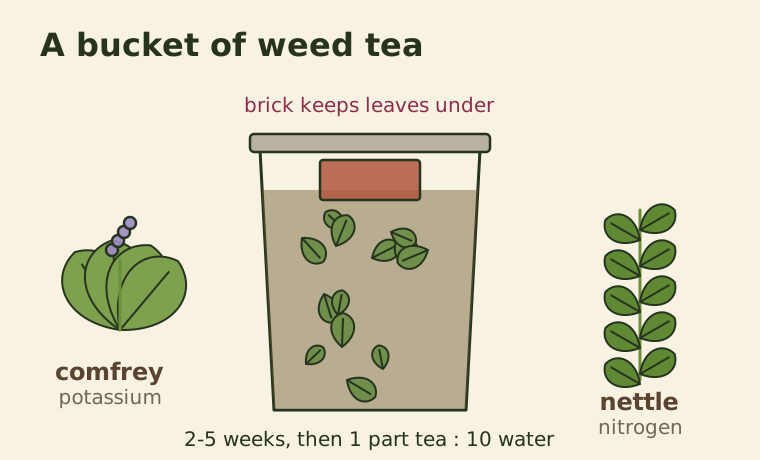 Natural Fertilizers
Comfrey and Nettle Tea: Homemade Liquid Fertilizers From Weeds
How to brew liquid plant feed from comfrey and stinging nettle, which crops each one suits, dilution rates, and how to handle the smell.
-
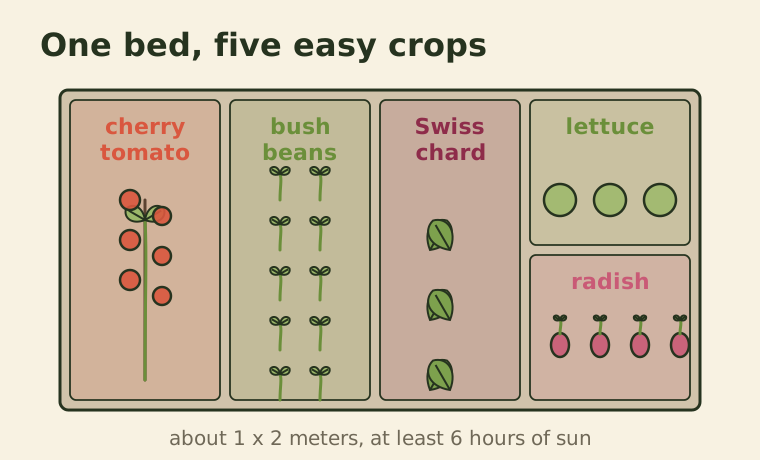 Growing Food
10 Easiest Vegetables to Grow for Beginners (and How Not to Kill Them)
Ten forgiving crops for a first vegetable garden, with spacing, time to harvest and the one mistake to avoid for each.
-
 Composting
How to Start Composting at Home: A Beginner's Setup That Actually Works
Choose a bin, find the right spot, learn the two ingredients that matter, and get your first finished compost in three to six months.