
Rainwater Harvesting at Home: How to Set Up a Rain Barrel
How much water a roof collects, how to connect a barrel to a downspout, keep mosquitoes and algae out, and use rainwater safely in the garden.
On this page
A roof is a big rain collector. Every time it rains, hundreds or thousands of liters run off into gutters and drains. A rain barrel captures some of that water for the garden, which reduces your water bill, eases pressure on local water supplies during dry spells and gives plants water they generally prefer, since rainwater contains no chlorine and is slightly acidic.
Before you start, check local rules. Rainwater collection is encouraged in most places, but a few regions have restrictions or require permits, and some offer subsidies for barrels.
How much water can you collect?
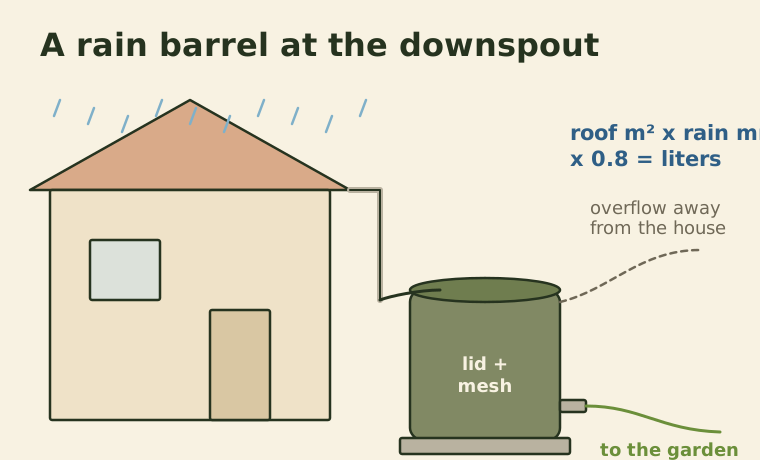
A simple formula estimates the water a roof can catch:
Roof area (m²) × rainfall (mm) × 0.8 = liters collected
One millimeter of rain falling on one square meter equals one liter of water. The factor of 0.8 accounts for losses from evaporation, splashing and the first flush.
For example, a 50 square meter section of roof draining into one downspout, during a 10 millimeter rain shower, gives about 50 × 10 × 0.8 = 400 liters. That is enough to fill two standard 200-liter barrels from a single moderate shower.
Choosing a barrel
- Size: 150 to 250 liters is common. You can link several barrels together if you have the space.
- Material: Food-grade plastic is best. Reused food barrels (from olive, juice or syrup suppliers) are cheap and work well. Never use barrels that held chemicals, oils or pesticides.
- Color: Opaque and dark. Light passing through the walls causes algae growth.
- Lid: It must be sealed or covered with fine mesh to keep out mosquitoes, debris, animals and children.
Parts list
- Barrel with a lid
- A spigot (tap) fitted near the bottom, with a rubber washer and lock nut
- An overflow outlet near the top, with a hose leading away from the house foundations
- A downspout diverter or a flexible connector
- Fine mesh screen (insect screen)
- Concrete blocks or a sturdy stand
Step-by-step setup
- Choose the downspout closest to where you will use the water.
- Level the ground and build a stable base of concrete blocks or pavers. A full 200-liter barrel weighs over 200 kilograms, so the base must be solid. Raising it 40 to 60 centimeters gives enough height to fill a watering can and adds pressure for a hose.
- Fit the spigot. Drill a hole near the bottom, about 10 centimeters up so sediment stays below it, and fit the tap with washers on both sides to seal it.
- Fit the overflow. Drill a second hole near the top and attach a hose that carries excess water at least 1.5 meters away from your house, into a garden bed or a second barrel.
- Connect to the downspout. A diverter kit is the neatest option. It sends water into the barrel until it is full, then lets the rest continue down the drain. Alternatively, cut the downspout above the barrel height and fit an elbow that directs water through the screened lid.
- Screen every opening with fine mesh.
Keeping water clean
Gutter guards and screens. Keep leaves out of the gutters, and clean them twice a year.
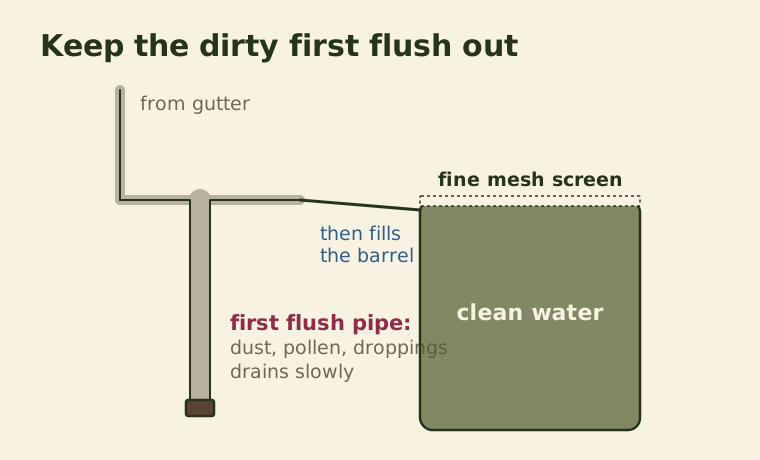
First-flush diverter. This simple device catches the first few liters of each rainfall, which wash most dust, bird droppings and pollen off the roof, and sends them away before the barrel starts filling. Kits are available, or you can build one from a length of pipe with a slow-drain cap.
Algae. Keep the barrel opaque and covered. Painting a translucent barrel dark helps.
Mosquitoes. Sealed lids and screened openings prevent breeding. Check screens regularly for tears. Use the water within a week or two in warm weather, or drain the barrel periodically.
Cleaning. Empty and scrub the barrel once a year, ideally at the end of the rainy season.
How to use rainwater safely
Untreated rainwater is excellent for:
- Watering ornamental plants, lawns, trees and shrubs
- Watering vegetable beds at the soil level
- Filling drip irrigation systems
- Rinsing tools, washing cars and bikes
Rainwater collected from a roof is not safe to drink without proper treatment. It can contain bacteria from bird droppings, dust, and substances from roofing materials. When watering edible crops, apply it to the soil rather than the leaves, especially for crops eaten raw such as lettuce, herbs and strawberries, and wash produce before eating.
Avoid collecting from roofs with treated wood shakes or old asbestos sheeting, or from roofs near heavy industry. Asphalt shingles and metal roofs are generally fine for garden use.
Winter care
In climates where temperatures drop below freezing, drain the barrel before the first hard frost, disconnect it from the downspout and store it upside down, or leave it in place with the spigot open. Water expands as it freezes and can split a barrel or tap.
Getting the most out of your barrel
- Water in the early morning or evening to reduce evaporation.
- Mulch beds so less water is needed.
- Group thirsty plants together near the barrel.
- Add a second barrel linked by a short hose between the overflows to double storage.
A single barrel will not supply a whole garden through a long dry season, but it can cover most of the watering for containers and a small vegetable patch, and it makes you far more aware of how much water the garden really uses.
Keep reading
-
 Water & Energy
How to Save Energy at Home: 15 Simple Steps Ranked by Impact
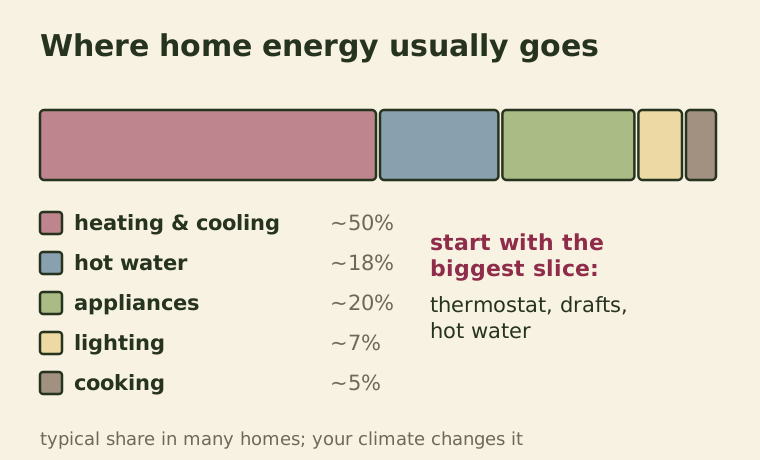
Where home energy actually goes, which changes save the most, and simple, low-cost steps for heating, cooling, hot water, lighting and appliances.
-
 Water & Energy
Drip Irrigation for Home Gardens: A Simple System You Can Install in a Day
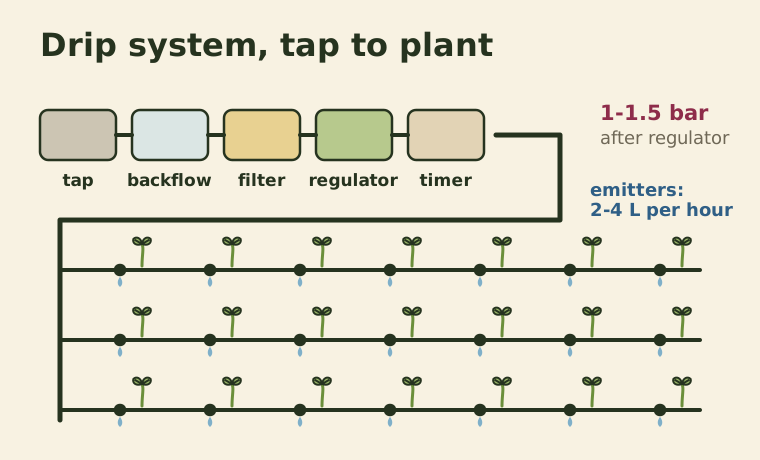
How drip irrigation saves water, the parts you need, how to plan and lay out lines, and how to run a low-pressure system from a rain barrel.
-
 Small-Space Gardening
Growing Vegetables in Containers: Pot Sizes, Soil Mix and Watering
How big each pot should be, how to mix a potting soil that doesn't compact, and a watering routine that keeps container crops healthy.