
15 Practical Ways to Reuse Glass Jars Around the House
How to remove labels and smells from jars, plus fifteen genuinely useful second jobs for them in the kitchen, garden and workshop.
On this page
Glass jars are one of the most useful things that come into a kitchen. They are tough, airtight, washable, safe for food and see-through. Glass can be recycled, but melting it down takes a lot of energy. Reusing a jar a few dozen times before it reaches the recycling bin saves much more.
Here is how to get jars clean and fifteen good ways to use them.
Getting jars ready
Removing labels
- Soak the jar in hot soapy water for 20 to 30 minutes. Most paper labels slide off.
- For stubborn glue, make a paste of equal parts baking soda and cooking oil. Rub it on, leave it for 15 minutes, then scrub it off with a scourer.
- Any oil-based residue comes off with a drop of dish soap and hot water.
Removing smells from lids
Lids from pickles, garlic sauce or curry paste often hold onto smells.
- Soak lids in a mix of hot water and a splash of white vinegar for an hour.
- Or rub the inside with a paste of baking soda and water, leave it overnight, then rinse.
- Leaving lids in direct sunlight for a day also helps.
Keep a set of "savory" lids for strong-smelling foods, and use the cleanest ones for things like sugar or flour.
In the kitchen
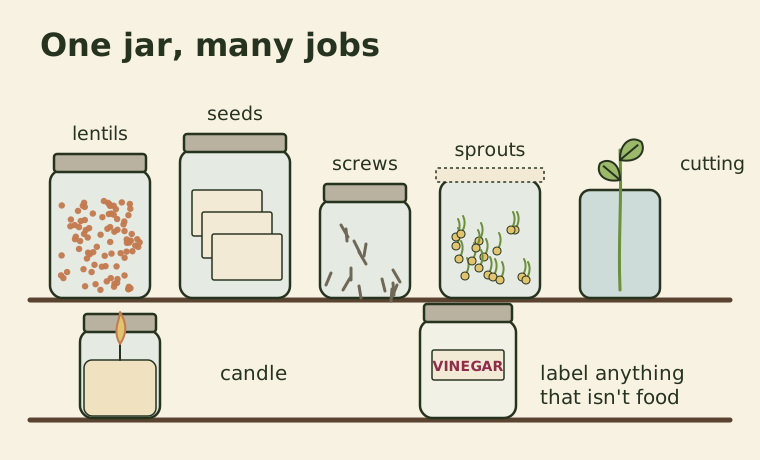
1. Bulk food storage. Rice, lentils, oats, pasta, nuts and spices keep well in jars and are easy to see at a glance. Take jars to stores that sell loose foods by weight, and note the empty weight on the lid to subtract it at the till.
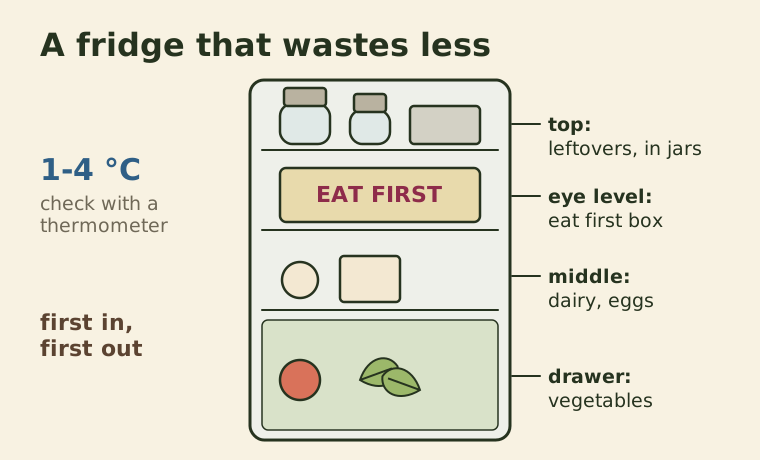
2. Leftovers. Jars stack in the fridge and let you see what is inside, which helps avoid forgotten food. Our guide to reducing food waste has more on fridge organization.
3. Freezing soups and stocks. Glass can go in the freezer if you take some care: use straight-sided jars, cool food first, and leave at least 3 centimeters of space at the top for expansion. Jars with narrow "shoulders" are more likely to crack.
4. Salad dressings and sauces. Shake ingredients together in a small jar. Store the leftovers in the same jar.
5. Overnight oats and chia puddings. Prepare portions in the evening and take them to work in the morning.
6. Sprouting. Put a spoonful of mung beans, lentils or alfalfa seeds in a jar, cover the mouth with a piece of mesh or cheesecloth held by a rubber band, then rinse and drain twice a day. Sprouts are ready in three to five days.
7. Fermenting. Small batches of sauerkraut, kimchi or pickled vegetables work well in jars. Keep vegetables below the brine, using a smaller jar or a clean stone as a weight.
In the garden
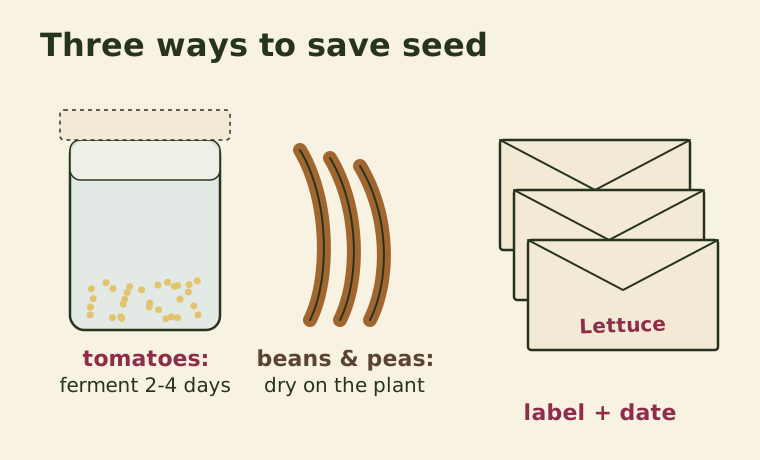
8. Seed storage. Dry seeds in labeled paper envelopes inside an airtight jar, with a small silica packet, keep for years. See our seed saving guide.
9. Rooting cuttings. Basil, mint, pothos and many other plants root in a jar of water on a windowsill.
10. Herb preservation. Store dried herbs from your balcony herb garden in small dark or opaque jars, away from light, to keep their flavor.
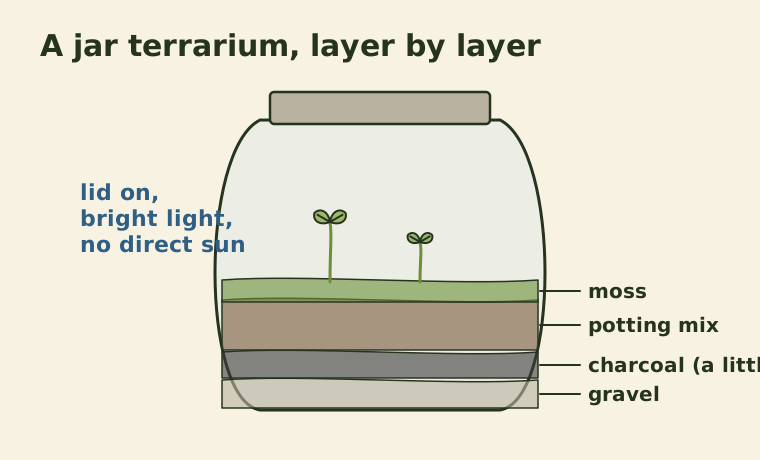
11. Mini terrariums. A large jar with a layer of gravel, a little charcoal, potting mix and some moss makes a small, low-maintenance garden.
Around the house and workshop
12. Hardware sorting. Screws, nails, washers and fuses are easy to find in jars. Screw the lids to the underside of a shelf, then twist the jars into place for a hanging organizer.
13. Bathroom storage. Cotton pads, hair ties, cotton buds and homemade scrubs look tidy in small jars.
14. Candles. Melt down candle stubs, pour the wax into a small jar around a new wick, and you have a new candle. Always put candles on a heat-proof surface and never leave them burning unattended.
15. Homemade cleaners. Store diluted vinegar cleaning solution or a baking soda scrub in a labeled jar. Our guide to natural cleaners has recipes and safety tips, including which mixes to avoid.
Safety notes
- Glass can crack from sudden temperature changes. Do not pour boiling liquid into a cold jar or move a jar straight from the freezer into hot water.
- Reused commercial jars are not reliable for pressure canning or long-term home canning. Use jars designed for canning for that.
- Discard any jar with chips or cracks, especially around the rim.
When a jar is done
When a jar finally breaks or has a chipped rim, it can go in the glass recycling, as long as it is a jar or bottle. Drinking glasses, ceramics and ovenproof dishes are a different kind of glass and should not go in the glass bin, as explained in common recycling mistakes.
Keep a small box of clean jars and lids in a cupboard. Once you start using them, you will find you never need to buy plastic storage containers again.
Keep reading
-
 Growing Food
How to Save Seeds From Your Garden: Tomatoes, Beans, Peppers and More
Which seeds are easy to save, why hybrids don't come true, and step-by-step methods for drying, fermenting and storing seed for next year.
-
 Zero Waste Home
How to Reduce Food Waste at Home: Plan, Store, Use Up
Where household food waste comes from, how to shop and store to prevent it, what date labels really mean, and how to use up scraps before composting.
-
 Zero Waste Home
12 Zero Waste Kitchen Swaps That Are Actually Easy to Keep Up
Simple replacements for the most common disposables in the kitchen, ordered from easiest to more committed, and the habits that make them stick.