
How to Read a Fertilizer Label: N-P-K Numbers Explained Simply
What the three N-P-K numbers on a fertilizer bag mean, what nitrogen, phosphorus and potassium do, why organic numbers look low, and how to spot deficiencies.
On this page
Every bag or bottle of fertilizer carries three numbers separated by dashes, such as 10-10-10, 5-1-1 or 3-15-0. They are the most useful information on the package, yet most people buy fertilizer without knowing what they mean. Once you can read them, you can compare products, choose the right feed for each crop and avoid paying for nutrients your soil does not need.
This guide explains the numbers, what each nutrient does for plants, why natural fertilizers have smaller numbers, and how to read the leaves for signs of what is missing.
What the three numbers mean
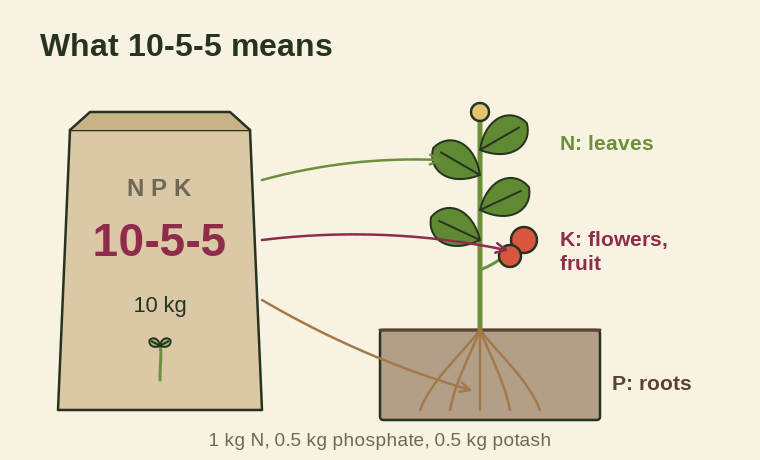
The numbers are always in the same order: N-P-K, nitrogen, phosphorus and potassium. Each is a percentage of the product's weight.
So a 10 kg bag of 10-5-5 fertilizer contains:
- 1 kg of nitrogen (10 percent)
- 0.5 kg of phosphate (5 percent)
- 0.5 kg of potash (5 percent)
The remaining 8 kg is not wasted. It includes the other parts of the chemical compounds, carriers, organic matter, and sometimes secondary nutrients such as calcium, magnesium and sulfur, which are listed separately on the label.
One detail trips people up: by long-standing convention, the second and third numbers are expressed as phosphate (P2O5) and potash (K2O), not as pure elements. Pure phosphorus is about 44 percent of the phosphate figure, and pure potassium about 83 percent of the potash figure. You do not need to convert anything to compare products, because all labels use the same system.
What each nutrient does
| Nutrient | Main job | Plants that want more | Too much causes |
|---|---|---|---|
| N, nitrogen | Leafy growth and green color | Lettuce, cabbage, lawns, leafy herbs | Soft, sappy growth, few flowers, more aphids |
| P, phosphorus | Roots, seedlings, flowering, seed | Young plants, root crops (if soil is low) | Runoff into streams; can block zinc and iron uptake |
| K, potassium | Flowers, fruit, sturdiness, water control | Tomatoes, peppers, fruit, flowers | Can crowd out magnesium and calcium |
A simple way to remember it: up, down and all around. Nitrogen for the top growth, phosphorus for the roots, potassium for the overall health of the plant.
The ratio between the numbers tells you what a product is for. A high-nitrogen feed like 20-5-5 suits lawns and leafy crops. A high-potash feed like 4-2-8 is designed for fruiting plants, which is why tomato feeds look like that (see our tomato growing guide). A balanced 10-10-10 is a general-purpose feed.
Why organic numbers look so low
Natural fertilizers usually show small numbers, and that does not mean they are weak. The label can only list nutrients the maker can guarantee, and organic materials release much of their content slowly, as soil life breaks them down.
| Material | Typical N-P-K | Notes |
|---|---|---|
| Blood meal | about 12-0-0 | Fast nitrogen; use sparingly |
| Bone meal | about 3-15-0 | Slow phosphorus and calcium |
| Fish emulsion | about 5-1-1 | Liquid, quick acting |
| Composted chicken manure | about 3-2-2 to 4-3-2 | Varies a lot by product |
| Kelp meal | about 1-0-2 | Mainly trace elements |
| Wood ash | about 0-1-3 | Also raises pH |
| Garden compost | roughly 1-0.5-1 | Mostly a soil builder |
Figures vary by source and batch, so treat them as rough guides. Homemade options such as well-rotted manure, comfrey and nettle tea and wood ash have no printed label at all, but the same principles apply: comfrey is rich in potassium, nettles in nitrogen, and ash in potassium and lime.
Synthetic fertilizers have high numbers because they are concentrated, water-soluble salts. They act quickly but can burn roots if overused, and they do nothing for soil structure. Organic feeds work more slowly, feed soil life along the way and are much harder to overdo.
Reading the leaves: deficiency signs
Plants show shortages in their leaves. Where the symptom appears matters, because some nutrients can move from old leaves to new ones and others cannot.
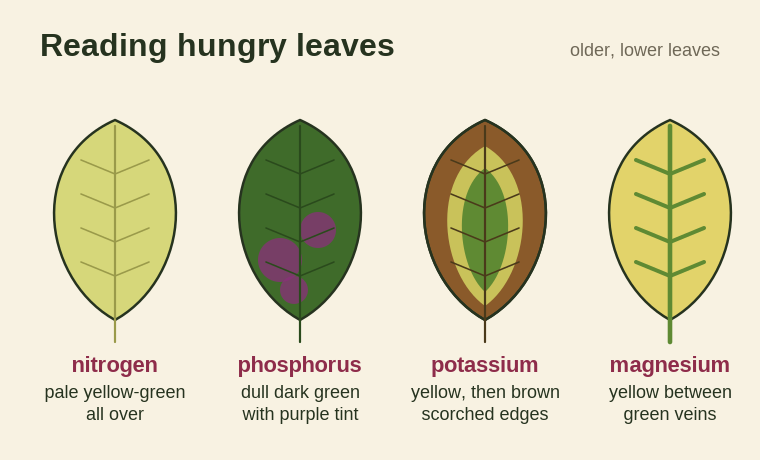
- Nitrogen: older, lower leaves turn evenly pale yellow-green; growth is slow and thin.
- Phosphorus: plants are stunted, and older leaves turn dull dark green with a purple tint. Cold soil in spring causes the same look, so wait for warmth before acting.
- Potassium: older leaves get yellow then brown, scorched edges; fruit ripens unevenly.
- Magnesium: yellow between the veins of older leaves while the veins stay green.
- Iron: yellow between the veins of the newest leaves, often because the soil is too alkaline rather than short of iron.
Leaf symptoms overlap with watering problems, pests and cold, so use them as clues, not a diagnosis. If many plants show the same pattern, a soil test confirms it.
Using the label well
- Read the ratio first, then the size of the numbers. The ratio tells you what the feed is for; the size tells you how much to use.
- Follow the rate on the pack. More is not better, and double doses of soluble fertilizer can scorch roots.
- Match the feed to the stage: nitrogen for leafy growth, potassium once flowers and fruit form.
- Feed the soil first. Compost and mulch improve structure and hold nutrients, so any fertilizer you add goes further.
Common questions
Is a higher number always better value? Not necessarily. Compare the price per kilogram of actual nutrient, and remember that slow-release organic feeds keep working for weeks.
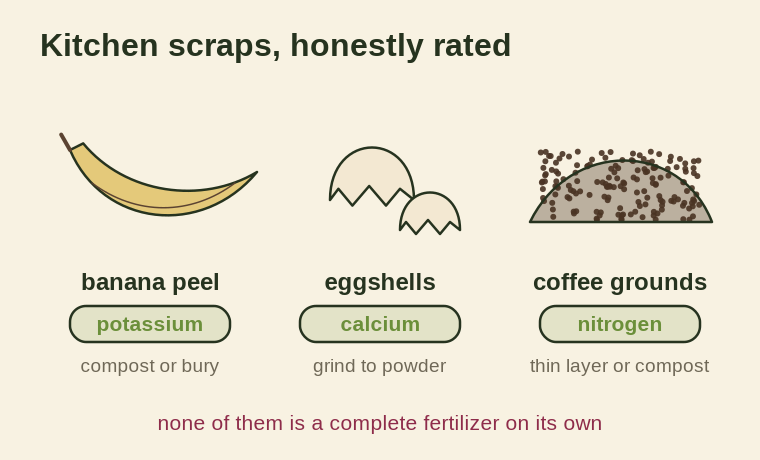
Do banana peels and eggshells count as fertilizer? They add small amounts of potassium and calcium as they break down, but not much. Our article on banana peel and eggshell fertilizer looks at what they can and cannot do.
What does 0-0-0 compost mean? Bagged soil improvers often carry no N-P-K claim because their content varies. They still feed soil life and supply small amounts of many nutrients.
Three numbers on a bag say more than any marketing slogan on the front. Read the ratio, match it to the plant, and let healthy soil do the rest of the work.
Keep reading
-
 Natural Fertilizers
How to Use Manure in the Garden Safely: Types, Aging and Amounts
Chicken, horse, cow and rabbit manure compared, why fresh manure can burn plants, how to age it, how much to use, and the food safety rules for vegetable beds.
-
 Natural Fertilizers
Using Wood Ash in the Garden: Benefits, Limits and Safe Amounts
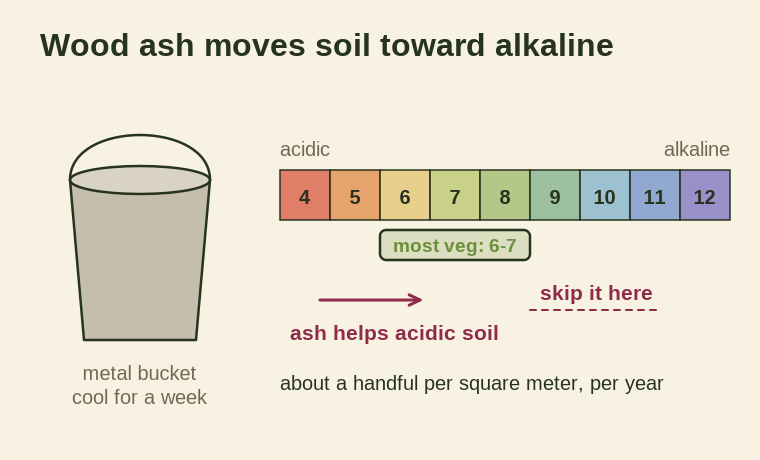
Wood ash adds potassium and raises soil pH. Here's how much to use, which plants like it, which don't, and how to handle it safely.
-
 Natural Fertilizers
Banana Peels, Eggshells and Coffee Grounds: Which Kitchen Fertilizers Really Work
An honest look at popular kitchen scrap fertilizers, what nutrients they actually supply, and the right way to use each one.
More in Natural Fertilizers
- How to Use Manure in the Garden Safely: Types, Aging and Amounts
- Cover Crops and Green Manure: How to Feed Your Soil With Plants
- Comfrey and Nettle Tea: Homemade Liquid Fertilizers From Weeds
- Using Wood Ash in the Garden: Benefits, Limits and Safe Amounts
- Banana Peels, Eggshells and Coffee Grounds: Which Kitchen Fertilizers Really Work
- How to Make Compost Tea: Simple Steeped and Aerated Methods
- Epsom Salt in the Garden: What It Really Does and When to Use It
- How to Use Worm Castings: Top Dressing, Potting Mix and Worm Tea