
What Happens to Your Recycling After the Truck Leaves
A step-by-step look inside a recycling sorting facility, how each material is separated and sold, and why contamination and bagged items cause so many problems.
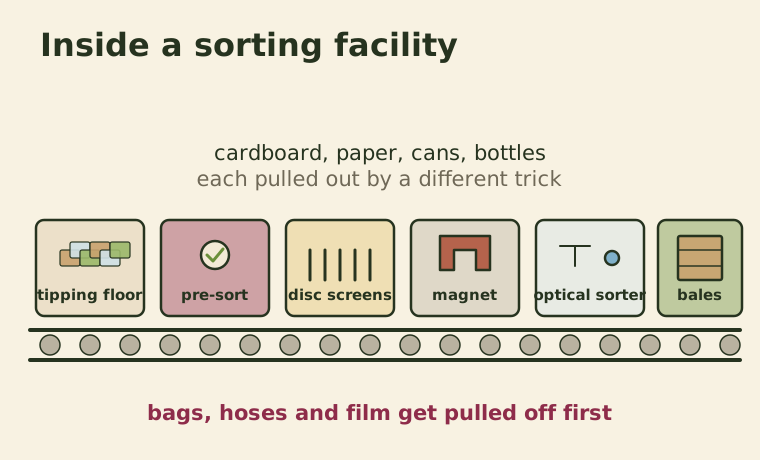
On this page
Once the truck takes your recycling bin, most of us never think about it again. But the journey from the curb to a new product passes through some remarkable machinery, and understanding it explains almost every recycling rule. Why bags are a problem, why greasy cardboard gets rejected, and why small items get lost all make sense once you see how the sorting works.
This guide follows a typical load of mixed household recycling, often called single-stream recycling, through a materials recovery facility, or MRF.
Step 1: Collection and the tipping floor
The truck empties its load onto a large concrete floor at the facility. A front loader pushes the material onto the start of a conveyor belt at a steady rate. At this point the load is a jumble of everything people put in their bins: cardboard, bottles, cans, jars, paper, and things that shouldn't be there at all.
Step 2: Pre-sort
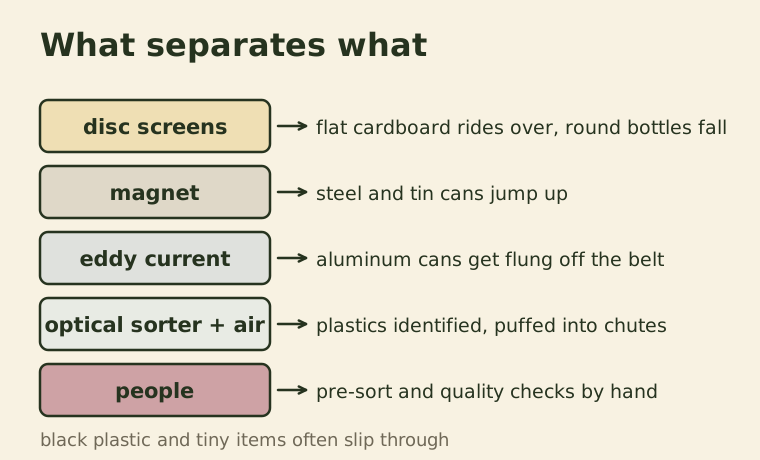
Workers at the start of the line pull out large items and obvious contaminants by hand: garden hoses, plastic bags, clothing, wires, scrap metal, and anything dangerous. This is one of the hardest and most hazardous jobs in the facility. Plastic bags and tanglers are removed early because, if they get through, they wrap around the spinning screens further down the line and force the whole facility to stop for cleaning.
Step 3: Separating paper and cardboard
The material moves onto disc screens: rows of rotating shafts with discs or stars. Flat, light materials like cardboard and paper ride over the top, while heavier, round items like bottles and cans fall through the gaps.
- Old corrugated cardboard (OCC) is separated first, as the largest flat items.
- Mixed paper, such as newspapers, office paper and cereal boxes, is separated next on finer screens.
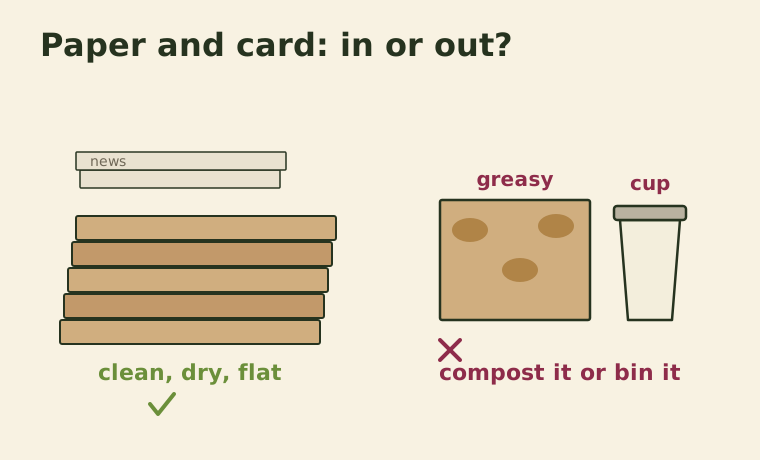
Wet or greasy paper is a problem here: it sticks to other items, jams screens and ends up mixed into the wrong stream. That's why our paper recycling guide stresses keeping it clean and dry.
Step 4: Glass
In many facilities, glass breaks during collection and handling. The broken glass falls through screens and is collected as mixed "cullet". Some facilities separate glass by color with optical systems. Ceramics, drinking glasses and window glass contaminate it because they melt at different temperatures.
Step 5: Metals
- Steel and tin cans are pulled out by a powerful overhead magnet.
- Aluminum cans are separated by an eddy current separator: a rotating magnetic field that induces a current in aluminum and literally throws the cans off the belt into their own bin.
Metals are among the most valuable materials in the stream, and aluminum in particular can be recycled over and over without loss of quality.
Step 6: Plastics
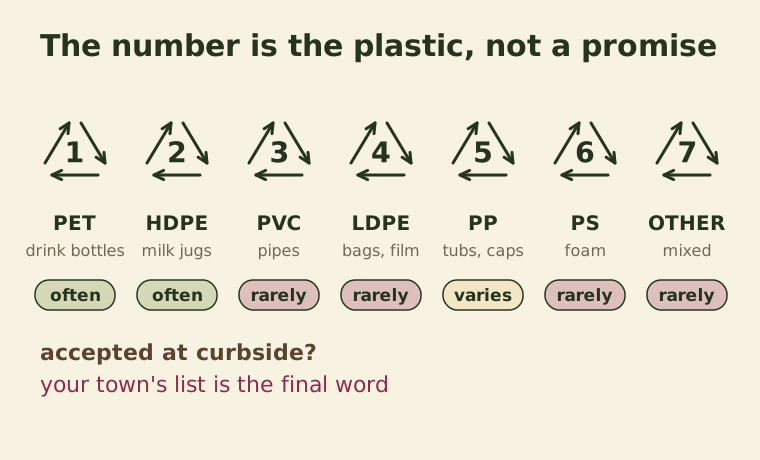
Plastics are sorted mostly by optical sorters. A sensor reads each item as it flies past using near-infrared light, which identifies the type of plastic. A precisely timed puff of compressed air then knocks the item into the right chute. PET bottles (code 1), HDPE jugs (code 2), and in many facilities PP tubs (code 5), are each separated this way.
Some materials confuse the sensors. Black plastic, for example, absorbs the light and often can't be identified, so it ends up as residue. Items smaller than a few centimeters may fall through screens before they reach the sorters at all. Our guide to recycling symbols explains why the code on a container doesn't guarantee it gets recycled.
Step 7: Quality control and baling
Workers check each sorted stream by hand and remove items that ended up in the wrong place. Each material is then compressed into dense bales weighing hundreds of kilograms.
Step 8: Sold as a raw material
Bales are sold to mills and processors, sometimes nearby, sometimes overseas:
| Material | Becomes |
|---|---|
| Cardboard and paper | New boxes, paperboard, tissue, egg cartons |
| PET bottles | New bottles, polyester fiber for clothes and carpets, packaging |
| HDPE jugs | New bottles, pipes, plastic lumber, garden furniture |
| Aluminum cans | New cans, often back on shelves within months |
| Steel cans | New steel products of all kinds |
| Glass | New bottles and jars, fiberglass insulation, road aggregate |
Buyers pay according to quality. A bale full of contaminants sells for much less or is rejected, which is why contamination costs recycling programs so much.
Step 9: What's left over
Everything that couldn't be sorted or wasn't recyclable becomes residue and goes to landfill or incineration. Contamination rates vary widely between programs, from a few percent to a quarter or more of what arrives.
What this means at home
Each step explains a familiar rule:
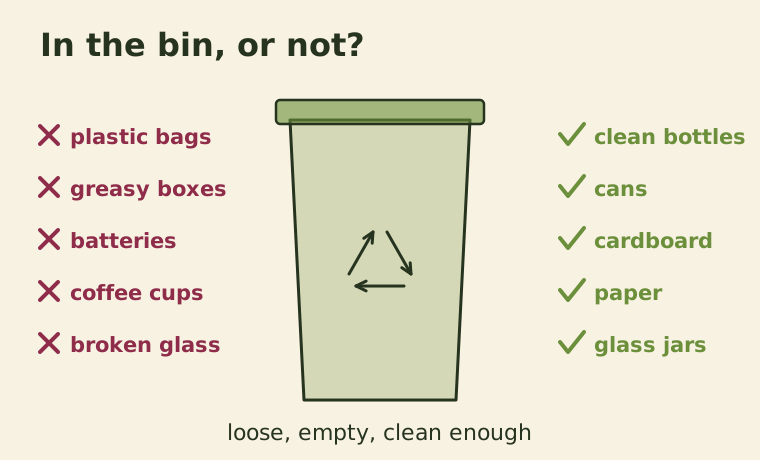
- Don't bag recyclables: bags get pulled off at pre-sort, contents and all.
- No hoses, cables or film: they wrap around the disc screens.
- Keep paper clean and dry: wet paper sticks and jams the screens.
- Empty containers: liquids soak paper and leftover food attracts pests.
- Don't recycle tiny items loose: they fall through screens and are lost.
- Batteries never go in: they can start fires when crushed in trucks and at the facility.
Our list of common recycling mistakes covers each of these in more detail.
Visit if you can
Many recycling facilities and municipal waste centers offer tours or open days, and some publish videos of their sorting lines. Seeing tons of material flying past at speed, and the workers picking out what doesn't belong, changes how most people fill their bins. It's a reminder that recycling is a manufacturing process, and like any process, it works best with clean inputs.
Keep reading
-
 Recycling
Paper and Cardboard Recycling: What Goes In, What Doesn't, and Why
Which paper and card can be recycled, the common contaminants, how to prepare boxes, and how many times fiber can actually be recycled.
-
 Recycling
12 Common Recycling Mistakes That Send Good Material to Landfill
Wishcycling, bagged recyclables, greasy boxes and tiny items. The errors that contaminate recycling and how to fix each one.
-
 Recycling
Recycling Symbols Explained: What the Numbers 1 to 7 on Plastic Really Mean
The triangle with a number doesn't mean an item is recyclable. Here's what each plastic code means, which ones are commonly accepted, and the other symbols to know.