
Recycling Plastic Bags and Film: Why Not Curbside and Where They Go
Why plastic bags and film tangle recycling machinery, which films store drop-off bins accept, the stretch test for mystery wrappers, and how to need fewer bags at all.
On this page
Plastic bags are one of the most common items people put in curbside recycling bins, and one of the most troublesome. In most places they are not accepted at the curb at all, even though many are made of a perfectly recyclable plastic. The problem is not the material; it is the shape.
Thin, flexible plastic, known as film, behaves very differently from bottles and cans inside a recycling plant. This guide explains why it causes trouble, where it can go instead, how to tell which films are accepted, and why using fewer bags beats recycling them.
Why bags jam recycling machines
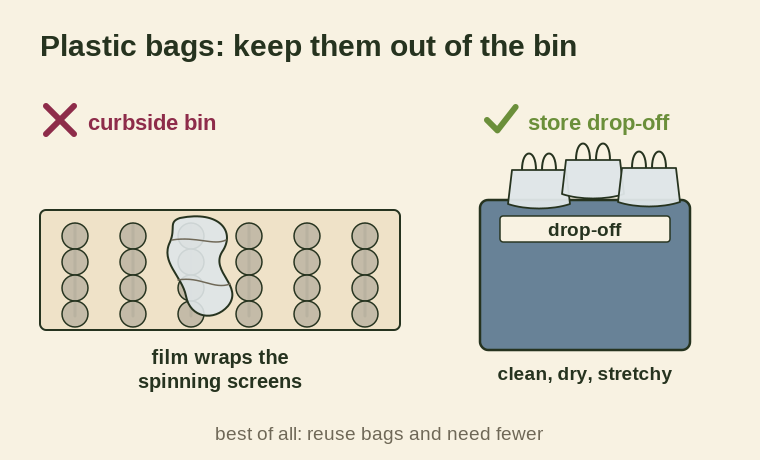
At a materials recovery facility, mixed recycling travels along conveyor belts and over disc screens: rows of spinning shafts fitted with discs that let small items fall through while flat paper and cardboard ride over the top. Plastic bags and film wrap around those shafts like string around a spool.
As the film builds up, the screens stop separating properly. Eventually the line has to be shut down so workers can climb in and cut the plastic off by hand, a slow and potentially dangerous job. Film that gets past the screens tends to end up mixed with paper, contaminating bales that are meant to be sold to paper mills. That is why most curbside programs ask you to keep bags out entirely, and why bags full of other recycling are often sent to landfill unopened. Our guide to what happens to your recycling shows the full sorting line.
Where plastic film can go instead
In many places, bags and some films can be returned to drop-off points, often bins near the entrance of large supermarkets and some other retailers. The film is collected separately, baled and sent to processors who can handle it, where it may become composite lumber for decking and benches, or new bags and film.
Rules vary by country and by scheme. In the US, collection bins are common at large grocery chains. In the UK, many big supermarkets run front-of-store soft plastic collection, and England plans to add plastic film to household collections by 2027. Check your local council or the retailer's own guidance, because what one scheme accepts another may not.
Be realistic about outcomes. Investigations that put GPS trackers in collected bags have found some film being landfilled or burned instead of recycled. Drop-off is far better than the curbside bin, but it is not a guarantee, which is one reason reducing film comes first.
What is usually accepted, and what is not
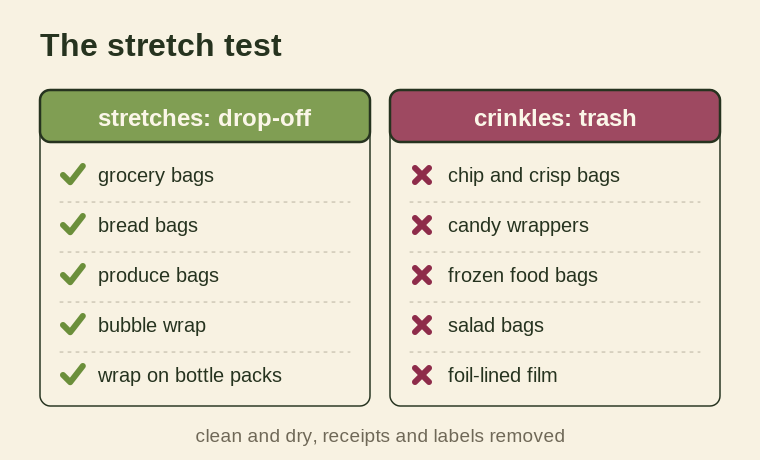
Most drop-off schemes accept polyethylene film, the soft, stretchy kind, as long as it is clean, dry and empty.
| Usually accepted (clean and dry) | Usually not accepted |
|---|---|
| Grocery and carrier bags (receipts removed) | Crisp and chip bags |
| Bread bags (crumbs shaken out) | Candy and snack wrappers |
| Produce and newspaper bags | Frozen food bags |
| Dry-cleaning bags | Pre-washed salad bags |
| Wrap around packs of bottles or toilet paper | Compostable or biodegradable bags |
| Zip-top bags (clean, hard zipper removed if asked) | Film with food or grease on it |
| Bubble wrap and deflated air pillows | Cling film, often |
| Plastic mailer envelopes (labels removed) | Plastic film with paper or foil layers |
The items in the right-hand column are usually made of several layers of different materials, or they are too dirty, so they cannot be reprocessed with ordinary film.
The stretch test
When a wrapper has no label, try this:
- Make sure it is clean and dry. Shake out crumbs and wipe off residue.
- Push your thumb into it. If it stretches and thins like a grocery bag, it is probably polyethylene and likely accepted.
- If it crinkles, tears straight like paper or has a shiny metallic inside, it is probably a multi-layer film. Leave it out.
- Check the label anyway. Look for the numbers 2 or 4 inside the chasing-arrows symbol, or a "store drop-off" style label. Our guide to recycling symbols explains the codes.
Keep a bag-of-bags under the sink or in a cupboard. When it is full, take it to the next shop that collects film.
Reduce first
Recycling film saves material, but avoiding it saves more. A few habits make a big difference:
- Keep reusable bags where you will remember them: by the door, in the car, in your work bag.
- Use the bags you already own. A 2011 life-cycle study for the UK Environment Agency estimated a cotton bag needs to be used over 130 times to have a lower carbon footprint than a thin plastic bag used once. The greenest bag is the one you keep reusing.
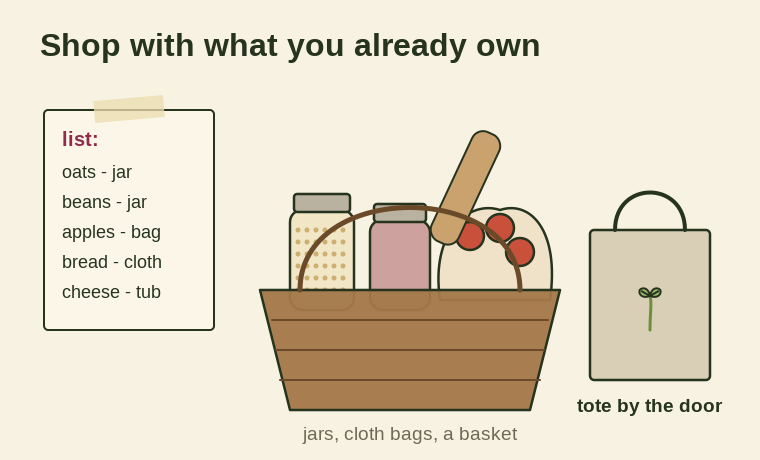
- Skip produce bags for loose fruit and vegetables, or use mesh bags. Our guide to zero-waste grocery shopping has more ideas.
- Reuse bags as bin liners, for wet swimwear, or to hold the bag-of-bags itself.
Common questions
Can I put plastic bags in the recycling if I tie them in a knot? No. A knotted ball of film still wraps around machinery. Unless your program explicitly accepts film at the curb, keep bags out.
Are "biodegradable" bags better? Usually not for recycling. They contaminate polyethylene film and should not go to drop-off points. Many only break down in industrial composting, not in a home bin.
Do I need to wash film before recycling? It must be clean and dry. A quick rinse and air-dry is fine for lightly soiled film; heavily greasy film belongs in the trash.
What about the plastic film on meat trays? It is usually a different plastic and is contaminated with food, so it goes in the trash in most areas.
Plastic film is a good material in the wrong place when it lands in curbside bins. Keep it out of the recycling cart, save the clean, stretchy kind for drop-off, and most of all, need less of it.
Keep reading
-
 Zero Waste Home
Zero-Waste Grocery Shopping: A Practical Guide for Beginners
How to cut packaging from your grocery shopping with bags and jars you already own, bulk stores, markets, the tare weight trick, smart planning and easy first swaps.
-
 Recycling
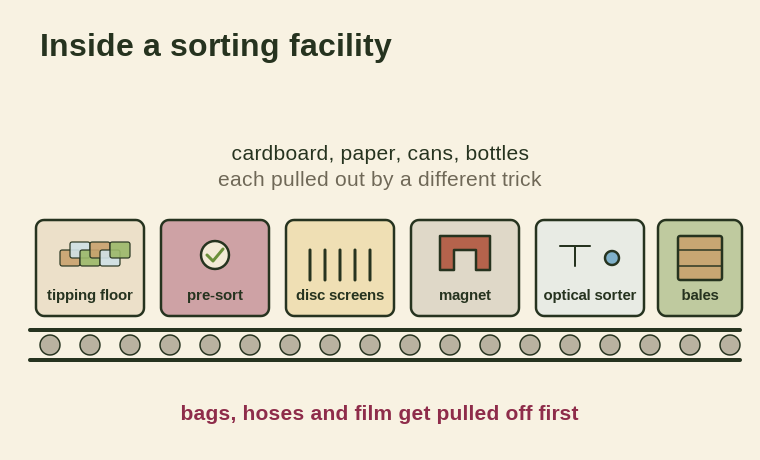
What Happens to Your Recycling After the Truck Leaves
A step-by-step look inside a recycling sorting facility, how each material is separated and sold, and why contamination and bagged items cause so many problems.
-
 Recycling
12 Common Recycling Mistakes That Send Good Material to Landfill
Wishcycling, bagged recyclables, greasy boxes and tiny items. The errors that contaminate recycling and how to fix each one.
More in Recycling
- What to Do With Old Clothes: Donate, Resell, Recycle or Reuse
- Glass and Metal Recycling: Cans, Jars, Foil, Lids and Aerosols
- What Happens to Your Recycling After the Truck Leaves
- Paper and Cardboard Recycling: What Goes In, What Doesn't, and Why
- How to Recycle Batteries and Old Electronics Safely
- 12 Common Recycling Mistakes That Send Good Material to Landfill
- Recycling Symbols Explained: What the Numbers 1 to 7 on Plastic Really Mean
- Household Hazardous Waste: How to Dispose of Paint, Oil and Medicines