
Recycling Symbols Explained: What the Numbers 1 to 7 on Plastic Really Mean
The triangle with a number doesn't mean an item is recyclable. Here's what each plastic code means, which ones are commonly accepted, and the other symbols to know.
On this page
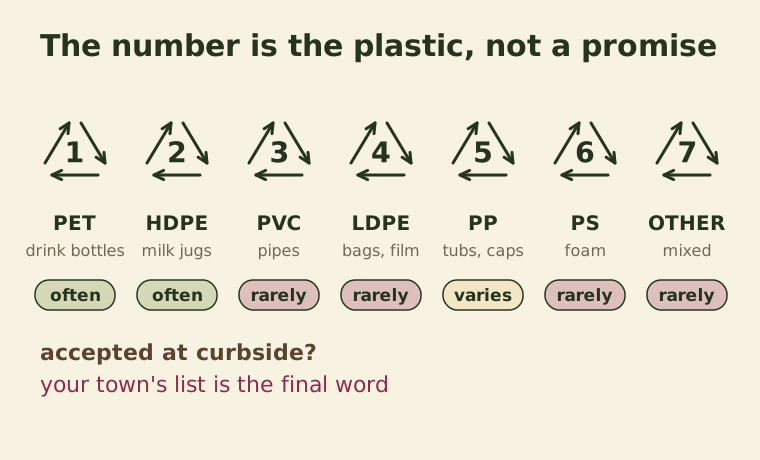
Turn over almost any plastic container and you will find a small triangle of arrows with a number inside. Most people assume it means "recyclable". It does not. The number is a resin identification code, which tells recycling facilities what type of plastic the item is made from. Whether that plastic is actually collected and recycled depends entirely on where you live.
Understanding the codes helps you sort correctly, avoid contaminating your recycling, and make better choices when you shop.
The seven plastic codes
1. PET or PETE (polyethylene terephthalate)
Found in: water and soda bottles, cooking oil bottles, some food trays and clamshells.
Recycling: The most widely recycled plastic in the world. Bottles are turned into new bottles, polyester fiber for clothing and carpets, and packaging. Thin clamshells and trays made of PET are accepted in fewer places than bottles, because they are a slightly different form.
2. HDPE (high-density polyethylene)
Found in: milk jugs, detergent and shampoo bottles, some grocery bags, rigid tubs.
Recycling: Widely accepted. Recycled into new bottles, plastic lumber, pipes and outdoor furniture.
3. PVC or V (polyvinyl chloride)
Found in: pipes, window frames, some cling films, blister packs, some bottles.
Recycling: Rarely accepted in household recycling. It can contaminate other plastics during processing.
4. LDPE (low-density polyethylene)
Found in: plastic bags, bread bags, squeeze bottles, some film wrapping.
Recycling: Rigid LDPE items are accepted in some places. Bags and film usually are not accepted in curbside bins, because they wrap around sorting machinery. Many supermarkets run separate drop-off points for clean, dry plastic film.
5. PP (polypropylene)
Found in: yogurt pots, margarine tubs, bottle caps, takeaway containers, medicine bottles.
Recycling: Increasingly accepted, but not everywhere. Check your local program.
6. PS (polystyrene)
Found in: foam cups and food trays, packing peanuts, disposable cutlery, some yogurt cups.
Recycling: Rarely accepted. Expanded foam is mostly air, light and bulky, which makes it uneconomical to collect. Some specialist drop-off points take clean foam.
7. Other
Found in: mixed or layered plastics, polycarbonate, some bioplastics like PLA, multi-material packaging.
Recycling: Generally not recyclable through household programs. Code 7 is a catch-all for "none of the above".
Quick summary
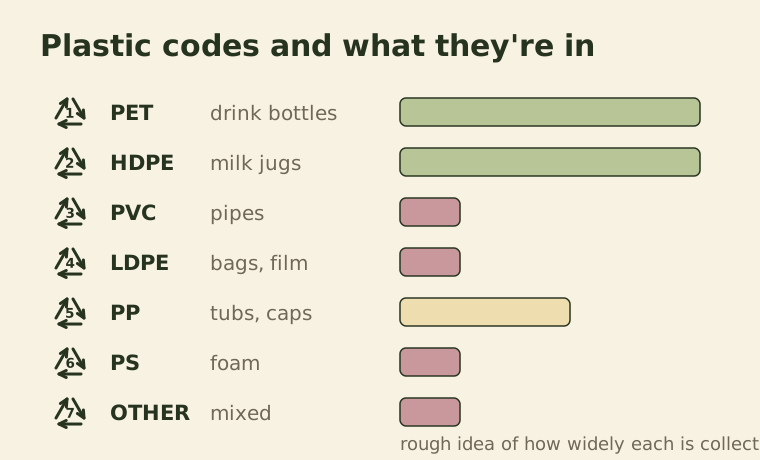
| Code | Common items | Usually accepted at curbside? |
|---|---|---|
| 1 PET | Drink bottles | Yes, very widely |
| 2 HDPE | Milk jugs, detergent bottles | Yes, very widely |
| 3 PVC | Pipes, blister packs | Rarely |
| 4 LDPE | Bags, film | Rigid items sometimes; bags usually via store drop-off |
| 5 PP | Tubs, caps, takeaway boxes | Often, varies |
| 6 PS | Foam, disposable cutlery | Rarely |
| 7 Other | Mixed plastics, PLA | Rarely |
Acceptance differs between countries and even between neighboring towns. Your municipality's website or the instructions printed on your bin are the final word.
Other symbols you will see
The Mobius loop (three chasing arrows without a number) means the item is technically recyclable, or, if it has a percentage inside, that it contains that much recycled material. It does not guarantee your local program accepts it.
The Green Dot (two interlocking arrows in a circle, common in Europe) means the manufacturer paid into a packaging recovery scheme. It does not mean the package is recyclable or made from recycled material.
The tidy man (a figure dropping something into a bin) is simply a reminder not to litter.
"Widely recycled" and "Check locally" labels appear on packaging in several countries. They are a helpful guide, but your local rules still take priority.
Compostable or seedling logos indicate the item is certified compostable, usually in industrial composting facilities. These items should not go in plastic recycling, and most do not break down in home compost bins.
What to do with this information
- Learn your local list. Print it or save it on your phone. Ten minutes of reading saves a year of guesswork.
- Recycle the sure things well. Bottles, jugs, cans, paper and cardboard make up most of the value in recycling. Empty and lightly rinse them.
- When in doubt, leave it out. An unaccepted item can contaminate a whole batch and send it to landfill. We cover this and other errors in common recycling mistakes.
- Buy with the end in mind. Choosing codes 1 and 2, glass, metal or paper over codes 3, 6 and 7 makes it far more likely your packaging gets a second life.
- Reduce and reuse first. Recycling is valuable, but avoiding the packaging altogether, or reusing containers like glass jars, saves even more energy and material.
The little number on the bottom of a container is useful once you know what it is: an ingredient label for plastic, not a promise.
Keep reading
-
 Recycling
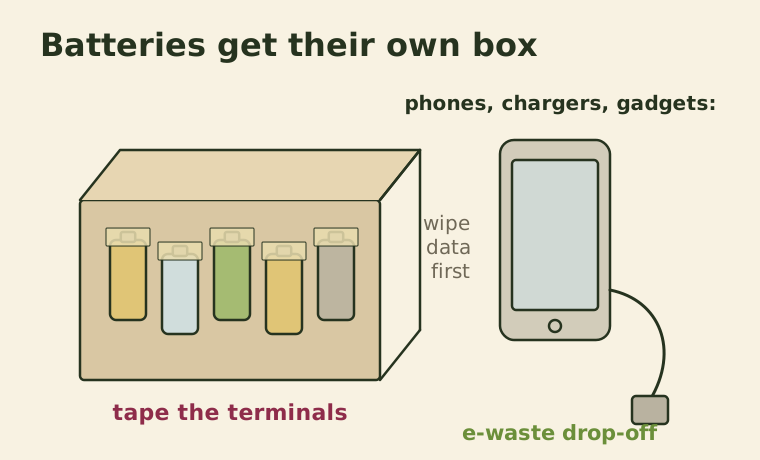
How to Recycle Batteries and Old Electronics Safely
Why batteries must stay out of the bin, how to tape and store them, where to drop off e-waste, and how to wipe your data before you let a device go.
-
 Recycling
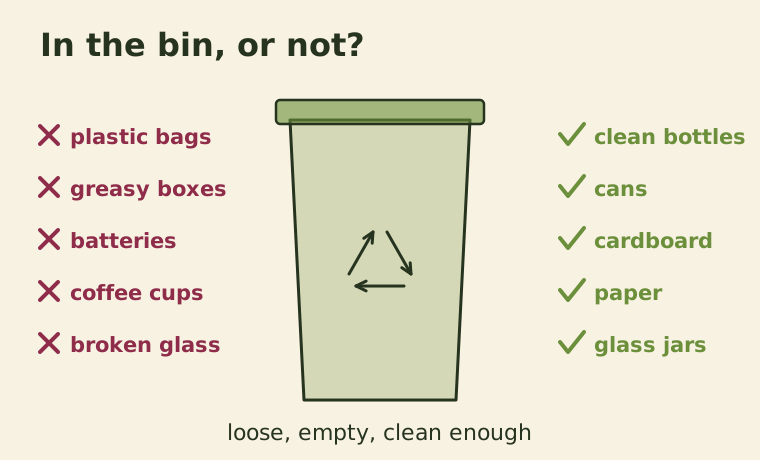
12 Common Recycling Mistakes That Send Good Material to Landfill
Wishcycling, bagged recyclables, greasy boxes and tiny items. The errors that contaminate recycling and how to fix each one.
-
 Reuse & Upcycling
15 Practical Ways to Reuse Glass Jars Around the House
How to remove labels and smells from jars, plus fifteen genuinely useful second jobs for them in the kitchen, garden and workshop.