
Paper and Cardboard Recycling: What Goes In, What Doesn't, and Why
Which paper and card can be recycled, the common contaminants, how to prepare boxes, and how many times fiber can actually be recycled.
On this page
Paper and cardboard are among the most recycled materials in the world. They are easy to collect, there is strong demand for recycled fiber, and the process is well established. Even so, a lot of paper that ends up in recycling bins cannot be used, usually because it is wet, greasy, coated or mixed with plastic.
Knowing what the mills can and cannot handle helps your paper actually become new paper.
How paper recycling works
- Collection and sorting. Paper is separated into grades, such as cardboard, newspapers and mixed office paper.
- Pulping. The paper is mixed with water and churned into a slurry, which breaks it back down into individual fibers.
- Screening and cleaning. Staples, tape, plastic windows and other contaminants are screened out. Some grades are de-inked.
- Making new paper. The clean pulp is spread, pressed and dried into new sheets or board.
Each time paper is recycled, its fibers get shorter and weaker. Fibers can typically go through the process around five to seven times before they become too short to bind together. That is why recycled paper often includes some fresh fiber, and why reusing boxes before recycling them is even better.
What usually goes in
- Corrugated cardboard boxes (flattened)
- Thin card: cereal boxes, shoe boxes, toilet roll tubes
- Newspapers and magazines (including glossy magazines in most programs)
- Office and printer paper, envelopes (window envelopes are usually fine)
- Junk mail, brochures and catalogs
- Paper bags
- Books with the hard covers removed (or donate them)
What usually doesn't
| Item | Why not | What to do instead |
|---|---|---|
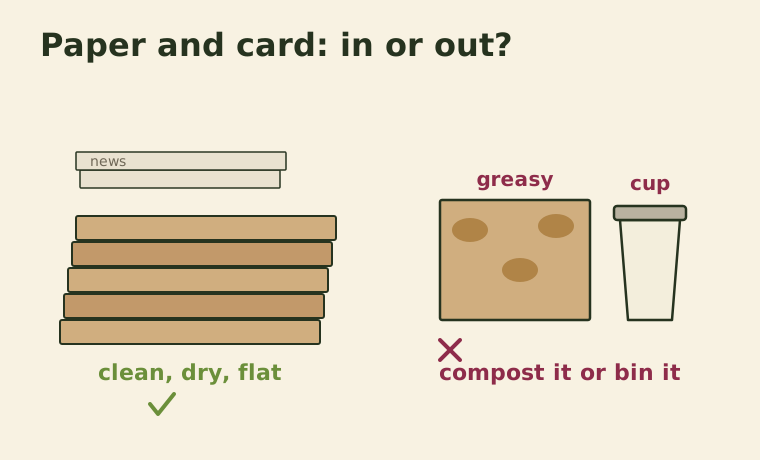
| Greasy pizza boxes or food-soiled paper | Oil can't be separated from fiber | Recycle the clean parts, compost the greasy part |
| Paper towels, napkins, tissues | Fibers are too short, often soiled | Compost them |
| Disposable coffee cups | Plastic lining | Check for special collection, or use a reusable cup |
| Waxed or plastic-coated paper and card | Coating doesn't pulp | Trash, unless your program accepts it |
| Receipts (thermal paper) | Often contain BPA or BPS chemicals | Trash; decline paper receipts where possible |
| Wet paper | Weak fibers, hard to sort | Compost it |
| Photographs | Chemical coatings | Trash, or keep them |
| Wrapping paper with glitter, foil or plastic | Non-paper materials | Reuse it, or trash |
| Paper with lots of tape or stickers | Adhesive contaminates pulp | Remove what you can |
Rules differ between programs. Some accept cartons, some accept shredded paper in a paper bag, and some do not. Your local guidance always comes first.
How to prepare cardboard and paper
- Empty boxes completely, including packing materials. Remove plastic air pillows and polystyrene.
- Flatten boxes. They take up far less space in the bin and the truck.
- Remove large pieces of tape and plastic labels when it's easy. Small bits of tape and staples are usually screened out.
- Keep it dry. Wet cardboard is often rejected. If your recycling is collected in open boxes, put paper out on dry days or keep it covered.
- Don't bag it unless your program asks you to.
Shredded paper
Shredded paper has very short fibers and the small pieces fall through sorting screens, so many curbside programs do not accept it loose. Some accept it in a closed paper bag. If yours does not, shredded paper is an excellent brown material for a compost pile or bedding for a worm bin, as long as it is plain paper and not glossy.
Reuse before you recycle
Cardboard and paper often have plenty of use left in them.
- Boxes: reuse for storage, moving, sending parcels or giving away to neighbors who are moving.
- Gardening: lay plain cardboard over grass and weeds as a base for a new bed (sheet mulching), or tear it up as a brown material for compost. Remove tape and labels first.
- Seed starting: toilet roll tubes make biodegradable pots for peas and beans. Our guide to starting seeds indoors explains how to use them.
- Scrap paper: print on both sides, and keep single-sided sheets for notes and lists.
- Gift wrap: wrap presents in newspaper, brown paper or fabric that can be reused.
Reduce the paper coming in
- Sign up for paperless bills and statements.
- Put a "no junk mail" sign on your mailbox and opt out of catalog mailing lists.
- Decline printed receipts when an email receipt is available.
- Choose products with less packaging, or with packaging made of recycled card.
The quick version
Recycle clean, dry, flat paper and cardboard. Compost the greasy, wet and tissue-type paper. Keep plastic-lined and coated paper out of the bin. And remember the order: reduce, reuse, then recycle. For the full list of everyday errors that send good material to landfill, see our guide to common recycling mistakes.
Keep reading
-
 Recycling
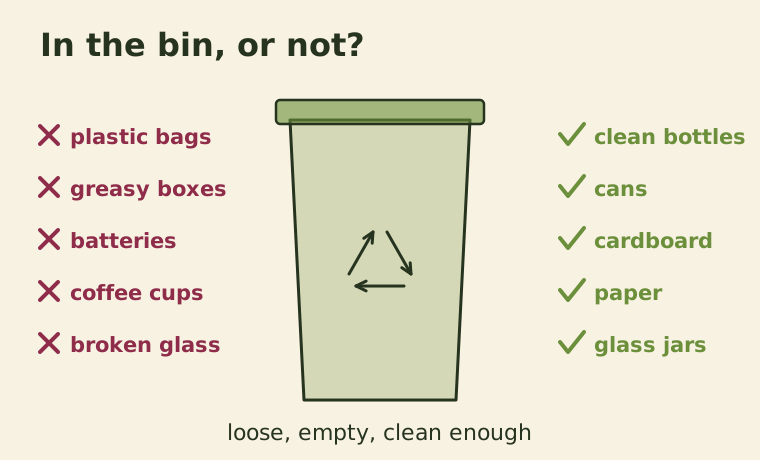
12 Common Recycling Mistakes That Send Good Material to Landfill
Wishcycling, bagged recyclables, greasy boxes and tiny items. The errors that contaminate recycling and how to fix each one.
-
 Recycling
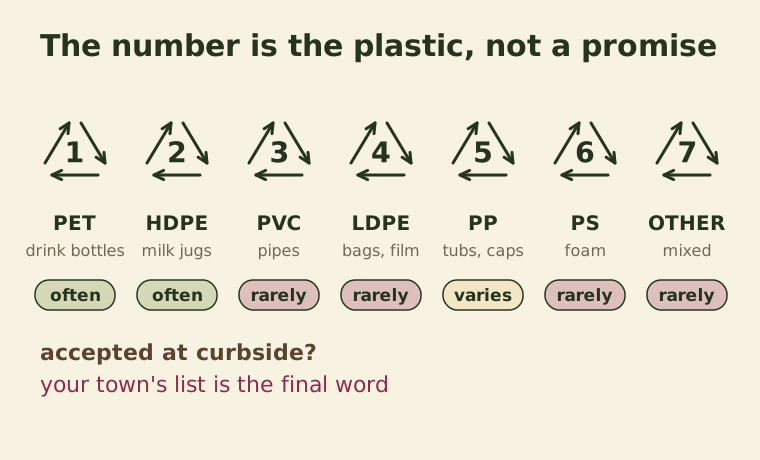
Recycling Symbols Explained: What the Numbers 1 to 7 on Plastic Really Mean
The triangle with a number doesn't mean an item is recyclable. Here's what each plastic code means, which ones are commonly accepted, and the other symbols to know.
-
 Composting
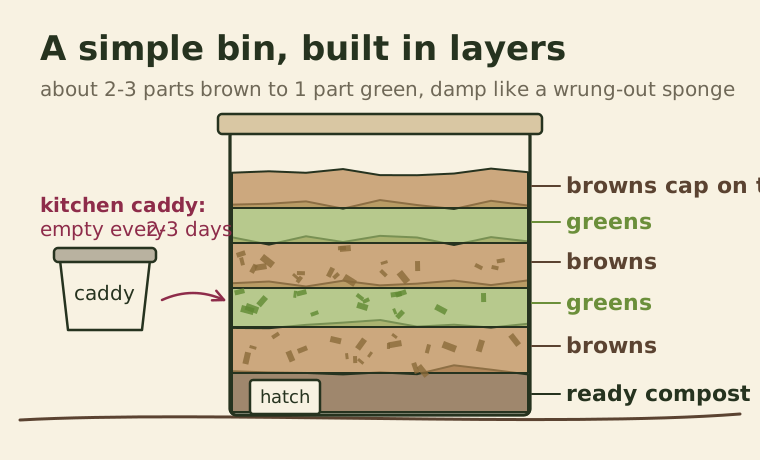
How to Start Composting at Home: A Beginner's Setup That Actually Works
Choose a bin, find the right spot, learn the two ingredients that matter, and get your first finished compost in three to six months.