
Glass and Metal Recycling: Cans, Jars, Foil, Lids and Aerosols
Glass and metal can be recycled again and again without losing quality. What goes in the bin, what doesn't, how to prepare it, and the tricky items like foil, lids and aerosol cans.
On this page
Glass and metal are the recycling success stories. Unlike paper and most plastics, they can be melted and remade over and over without losing quality. An aluminum can is often back on the shelf as a new can within a couple of months, and recycling it uses about 95 percent less energy than making aluminum from ore.
They are also easy to get wrong, because some glass and metal items look recyclable but aren't. Here is how to sort them. Rules vary by town, so always check your local council's list; this guide covers what is accepted in most places.
Glass: what goes in
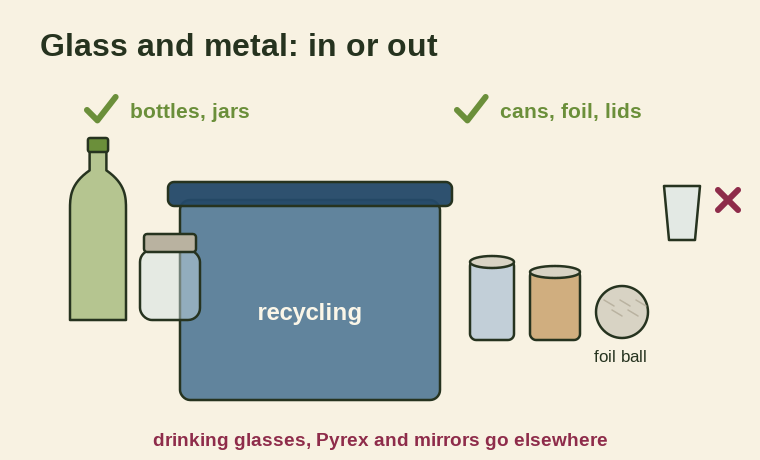
Yes, usually: - Drink bottles: wine, beer, juice, soda - Food jars: jam, sauces, baby food, pickles - Perfume and cosmetic bottles, if empty
No, usually not: - Drinking glasses and wine glasses - Window glass and mirrors - Ovenproof glass like Pyrex - Light bulbs - Ceramics, china and mugs
Why the difference? Bottles and jars are made from container glass, which melts at the same temperature. Drinking glasses, ovenware and windows are made differently and melt at other temperatures. Even a small piece of ovenproof glass or ceramic can ruin a whole batch of new bottles, leaving flaws or making them shatter.
How to prepare glass
- Empty it and give it a quick rinse. It doesn't need to be spotless; a swirl of water is enough.
- Leave labels on. They burn or wash off during recycling.
- Lids off. Metal lids go in with metal (see below); plastic lids follow your local plastic rules.
- Don't break it. Whole bottles are easier to sort. Broken glass can be a danger to workers.
- Separate by color if your area has color-coded bottle banks: clear, green and brown glass are made into different products.
Metal: what goes in
Yes, usually: - Aluminum drink cans - Steel and tin food cans (soup, beans, pet food) - Clean aluminum foil and foil trays - Metal jar lids and bottle caps - Empty aerosol cans (deodorant, cooking spray), with the plastic cap removed - Biscuit and sweet tins
No, usually not: - Paint tins with paint still in them - Gas canisters and camping gas bottles - Batteries (these need special drop-off; see our battery and electronics guide) - Pots, pans, cutlery and tools: these are recyclable as scrap metal, but at a recycling center, not in the home bin - Coffee pods, unless your area has a specific scheme
How to prepare metal
- Rinse cans to remove food. It stops smells and pests in your bin.
- Don't crush cans unless your council says to. Some sorting machines identify cans by their shape.
- Scrunch foil into a ball at least the size of a fist. Small flat pieces are too light to be sorted and get lost.
- The scrunch test: if it stays scrunched, it's foil and can go in. If it springs back, it's probably metallized plastic (like crisp packets), which can't.
- Put loose lids and caps inside a can and pinch the top closed, so they don't slip through the machinery.
Tricky items
| Item | Answer |
|---|---|
| Aerosol cans | Yes if fully empty; never pierce or crush them |
| Foil-lined cartons (juice, milk) | Separate stream in many areas; check locally |
| Crisp and snack bags | No; they are plastic with a metal coating |
| Blister packs (pills) | No in home bins; some pharmacies collect them |
| Candle tea-light cups | Yes, once the wax is removed |
| Pet food pouches | No; mixed plastic and foil layers |
| Broken glass | Wrap it and put it in the trash |
What happens next
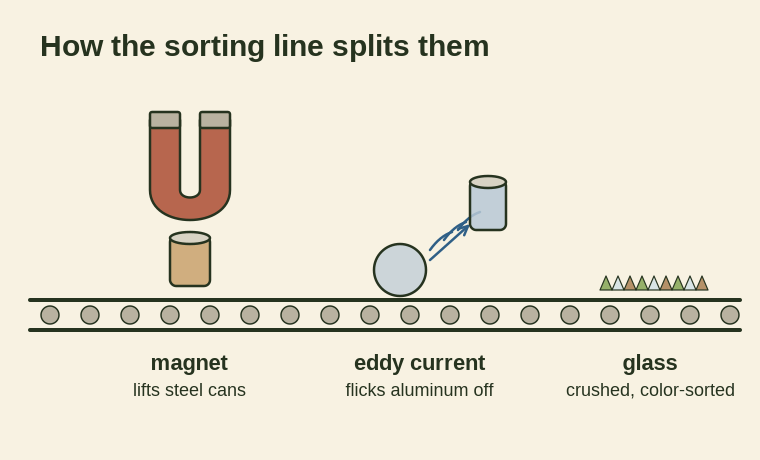
At a sorting facility, a powerful magnet lifts out steel cans. An eddy current separator then makes aluminum cans jump off the conveyor. Glass is crushed into cullet, cleaned, sorted by color with optical sorters, and melted with sand to make new bottles. Our guide to what happens to your recycling shows the whole line.
Common questions
Do I need to remove can labels? No. They come off in the process.
Can I recycle a can with a little food left? A bit of residue is fine, but empty and rinse quickly. Greasy, food-filled containers can contaminate paper in mixed bins.
What about deposit return schemes? Where they exist, returning bottles and cans for a deposit gives some of the cleanest, highest-quality recycling. Use them.
Glass and metal are worth getting right: they can be recycled endlessly. Empty, rinse, keep lids with metal, leave out drinking glasses and ovenware, and remember the common recycling mistakes that contaminate whole loads.
Keep reading
-
 Recycling
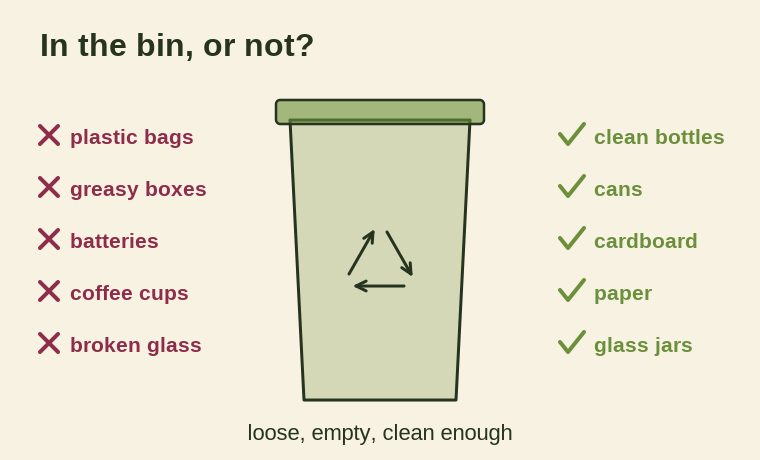
12 Common Recycling Mistakes That Send Good Material to Landfill
Wishcycling, bagged recyclables, greasy boxes and tiny items. The errors that contaminate recycling and how to fix each one.
-
 Reuse & Upcycling
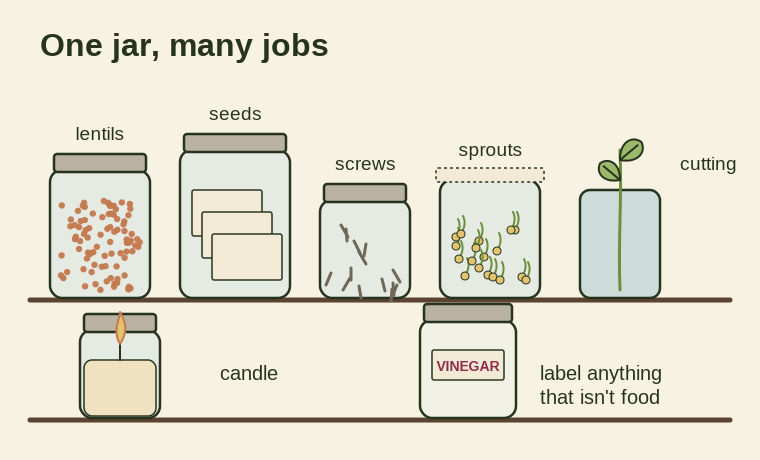
15 Practical Ways to Reuse Glass Jars Around the House
How to remove labels and smells from jars, plus fifteen genuinely useful second jobs for them in the kitchen, garden and workshop.
-
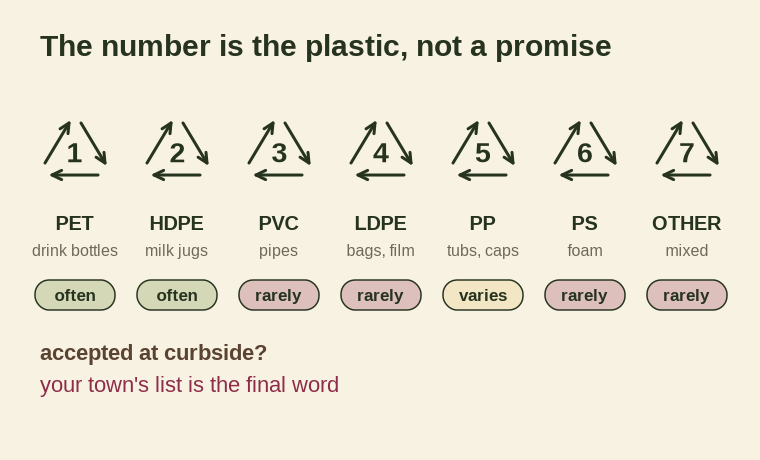 Recycling
 Symbols Explained: What the Numbers 1 to 7 on Plastic Really Mean
The triangle with a number doesn't mean an item is recyclable. Here's what each plastic code means, which ones are commonly accepted, and the other symbols to know.
More in Recycling
- What Happens to Your Recycling After the Truck Leaves
- Paper and Cardboard Recycling: What Goes In, What Doesn't, and Why
- How to Recycle Batteries and Old Electronics Safely
- 12 Common Recycling Mistakes That Send Good Material to Landfill
- Recycling Symbols Explained: What the Numbers 1 to 7 on Plastic Really Mean
- Household Hazardous Waste: How to Dispose of Paint, Oil and Medicines
- Recycling Plastic Bags and Film: Why Not Curbside and Where They Go
- What to Do With Old Clothes: Donate, Resell, Recycle or Reuse