
Household Hazardous Waste: How to Dispose of Paint, Oil and Medicines
How to get rid of leftover paint, motor oil, garden chemicals, old medicines, fluorescent bulbs and other hazardous waste safely, and how to store it until then.
On this page
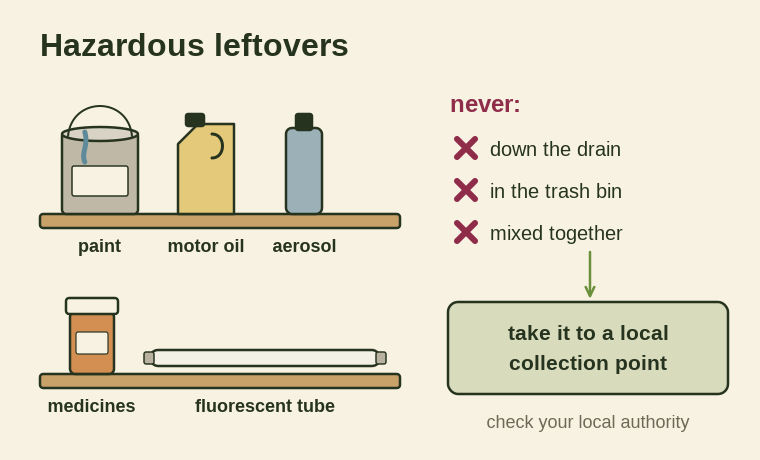
Most homes have a shelf in the garage, shed or under the sink with half-empty paint cans, an old bottle of weedkiller, used motor oil, expired pills and a few dead bulbs. These products are perfectly legal to own, but once they become waste they need special handling. Poured down a drain, tipped on the ground or thrown in the trash, they can poison water, start fires in collection trucks or harm the people who handle the waste.
The rules differ from town to town, so this guide gives the general approach and the questions to ask. Your local authority, waste department or council website has the final word for where you live.
What counts as household hazardous waste
A product is usually treated as hazardous if it is flammable, corrosive, toxic or reactive. The label often tells you: look for words such as Danger, Warning, Caution, Poison, Flammable or Corrosive, or for hazard pictograms.
Common examples:
- Oil-based paint, varnish, stains, paint thinner and solvents
- Used motor oil, oil filters, antifreeze and brake fluid
- Pesticides, weedkillers and some fertilizers with added chemicals
- Pool and spa chemicals
- Strong cleaners such as drain openers and oven cleaners
- Fluorescent tubes and compact fluorescent bulbs (they contain a small amount of mercury)
- Mercury thermometers
- Propane and camping gas cylinders, and full or partly full aerosol cans
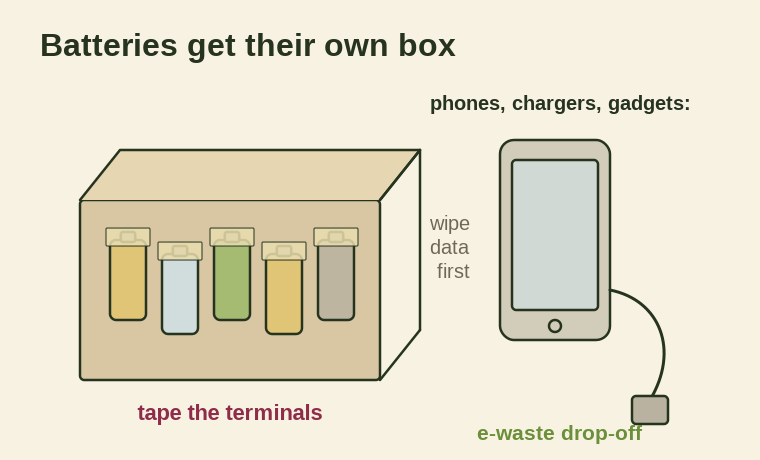
- Batteries and electronics, covered in our battery and electronics recycling guide
- Medicines and used needles (sharps), which usually have their own systems
Three rules before anything else
- Never pour it down the drain, toilet or storm drain. Storm drains often lead straight to rivers, and wastewater plants are not designed to remove most of these chemicals.
- Never put liquids in the trash or recycling bin. Crushed in a truck, a leaking can or bottle can splash workers or catch fire.
- Never mix products. Bleach mixed with ammonia or with acids (such as some toilet cleaners) releases toxic gases. Keep each product in its own container.
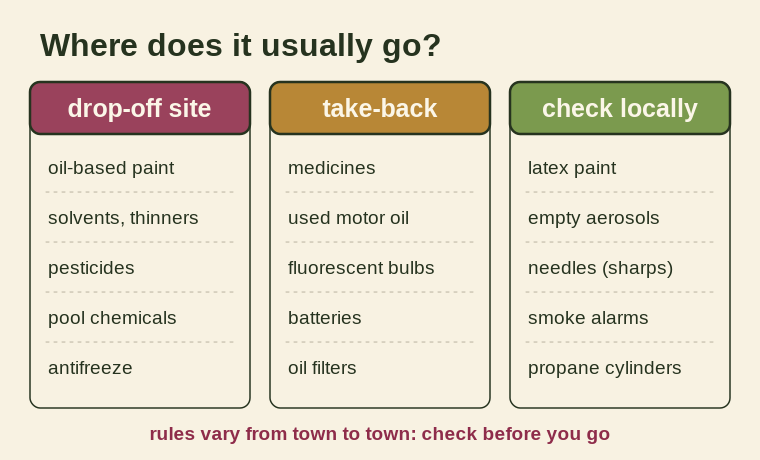
Where it usually goes
| Item | Usual route (check locally) |
|---|---|
| Oil-based paint, solvents, varnish | Household hazardous waste site or collection day |
| Water-based (latex) paint | Paint reuse or take-back where available; in some areas, dried out and put in the trash |
| Used motor oil and filters | Many service stations, garages or auto parts stores accept them |
| Pesticides and pool chemicals | Household hazardous waste site |
| Medicines | Pharmacy take-back or drug take-back events |
| Fluorescent bulbs | Hazardous waste site or a retailer take-back |
| Needles (sharps) | Approved sharps container, returned as your local program directs |
| Propane cylinders | Hazardous waste site or a cylinder exchange |
Many areas run a permanent drop-off site, while others hold collection days a few times a year. Search your local authority's website for "household hazardous waste" or call them.
Paint: the most common leftover
Paint is usually the bulkiest item. Before disposing of it, see if someone can use it: community groups, schools, theater groups and reuse centers sometimes take good paint.
For water-based (latex) paint, some local authorities allow you to dry out small amounts and put the hardened can in the trash. Leave a thin layer open in a ventilated place, or stir in an absorbent such as cat litter or sawdust until it is solid. Only do this where it is allowed.
Oil-based paint, varnish and thinners are flammable and always belong at a hazardous waste site. Never dry them out indoors.
Old and unused medicines
Medicines flushed or poured away can end up in rivers, and pills in the trash can be found by children, pets or others.
- Use a take-back program first. Many pharmacies accept unused medicines, and some areas hold drug take-back days.
- If there is no take-back option, follow your local health authority's advice. A common recommendation is to mix pills with something unappealing, such as used coffee grounds or cat litter, seal it in a bag and put it in the trash.
- Only flush medicines if the label or your pharmacist specifically says to.
- Scratch out personal details on labels before throwing away empty bottles.
Fluorescent bulbs and broken bulbs
Fluorescent tubes and compact fluorescent bulbs contain a small amount of mercury, so they should go to a collection point rather than the trash. If one breaks:
- Get people and pets out of the room and open a window for at least 10 minutes.
- Turn off any heating or air conditioning that circulates air.
- Scoop up pieces with stiff card and pick up small fragments with sticky tape. Avoid vacuuming if you can, as it can spread mercury vapor and powder.
- Seal everything in a glass jar or sealed bag and take it to a hazardous waste collection point.
Storing hazardous waste until drop-off
- Keep products in their original containers with labels intact.
- Store them upright, closed and out of reach of children and pets, in a cool place away from heat and flames.
- For the trip, pack them in a sturdy box in the trunk, wedged so they cannot tip.
Buy less, store less
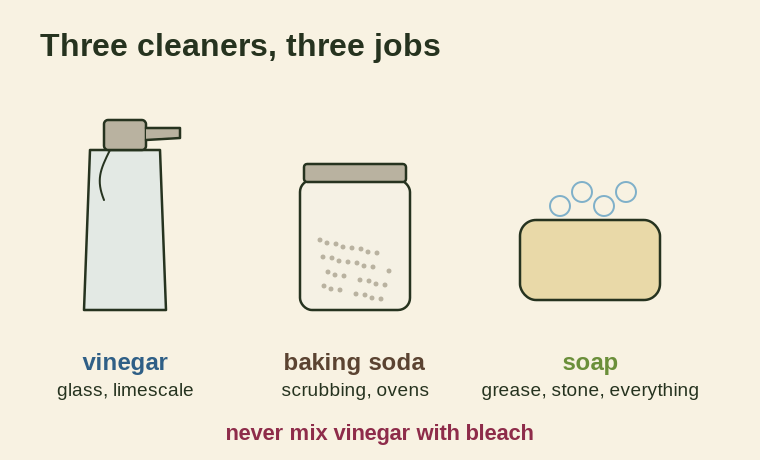
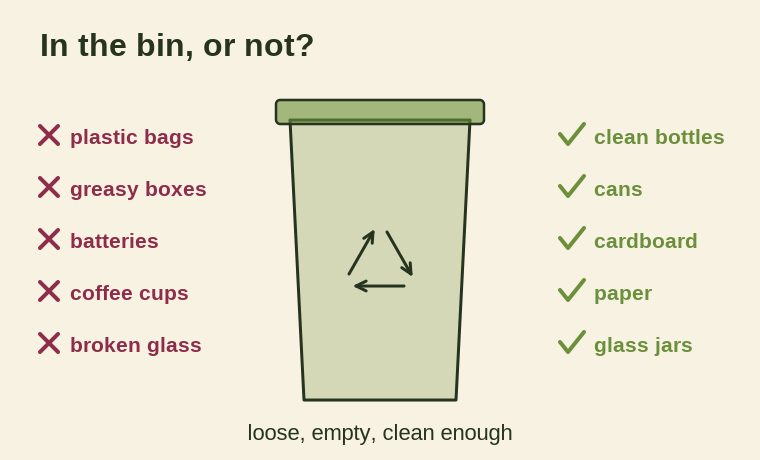
The easiest hazardous waste is the kind you never create. Buy only the paint you need (stores can help estimate), choose water-based products, share leftovers with neighbors, and switch to gentler options such as vinegar and baking soda cleaners where they do the job. Our list of common recycling mistakes also shows why these items should never go in the recycling bin.
Common questions
Are empty aerosol cans hazardous? Completely empty cans are accepted with metal recycling in many areas. Cans with product or pressure left inside go to hazardous waste.
What about smoke alarms? Some contain a tiny radioactive source. Many manufacturers take them back; otherwise follow your local authority's instructions.
Can I put motor oil in the trash if it's sealed? No. Used oil can be re-refined, and most areas have free drop-off points.
A shelf of old chemicals is easy to ignore, but one trip to the right drop-off clears it safely. Find your local collection site once and keep the details for next time.
Keep reading
-
 Zero Waste Home
Natural Cleaners With Vinegar and Baking Soda: Recipes and Safety Rules
What vinegar, baking soda and soap each clean best, five simple recipes, which surfaces to avoid, and the chemical mixes you must never make.
-
 Recycling
How to Recycle Batteries and Old Electronics Safely
Why batteries must stay out of the bin, how to tape and store them, where to drop off e-waste, and how to wipe your data before you let a device go.
-
 Recycling
12 Common Recycling Mistakes That Send Good Material to Landfill
Wishcycling, bagged recyclables, greasy boxes and tiny items. The errors that contaminate recycling and how to fix each one.
More in Recycling
- Recycling Plastic Bags and Film: Why Not Curbside and Where They Go
- What to Do With Old Clothes: Donate, Resell, Recycle or Reuse
- Glass and Metal Recycling: Cans, Jars, Foil, Lids and Aerosols
- What Happens to Your Recycling After the Truck Leaves
- Paper and Cardboard Recycling: What Goes In, What Doesn't, and Why
- How to Recycle Batteries and Old Electronics Safely
- 12 Common Recycling Mistakes That Send Good Material to Landfill
- Recycling Symbols Explained: What the Numbers 1 to 7 on Plastic Really Mean