
What to Do With Old Clothes: Donate, Resell, Recycle or Reuse
Where old clothes, shoes and household textiles should go: donating, reselling, textile banks, store take-back schemes, and what really can't be recycled.
On this page
Clothes and household textiles are one of the fastest-growing parts of household waste. The US Environmental Protection Agency estimated that around 17 million tons of textile waste was generated in 2018, and most of it went to landfill. Yet a large share of discarded clothing is still wearable, and much of the rest could become rags, insulation or stuffing.
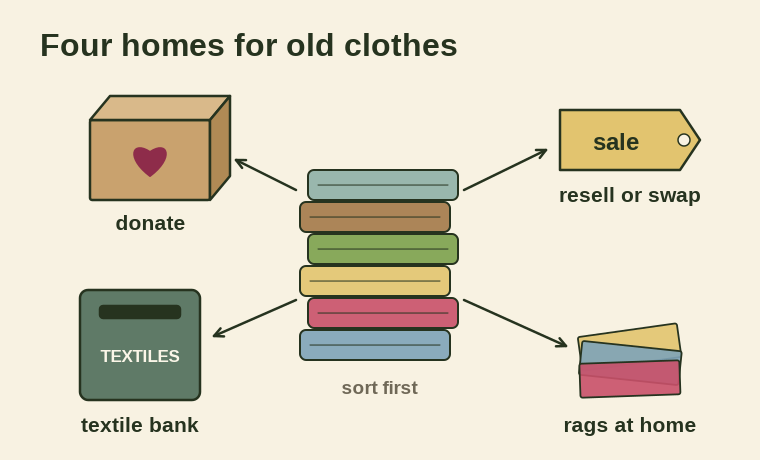
The good news is that there is a home for almost every item, from a barely worn jacket to a single holey sock. The trick is matching each piece to the right route. This guide walks through the options, from the most valuable to the last resort.
Start by sorting into three piles
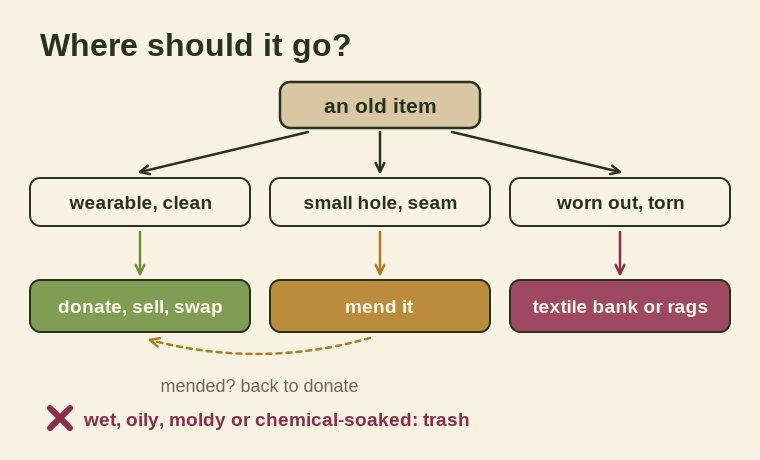
Before you take anything anywhere, sort it:
- Wearable and clean: no stains, holes or broken zips. These can be donated, sold or swapped.
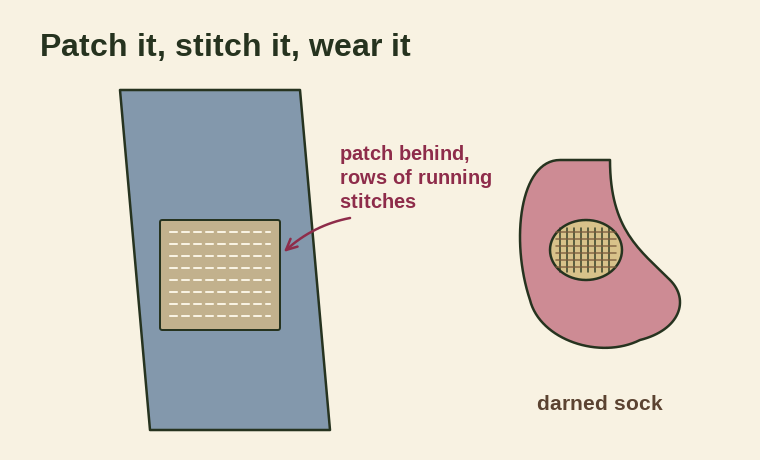
- Repairable: a missing button, a split seam, a small hole. A few minutes of visible mending can move them back to pile one, or keep them in your own wardrobe.
- Worn out: stained, torn, stretched, or single socks. These go to textile recycling or get reused at home.
Wash everything first. Damp or dirty items can spoil a whole bag, and wet textiles grow mold that makes them unusable for any route.
Wearable items: donate, resell or swap
| Route | Best for | Good to know |
|---|---|---|
| Charity shops and donation centers | Everyday clothes, shoes, bedding | Only a portion is sold in store; the rest is usually passed on to textile merchants |
| Shelters and community groups | Coats, warm clothes, new underwear and socks | Ask first; needs are specific and change with the seasons |
| Online resale and consignment | Good brands, outerwear, special items | Takes time to photograph and list; consignment shops take a cut |
| Clothes swaps | Kids' clothes, things that no longer fit | Free; often organized by schools, libraries or local groups |
Some practical tips:
- Tie or band shoes in pairs. Single shoes are hard to use.
- Fold and bag items so they stay clean in transit.
- Donate in season. Winter coats are most useful in autumn.
- Donate only new underwear and socks. Used ones go to textile recycling.
Worn-out items: textile banks and take-back schemes
Many towns have textile banks, large bins in parking lots or at recycling centers, and some areas have curbside textile collections. Many textile banks accept worn and torn items as well as wearable ones, because the operator sorts everything afterwards: good items are resold, often abroad, and the rest is turned into wiping cloths or shredded for insulation and padding. Check the label on the bank, since rules differ.
In the European Union, member states have been required to collect textiles separately since 2025, so more options are appearing there.
Take-back schemes run by some clothing retailers accept used clothes of any brand in store, sometimes in exchange for a discount voucher. They usually go to the same sorting companies. They are a convenient drop-off point, but the voucher is designed to bring you back to buy more, so use it only for something you genuinely need.
What can't really be recycled
"Textile recycling" mostly means reuse and downcycling. True fiber-to-fiber recycling, turning old clothes into new yarn, still handles only a tiny fraction of discarded clothing worldwide. Some items are especially difficult:
- Blended fabrics, such as polyester-cotton or anything with elastane, are hard to separate back into usable fibers.
- Heavily soiled items, contaminated with oil, paint, chemicals or mold, are rejected by sorters.
- Wet items of any kind.
- Items with lots of hardware, such as heavily studded or coated fabrics.
Heavily contaminated items belong in the trash. Everything else is worth at least trying a textile bank.
Reuse at home
The most useful route for worn-out fabric is often right at home:
- Cleaning rags: cut cotton t-shirts, towels and flannel shirts into squares. They replace paper towels for most jobs.
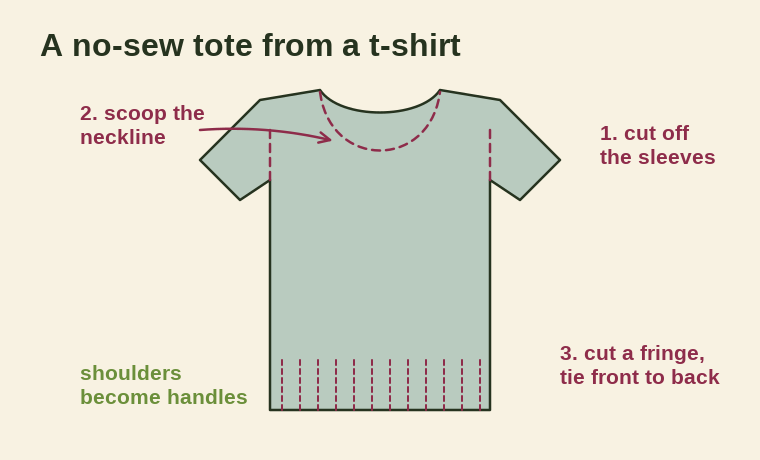
- Craft material: jersey becomes yarn, bags and ties. Our guide to upcycling old t-shirts has several no-sew projects.
- Garden ties: strips of stretchy fabric are gentle on tomato and bean stems.
- Draft stoppers and pet beds: old fabric makes good stuffing for a door draft excluder, one of the simple fixes in our draft-proofing guide.
- Compost: small pieces of 100 percent cotton, linen or wool break down in a compost heap. Remove synthetic thread, labels, buttons and zips first, and expect it to take months.
Buying less in the first place
The textiles that are easiest to deal with are the ones never bought. Washing clothes less often and at lower temperatures, as described in our zero-waste laundry guide, helps them last longer, and choosing single-fiber fabrics makes them easier to recycle at the end.
Common questions
Do charity shops want worn-out clothes? Most prefer not to receive them, as sorting costs them time and money. Some pass unsellable items to textile merchants, but a textile bank is the better place for anything worn.
What about old bedding and towels? Animal shelters and vets often welcome old towels and blankets. Ask before dropping them off.
Can shoes be recycled? Wearable pairs can be donated. Worn-out shoes are accepted by some textile banks and specialist take-back schemes; check locally.
A wardrobe clear-out does not have to end in a trash bag. Sort, mend what you can, pass on what someone else will wear, and send the rest to be reused as rags and fiber.
Keep reading
-
 Reuse & Upcycling
Visible Mending for Beginners: Darning, Patching and Sashiko-Style Stitches
Repair holes, tears and worn spots in clothes with three simple techniques, the basic kit you need and how to choose the right fix for each fabric.
-
 Reuse & Upcycling
What to Do With Old T-Shirts: 8 No-Sew and Simple-Sew Upcycling Projects
Turn worn-out t-shirts into bags, rags, yarn, plant ties and more, plus how to decide what to donate, upcycle or send to textile recycling.
-
 Recycling
12 Common Recycling Mistakes That Send Good Material to Landfill
Wishcycling, bagged recyclables, greasy boxes and tiny items. The errors that contaminate recycling and how to fix each one.
More in Recycling
- Glass and Metal Recycling: Cans, Jars, Foil, Lids and Aerosols
- What Happens to Your Recycling After the Truck Leaves
- Paper and Cardboard Recycling: What Goes In, What Doesn't, and Why
- How to Recycle Batteries and Old Electronics Safely
- 12 Common Recycling Mistakes That Send Good Material to Landfill
- Recycling Symbols Explained: What the Numbers 1 to 7 on Plastic Really Mean
- Household Hazardous Waste: How to Dispose of Paint, Oil and Medicines
- Recycling Plastic Bags and Film: Why Not Curbside and Where They Go