
Zero-Waste Laundry: Cleaner Clothes With Less Plastic, Water and Energy
Simple changes to laundry that cut plastic packaging, microfibers, energy and water use, from washing cooler and fuller loads to detergent choices, line drying and stain removal.
On this page
Laundry is one of the biggest household routines, and it quietly adds up: plastic detergent bottles, dryer sheets, hot water, tumble dryer energy, and tiny plastic fibers washing off synthetic clothes. The good news is that the biggest improvements are also the easiest, and many of them make clothes last longer too.
The four habits that matter most
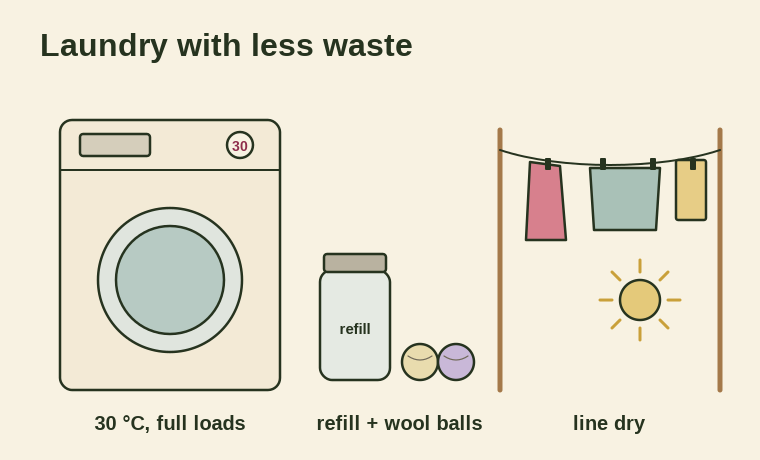
1. Wash cooler
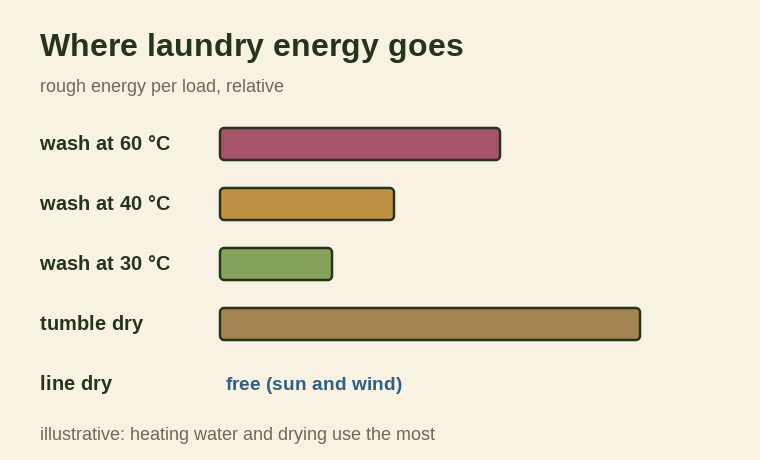
Most of the energy a washing machine uses goes into heating water. Washing at 30 °C instead of 40 °C cuts energy use per load by roughly a third or more, and modern detergents are designed to work at low temperatures.
Keep hotter washes for things that need them: towels, bedding during illness, and heavily soiled work clothes. Our energy saving guide shows where laundry fits in total home energy use.
2. Wash full loads, less often
A full load uses about the same water and energy as a half load. Many clothes, especially jeans, sweaters and jackets, don't need washing after every wear. Air them out, spot-clean marks, and wash when they're actually dirty.
3. Line dry
A tumble dryer can use more energy than the washing machine. Drying on a line or rack is free, and sunlight helps whiten and freshen fabrics. If you use a dryer, clean the lint filter every time and dry loads back to back while the drum is warm.
4. Use less detergent
Most people use too much. Excess detergent doesn't make clothes cleaner; it leaves residue that attracts dirt and can make fabrics stiff. Follow the dose for your water hardness and load size, and in soft water, use less.
Detergent choices
| Option | Plastic | Notes |
|---|---|---|
| Powder in a cardboard box | Low | Often cheapest per wash; good for whites |
| Refill liquid (bring your own bottle) | Very low | Look for refill stations in shops |
| Concentrated liquid | Lower | Less packaging per wash |
| Laundry strips or sheets | Low | Convenient; check what they're made of |
| Soap nuts | None | Gentle; works best on lightly soiled loads |
| Homemade soap-based mixes | Low | Can leave residue and harm machines over time; not recommended |
Homemade laundry "detergents" made from grated soap and washing soda are popular online, but soap behaves differently from detergent, especially in hard water. It can build up in fabrics and machines. A good eco-labeled detergent bought in bulk or refill is usually the better choice.
Skip the extras
- Fabric softener: often unnecessary. A small splash of white vinegar in the softener drawer softens fabric and removes detergent residue. Don't use it with every load on rubber seals, and never mix vinegar with bleach.
- Dryer sheets: replace with wool dryer balls, which shorten drying time and last for years.
- Stain sprays: most stains respond to a few pantry items (see below).
Cutting microfibers
Synthetic fabrics like polyester, nylon and acrylic shed tiny plastic fibers in every wash, which can end up in rivers and the sea. To reduce them:
- Wash synthetics less often and on cooler, shorter cycles.
- Wash full loads: less friction between clothes means less shedding.
- Use a microfiber-catching bag or ball for synthetic clothes, or fit a filter to the machine.
- Choose natural fibers like cotton, linen and wool when buying new clothes.
- Avoid tumble drying synthetics.
Simple stain removal
Treat stains quickly, before they dry or go through a hot dryer.
| Stain | Try this |
|---|---|
| Grease and oil | Rub in a little dish soap, leave 10 minutes, wash |
| Grass | Rub with dish soap or a paste of baking soda and water |
| Coffee and tea | Rinse with cold water from the back, then wash |
| Blood | Cold water only (hot water sets it); salt or soap helps |
| Sweat marks | Paste of baking soda and water, leave an hour, wash |
| Red wine | Blot, cover with salt, then rinse with cold water |
Our guide to natural cleaners covers more uses for these basics.
Care for your machine
A clean machine washes better and lasts longer:
- Leave the door and drawer open after washing so they can dry.
- Wipe the rubber seal now and then.
- Run an empty hot wash once a month to clear residue.
- Clean the filter every few months; it often holds coins and hair clips.
Common questions
Do clothes really get clean at 30 °C? For everyday wear, yes. Modern detergents contain enzymes that work best at low temperatures.
Is it worth buying an eco washing machine? If yours still works, keep it and change how you use it. When it's time to replace, look for a high energy rating and a quick, cool eco program.
Should I wash new clothes before wearing them? Yes, especially items for children, to remove finishing chemicals.
Zero-waste laundry isn't about perfect habits. Wash cooler, wash full loads, line dry when you can, and use less detergent from less packaging. Your bills will drop and your clothes will last longer.
Keep reading
-
 Water & Energy
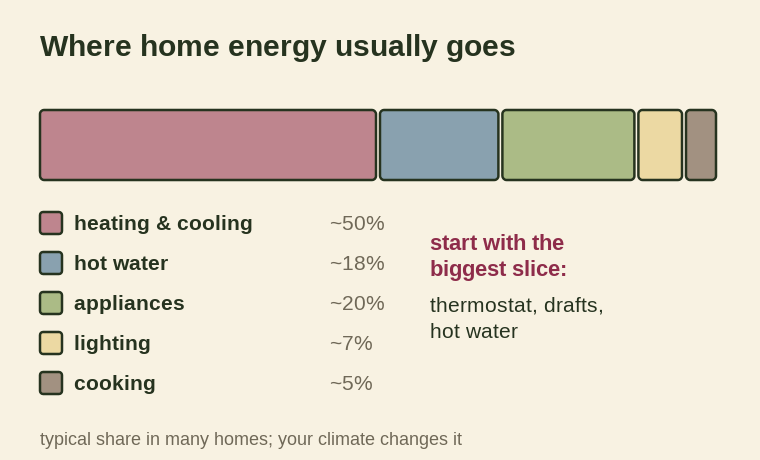
How to Save Energy at Home: 15 Simple Steps Ranked by Impact
Where home energy actually goes, which changes save the most, and simple, low-cost steps for heating, cooling, hot water, lighting and appliances.
-
 Zero Waste Home
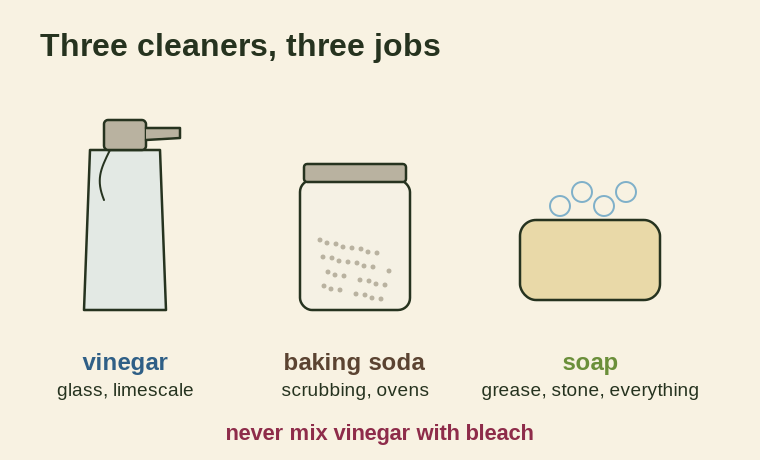
Natural Cleaners With Vinegar and Baking Soda: Recipes and Safety Rules
What vinegar, baking soda and soap each clean best, five simple recipes, which surfaces to avoid, and the chemical mixes you must never make.
-
 Zero Waste Home
12 Zero Waste Kitchen Swaps That Are Actually Easy to Keep Up
Simple replacements for the most common disposables in the kitchen, ordered from easiest to more committed, and the habits that make them stick.
More in Zero Waste Home
- How to Make Beeswax Wraps at Home (Oven Method)
- Zero Waste Bathroom Swaps: 10 Changes That Cut Plastic Without Hassle
- Natural Cleaners With Vinegar and Baking Soda: Recipes and Safety Rules
- How to Reduce Food Waste at Home: Plan, Store, Use Up
- 12 Zero Waste Kitchen Swaps That Are Actually Easy to Keep Up
- Zero-Waste Gift Wrapping: Furoshiki, Brown Paper and Tape-Free Ideas
- Vegetable Scrap Broth: Turn Peels and Ends Into Free Stock
- Zero-Waste Grocery Shopping: A Practical Guide for Beginners