
Zero-Waste Grocery Shopping: A Practical Guide for Beginners
How to cut packaging from your grocery shopping with bags and jars you already own, bulk stores, markets, the tare weight trick, smart planning and easy first swaps.
On this page
A typical weekly shop brings home a surprising amount of packaging: plastic bags around loose fruit, trays under vegetables, film over everything else. Much of it cannot be recycled where most people live. Zero-waste shopping is about bringing your own containers and choosing products that come with little or no packaging.
You do not need a special store, a matching set of jars or a perfect record to start. The biggest reductions come from a few habits: carrying bags, buying loose produce, and planning so you buy only what you will eat. This guide covers the kit, where to shop, how the tare weight system works, and what to change first.
The kit: use what you have
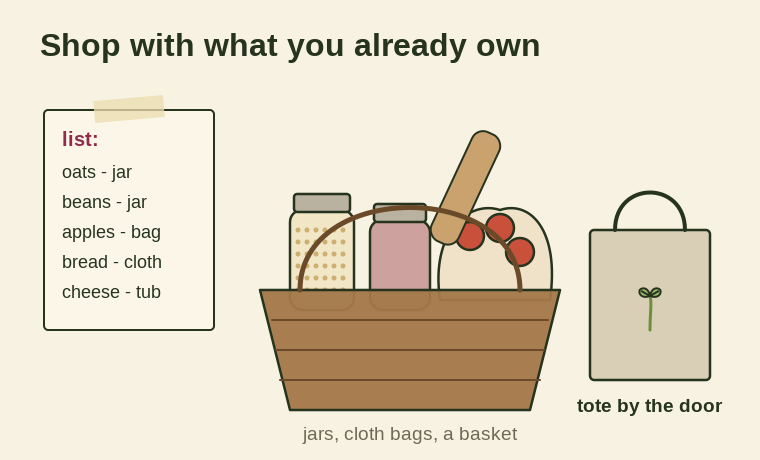
There is no need to buy anything new to begin. A starter kit from your own cupboards:
- Tote bags: two or three sturdy ones that live by the door or in the car.
- Produce bags: any light cloth bags, mesh bags, old pillowcases or bags sewn from an old shirt. Our guide to upcycling old t-shirts includes a no-sew bag.
- Jars and containers: reused glass jars for dry goods and liquids, lidded tubs for deli items, cheese or meat.
- A cloth bag or tea towel for bread.
- A marker or labels to write tare weights.
Keep everything washed and dry, and pack the kit the night before shopping so it actually comes with you.
Where to shop
| Place | What it is good for | Tips |
|---|---|---|
| Farmers' markets | Loose fruit and vegetables, eggs, bread | Bring a box or basket; return egg boxes to the stallholder |
| Bulk or refill stores | Grains, pasta, beans, nuts, oil, cleaning products | Weigh your jars first; buy small amounts to try |
| Supermarkets | Loose produce, some deli and bulk sections | Choose loose over packed; ask whether counters accept containers |
| Bakeries | Bread and pastries | Hand over your own bag before they bag it |
| Butchers, fishmongers, delis | Meat, fish, cheese | Policies on customer containers vary; ask politely |
| Milk delivery or refill schemes | Milk and juice in returnable bottles | Available in some areas |
Hygiene rules differ by country and by store. Some counters cannot accept customer containers for raw meat or fish; others are happy to. Asking is the only way to find out, and a clean container makes a yes more likely.
How the tare weight system works
At bulk stores you pay only for the food, not the weight of your jar. The empty weight is called the tare.
- Weigh the empty jar on the store's scale (or at home on a kitchen scale) before filling it.
- Write the tare on the lid or a label, for example "tare 300 g".
- Fill the jar from the bulk bin or dispenser.
- At the till, the cashier weighs the full jar and subtracts the tare.
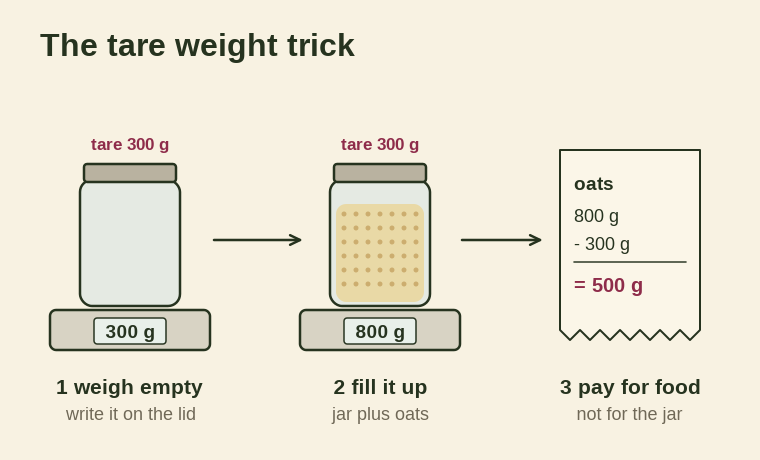
Many stores weigh jars for you at the entrance and print a sticker. Writing the tare permanently on the lid saves time on every trip.
Planning: the biggest waste saver
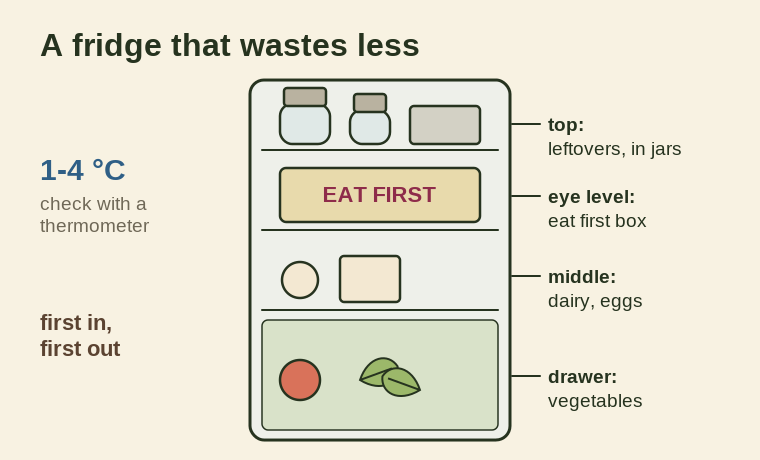
The most wasteful grocery item is food that is thrown out uneaten. Planning cuts that and makes zero-waste shopping easier, because you know exactly how many containers to bring.
- Check the fridge, freezer and cupboards before writing a list.
- Plan a few meals around what needs using up.
- Write a list by container: "jar for oats, tub for cheese, two produce bags".
- Buy loose, buy only what you need. Loose produce lets you take two carrots instead of a bag of ten.
Our guide to reducing food waste at home has more on storing produce so it lasts.
What to switch first
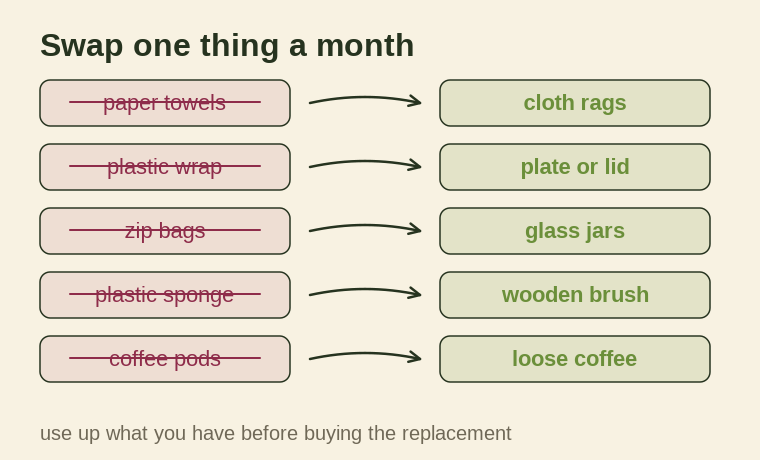
Trying to change everything at once usually ends in frustration. Start with the items you buy most often:
- Loose fruit and vegetables, in your own bags or none at all. Bananas, onions and squash do not need a bag.
- Bread from a bakery, in a cloth bag.
- Dry staples such as oats, rice, pasta and lentils from bulk bins.
- Cleaning products from refill stations, if there is one near you.
- Snacks and treats last: these are usually the hardest to find unpackaged, and homemade versions take time.
When an item only comes packaged, choose the packaging most likely to be recycled where you live, usually glass, metal cans or plain cardboard, over mixed-material pouches and black plastic trays. The recycling symbols guide helps decode labels. Larger packs also mean less packaging per kilogram, as long as you will finish them.
Storing it at home
Decant bulk food into clean, dry, airtight containers and label them with the contents and the date. Store flour, nuts and grains in a cool, dark cupboard, and use oily items like nuts and seeds within a few months, as they can go rancid. Cover leftovers with a plate or a beeswax wrap instead of film.
Common questions
Is bulk food more expensive? It varies. Staples such as oats and lentils are often similar or cheaper per kilogram; specialty items can cost more. Buying only the amount you need often saves money overall.
What if there is no bulk store near me? Focus on loose produce, bakeries and markets, buy larger packs, and choose easily recycled packaging. That still makes a big difference.
Are glass jars too heavy to carry? For long trips, use light plastic tubs or cloth bags for dry goods, and keep jars for liquids and oily foods.
Zero-waste shopping is a habit built one trip at a time. Pack the bags, bring a couple of jars, and swap one item each week. Within a few months, the bin will be noticeably lighter.
Keep reading
-
 Zero Waste Home
How to Reduce Food Waste at Home: Plan, Store, Use Up
Where household food waste comes from, how to shop and store to prevent it, what date labels really mean, and how to use up scraps before composting.
-
 Zero Waste Home
12 Zero Waste Kitchen Swaps That Are Actually Easy to Keep Up
Simple replacements for the most common disposables in the kitchen, ordered from easiest to more committed, and the habits that make them stick.
-
 Reuse & Upcycling
15 Practical Ways to Reuse Glass Jars Around the House
How to remove labels and smells from jars, plus fifteen genuinely useful second jobs for them in the kitchen, garden and workshop.
More in Zero Waste Home
- Zero-Waste Laundry: Cleaner Clothes With Less Plastic, Water and Energy
- How to Make Beeswax Wraps at Home (Oven Method)
- Zero Waste Bathroom Swaps: 10 Changes That Cut Plastic Without Hassle
- Natural Cleaners With Vinegar and Baking Soda: Recipes and Safety Rules
- How to Reduce Food Waste at Home: Plan, Store, Use Up
- 12 Zero Waste Kitchen Swaps That Are Actually Easy to Keep Up
- Zero-Waste Gift Wrapping: Furoshiki, Brown Paper and Tape-Free Ideas
- Vegetable Scrap Broth: Turn Peels and Ends Into Free Stock