
Zero-Waste Gift Wrapping: Furoshiki, Brown Paper and Tape-Free Ideas
Wrap presents without throwaway paper: how to tie a furoshiki cloth wrap, reuse paper and boxes, wrap without tape, and decorate with things that compost.
On this page
Gift wrapping is designed to be torn off and thrown away within seconds. Much of it cannot even be recycled: paper with foil, glitter or a shiny plastic coating, along with sticky tape and plastic ribbon, usually ends up in the trash. Around birthdays and holidays, that adds up to bags of waste from a single household.
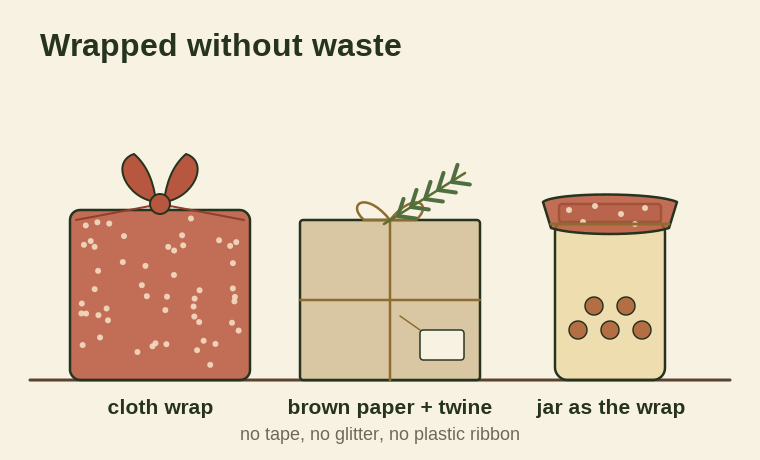
Wrapping without waste doesn't mean plain or dull gifts. Cloth wraps, reused paper and natural decorations can look more special than shop-bought paper, and many of them become part of the gift.
Why most wrapping paper is a problem
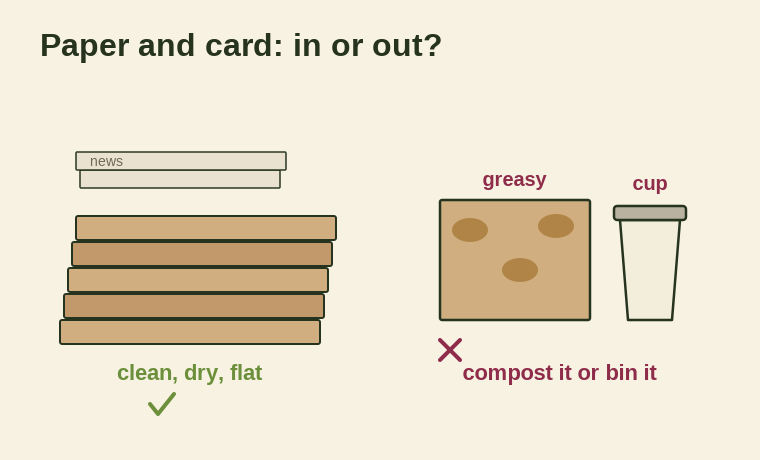
Ordinary paper is easy to recycle, but wrapping paper often isn't ordinary paper. It is usually thin, with short fibers, and may be coated with plastic, metallic foil or glitter. Many recycling programs accept plain wrapping paper but reject the rest. Rules vary, so check your local guidance, and see our paper and cardboard recycling guide for the basics.
The scrunch test: scrunch a piece of wrapping paper into a ball. If it stays scrunched, it is probably paper-based and recyclable where wrapping paper is accepted. If it springs back open, it likely contains plastic or foil and belongs in the trash.
Tape, ribbon and bows add to the problem. Plastic tape can't be recycled and contaminates paper recycling if left on in large amounts.
Your zero-waste wrapping options
| Option | Cost | Reusable? | End of life |
|---|---|---|---|
| Fabric wrap (furoshiki) | Free to low | Many times | Becomes part of the gift or is reused |
| Saved wrapping paper and gift bags | Free | Several times | Recycle plain paper |
| Brown kraft paper | Low | A few times | Recyclable and compostable if uncoated |
| Newspaper, maps, old calendars | Free | Once or twice | Recyclable |
| Children's drawings | Free | Once | Recyclable |
| Jars, tins and boxes | Free | Many times | Become storage |
Furoshiki: wrapping with cloth
Furoshiki is a traditional Japanese way of wrapping and carrying things in a square of cloth. One cloth can wrap gift after gift for years, and the knot holds it closed without tape.
Any square of fabric works: a scarf, a tea towel, a pillowcase cut open, or a square cut from an old shirt (our guide to upcycling old t-shirts has more ideas for fabric). As a rough guide, choose a cloth whose diagonal is about three times the width of the item. Common sizes are about 50, 70 and 90 cm square.
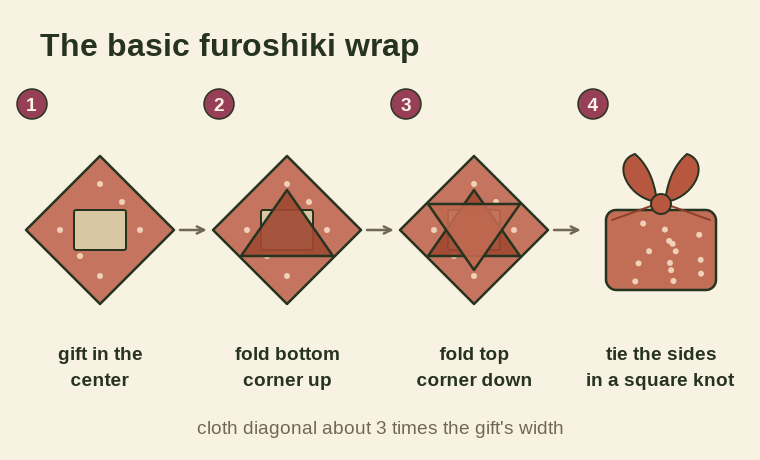
The basic wrap for a box:
- Lay the cloth flat in a diamond shape, with the wrong side up.
- Place the gift in the center, with its sides facing the corners at an angle.
- Fold the bottom corner up over the gift, tucking the excess under. Then fold the top corner down over it.
- Bring the left and right corners up over the top and tie them in a square knot: right over left, then left over right. Pull the ends neatly into "ears".
The knot unties easily, so the recipient can reuse the cloth. If you give the cloth as part of the present, say so, or it may get handed back.
Reusing paper, bags and boxes
The greenest wrapping is the one you already have.
- Save paper from gifts you receive. Carefully peeled paper can be smoothed with a cool iron.
- Keep gift bags and boxes flat in a drawer, with a box of saved ribbons and twine.
- Use newspaper, old maps, sheet music or comic pages. They look surprisingly good with simple twine.
- Choose brown kraft paper if you need something new. Uncoated paper is recyclable and can be shredded into the compost, and it can be stamped, drawn on or decorated with leaves.
- Use the container as wrapping. A clean jar for homemade cookies or bath salts, a tin for biscuits, or a basket for fruit makes wrapping unnecessary. See our ideas for reusing glass jars.
Wrapping without tape
Tape is often the only non-recyclable part of a paper-wrapped parcel. You can skip it:
- Fold paper like a parcel and hold it closed with twine tied around both directions.
- Tuck ends into each other. On a box, fold the end flaps inward and slide the last flap under the twine.
- Use a paper sticker or a strip of gummed paper tape. Paper tape is recyclable with paper in many areas.
- Use a pretty clothes peg or a small bulldog clip that can be reused.
Natural and compostable decorations
Instead of plastic bows and glitter, try:
- Garden sprigs: rosemary, bay, pine or holly tucked under twine.
- Dried orange slices (dried slowly in a low oven) and cinnamon sticks.
- Pressed leaves, seed heads and dried flowers.
- Cotton, jute or hemp twine, which can be composted when worn out.
- Gift tags cut from old greeting cards, with a hole punched for the twine.
Avoid glitter entirely: it is usually made of tiny pieces of plastic that cannot be recovered.
Common questions
Is tissue paper recyclable? Often not. The fibers are too short and many programs reject it. Reuse it, or compost plain tissue paper in small amounts.
What about gift bags with glitter or plastic coating? Reuse them as many times as possible. They are rarely recyclable.
Where can I get fabric for furoshiki? Thrift stores, old scarves and pillowcases, and leftover fabric from sewing projects. Hem the edges or cut them with pinking shears to stop fraying.
Won't people think it's cheap? Most people find a cloth-wrapped gift with a sprig of rosemary more thoughtful than paper. A short note explaining the wrap helps it get reused.
Start with what you already have: a scarf, a stack of saved paper and a ball of twine. After one holiday season, you may never buy a roll of wrapping paper again.
Keep reading
-
 Recycling
Paper and Cardboard Recycling: What Goes In, What Doesn't, and Why
Which paper and card can be recycled, the common contaminants, how to prepare boxes, and how many times fiber can actually be recycled.
-
 Reuse & Upcycling
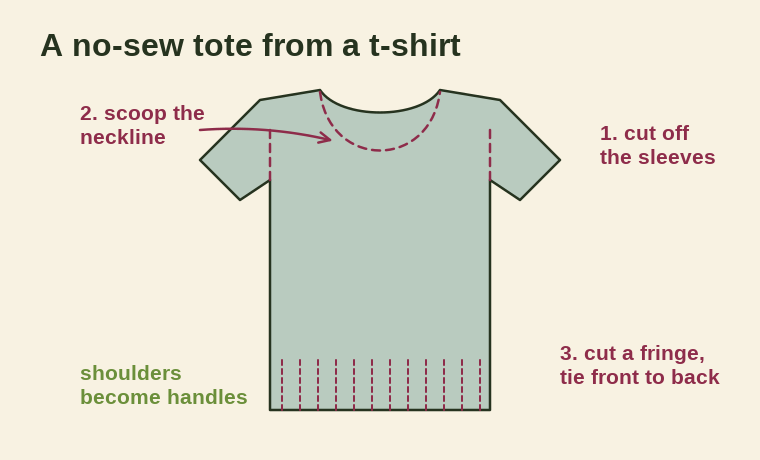
What to Do With Old T-Shirts: 8 No-Sew and Simple-Sew Upcycling Projects
Turn worn-out t-shirts into bags, rags, yarn, plant ties and more, plus how to decide what to donate, upcycle or send to textile recycling.
-
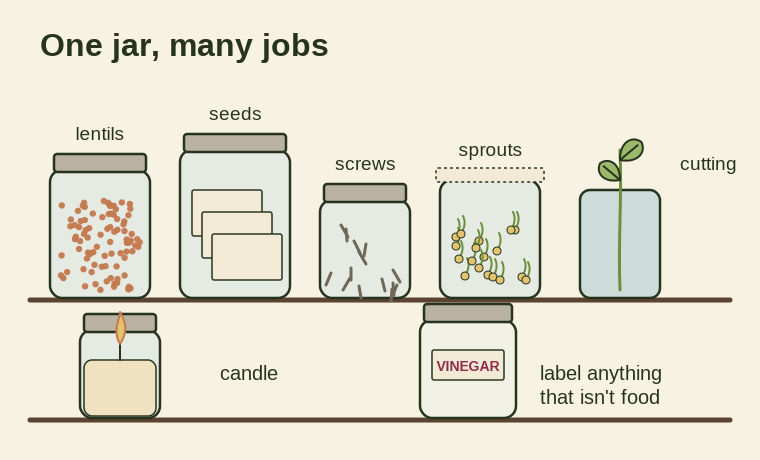 Reuse & Upcycling
15 Practical Ways to Reuse Glass Jars Around the House
How to remove labels and smells from jars, plus fifteen genuinely useful second jobs for them in the kitchen, garden and workshop.
More in Zero Waste Home
- Vegetable Scrap Broth: Turn Peels and Ends Into Free Stock
- Zero-Waste Grocery Shopping: A Practical Guide for Beginners
- Zero-Waste Laundry: Cleaner Clothes With Less Plastic, Water and Energy
- How to Make Beeswax Wraps at Home (Oven Method)
- Zero Waste Bathroom Swaps: 10 Changes That Cut Plastic Without Hassle
- Natural Cleaners With Vinegar and Baking Soda: Recipes and Safety Rules
- How to Reduce Food Waste at Home: Plan, Store, Use Up
- 12 Zero Waste Kitchen Swaps That Are Actually Easy to Keep Up