
What Not to Compost: 15 Things to Keep Out of a Home Bin
The items that cause smells, pests, disease or plastic in your finished compost, why each one is a problem, and what to do with them instead.
On this page
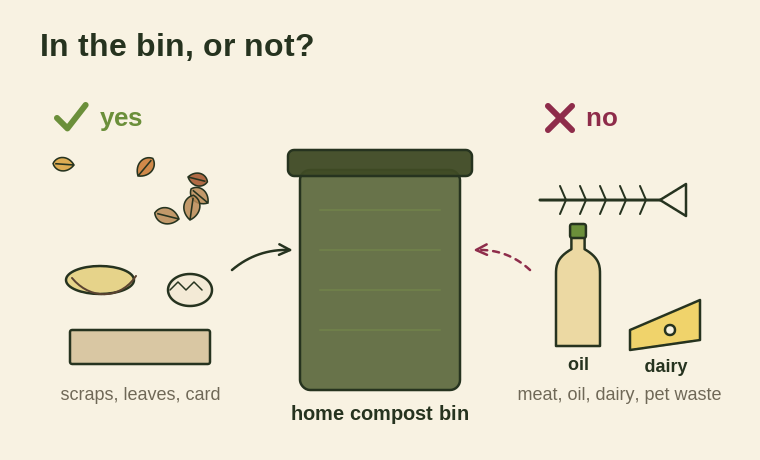
Almost everything that once lived can rot, but that doesn't mean it belongs in a home compost bin. A cool backyard pile or a small bin on a balcony is not an industrial composting plant. It doesn't get hot enough to kill some diseases, and it is easy for rats, flies and smells to take over if the wrong things go in.
The good news is that the list of things to avoid is short. Learn it once and your compost will stay sweet-smelling and safe to use on vegetables. If you are just starting out, read our beginner's guide to composting at home first.
Why a home bin is different
Commercial composting sites build huge piles that reach 60 to 70 °C for days and are turned by machines. That heat breaks down meat, bones and many plant diseases. A home bin usually stays between 20 and 40 °C, warm but not hot. Things that need heat to break down safely will simply sit there, attract animals or survive into the finished compost.
So when people say "you can compost that", it is worth asking: in which kind of system?
The "keep out" list
| Item | Why not | What to do instead |
|---|---|---|
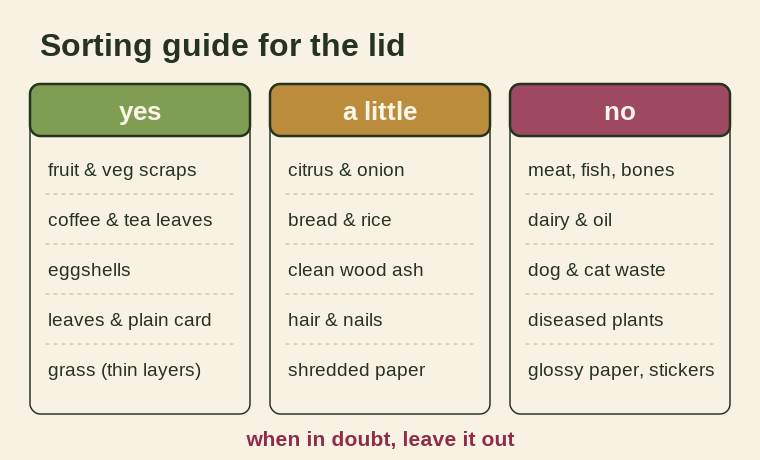
| Meat, fish and bones | Smell, attract rats, foxes and flies | Bokashi bin, or council food-waste collection |
| Dairy (cheese, yogurt, butter) | Smell and pests | Bokashi, or food-waste collection |
| Cooking oil and grease | Coats materials, slows rotting, attracts animals | Let it set and put it in the trash; some towns collect used oil |
| Cooked food with sauces | Often contains oil, meat or salt | Bokashi, or plan meals to waste less |
| Dog and cat waste | Can carry parasites that survive a cool pile | Bag it and bin it; never use on food crops |
| Diseased plants | Blight, mildew and rust spores can survive | Trash or council green waste, which composts hot |
| Weeds with seeds or runners | Seeds survive and sprout everywhere you spread compost | Drown them in a bucket of water for a few weeks first |
| Glossy or coated paper | Plastic coatings and inks don't break down well | Paper recycling |
| "Compostable" plastics | Most need industrial heat to break down | Check the label; usually goes in council food waste only |
| Tea bags with plastic | Many contain polypropylene and leave a mesh behind | Tear open, compost the leaves, bin the bag |
| Coal ash and charcoal ash | Can contain sulfur and heavy metals | Trash |
| Treated or painted wood | Chemicals and preservatives | Trash or a household waste center |
| Pet bedding from meat-eaters | Same problem as their waste | Trash; bedding from rabbits or guinea pigs is fine |
| Sticky labels on fruit | Small plastic pieces in your compost | Peel them off first |
| Large branches | Take years to rot | Chop small, or use as a wildlife pile |
The "go easy" list
Some things can go in, but only in small amounts:
- Citrus peel and onions. They are fine in an ordinary compost bin, but worms in a worm bin dislike them. Chop them and add a few at a time. Our worm bin guide explains what worms prefer.
- Wood ash from clean, untreated wood. A thin dusting adds potassium, but too much makes the pile alkaline. See how to use wood ash in the garden.
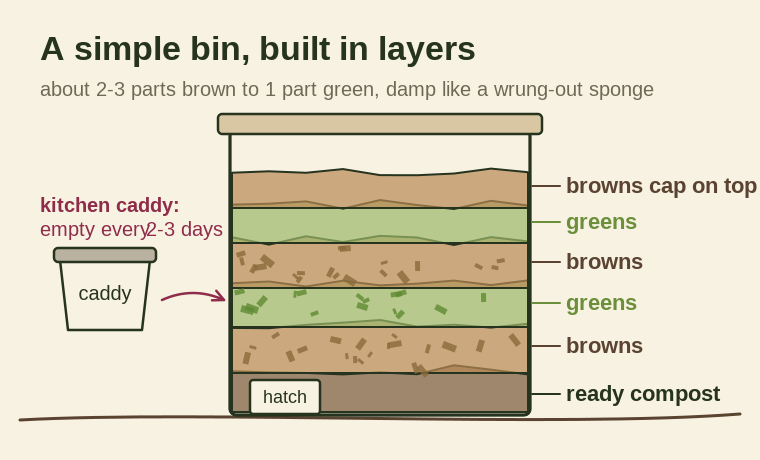
- Grass clippings. Great in thin layers mixed with leaves. A thick layer turns into a slimy, smelly mat. Getting the green and brown ratio right fixes most problems.
- Bread, rice and pasta. Fine in small amounts if buried in the middle of the pile, but they can attract mice.
- Shredded paper and cardboard. Excellent browns, as long as they are plain. Remove tape and staples.
What about bokashi?
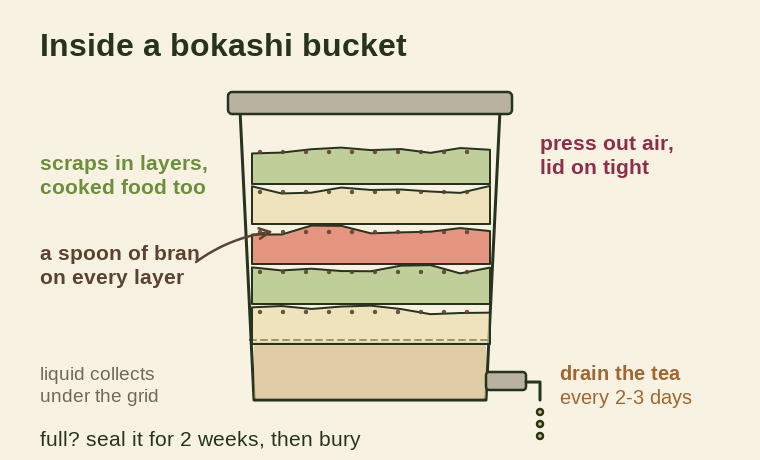
A bokashi bin ferments food in a sealed bucket, so it can handle meat, fish, dairy and cooked leftovers without smells or pests. After two weeks the fermented food is buried in soil or added to a compost bin, where it breaks down quickly. If you want to divert almost all your food waste, a bokashi bin next to a normal compost bin is a very good combination.
Signs something went in that shouldn't
- A rotten or sour smell usually means too many greens or food without enough browns, but a sudden bad smell can mean meat or dairy got in.
- Rats or mice digging or nesting point to cooked food, bread or meat. Remove the attraction, add a mesh base to the bin, and keep the lid closed.
- Lots of flies suggest exposed food. Always cover new scraps with a layer of leaves, straw or shredded cardboard.
- Plastic bits in finished compost come from stickers, tea bags or "compostable" packaging. Sieve them out and stop adding the source.
Weeds: the special case
Weeds are useful green material, but two kinds cause trouble:
- Weeds that have set seed. A cool pile won't kill the seeds, so you spread them across the garden.
- Perennial weeds with runners or roots, such as bindweed, couch grass and dock. Small pieces can regrow.
The simple fix is to drown them: stuff them into a bucket or barrel, cover with water and a lid, and leave for three to four weeks. The result is a smelly but harmless sludge that can go into the compost, or be diluted and used like a homemade liquid feed.
Common questions
Can I compost eggshells? Yes. Crush them first so they break down faster.
Can I compost paper towels and napkins? Yes, if they only have food or water on them. Skip any that were used with cleaning chemicals.
What about hair and nail clippings? Yes, in small amounts. They are slow to rot but harmless.
Can I compost coffee grounds? Yes, and the paper filters too. They count as a green.
A home compost bin is forgiving, and most kitchen and garden waste is welcome. Keep meat, dairy, oil, pet waste, diseased plants and seeding weeds out, and the rest will turn into dark, crumbly compost with very little trouble.
Keep reading
-
 Composting
Bokashi Composting: How to Ferment Food Scraps, Including Meat and Dairy
How a bokashi bucket works, what you need, the step-by-step routine, what to do with the fermented scraps and how to tell a good batch from a bad one.
-
 Composting
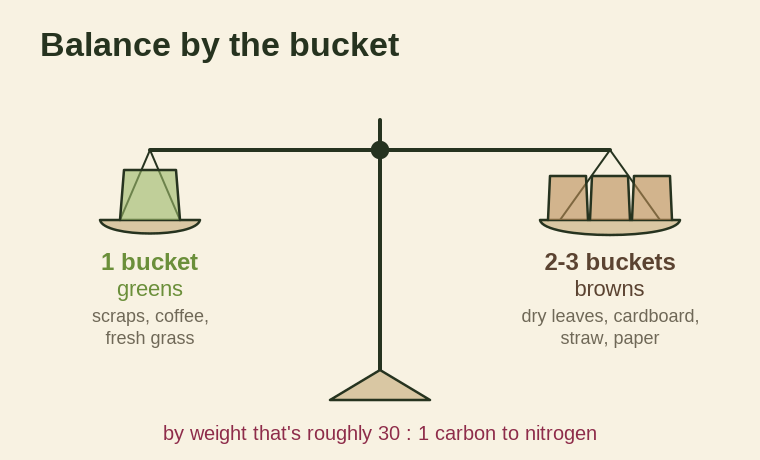
The Green and Brown Compost Ratio, Explained Without the Math Headache
Why the 30:1 carbon to nitrogen number confuses people, how to translate it into buckets, and how to fix a pile that smells or won't heat up.
-
 Composting
How to Start Composting at Home: A Beginner's Setup That Actually Works
Choose a bin, find the right spot, learn the two ingredients that matter, and get your first finished compost in three to six months.
More in Composting
- How to Make Leaf Mold: Turn Fallen Leaves Into Free Soil Conditioner
- Bokashi Composting: How to Ferment Food Scraps, Including Meat and Dairy
- Vermicomposting for Beginners: How to Set Up and Run a Worm Bin
- The Green and Brown Compost Ratio, Explained Without the Math Headache
- How to Start Composting at Home: A Beginner's Setup That Actually Works
- When Is Compost Ready? 6 Simple Tests for Finished Compost
- Choosing a Compost Bin: Heaps, Bays, Tumblers, Worms and Bokashi
- Hot Composting: Build a Pile That Heats Up and Finishes in Weeks