
How to Keep Your Home Cool Without AC: Shade, Night Air and Fans
Practical ways to keep a home cool in hot weather without air conditioning: shade windows, flush heat out at night, use fans well, cut indoor heat and stay safe.
On this page
Air conditioning is not the only way to get through a heat wave. Many homes, especially older ones, can stay several degrees cooler with a few simple habits: stopping sunlight before it reaches the glass, letting cool night air in, using fans the right way and cutting the heat produced inside.
These steps cost little or nothing, use almost no electricity and work in apartments as well as houses. They also make any air conditioner you do have run less.
How homes heat up
Heat gets into a home in three main ways:
- Sun through windows. Direct sunlight on glass is often the biggest source of heat, especially on east- and west-facing windows in the morning and afternoon.
- Hot outside air coming in through open windows, doors and gaps.
- Heat made indoors by ovens, dryers, old light bulbs, electronics and people.
Cooling without AC means tackling all three, in the right order.
1. Block the sun before it gets in
Shading on the outside of a window is far more effective than blinds or curtains inside. Once sunlight passes through glass, much of it turns into heat in the room, and an indoor blind only catches it after it is already inside.
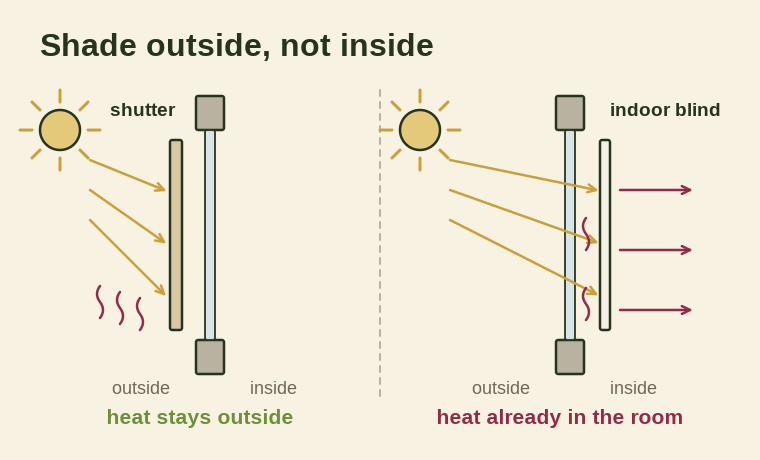
- Outside: shutters, awnings, external blinds, shade sails or a simple bamboo screen.
- Inside: light-colored blinds or curtains, closed before the sun hits the window. Pale or reflective linings work better than dark fabric.
- Plants: deciduous trees, climbers on a trellis or tall plants in pots shade walls and windows in summer and let light through in winter. Our guide to water-wise garden plants suggests tough choices.
Follow the sun around the house: close east-facing blinds in the morning and west-facing ones from midday.
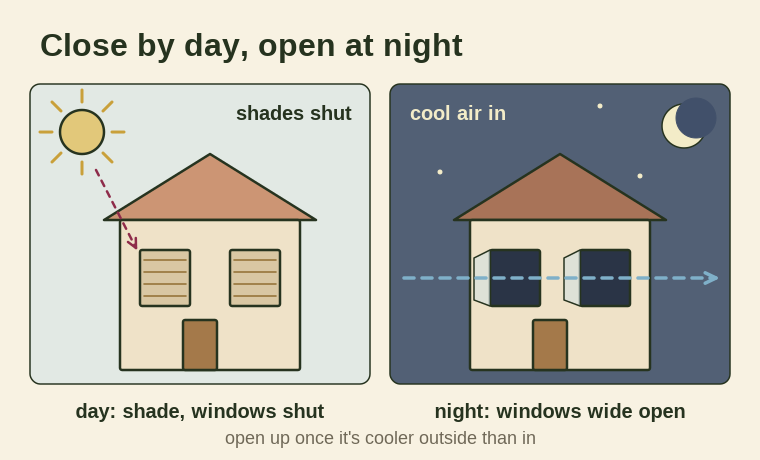
2. Close up by day, open up at night
This is the most powerful free cooling method, often called night purging or night flushing.
- In the morning, as soon as the outside air is warmer than inside, close windows and shades on the sunny sides.
- During the day, keep them closed. The building's walls and floors stay cool and absorb heat slowly.
- In the evening, once the outside temperature drops below the inside temperature, open windows wide.
- Overnight, let cool air flow through. Open windows on opposite sides to create a cross breeze, and open high windows (upstairs or skylights) so warm air escapes from the top.
- Repeat each day of the hot spell.
A cheap indoor and outdoor thermometer makes timing easy. Only leave windows open where it is safe and secure.
3. Use fans the right way
Fans don't cool the air. They cool people, by moving air over skin so sweat evaporates faster. That means:
- Turn fans off in empty rooms. They only use power and add a little heat.
- Set ceiling fans to spin counterclockwise (seen from below) in summer, so they push air down.
- Place a box fan in a window at night, facing out to push warm air out, while other windows let cool air in.
- Point a fan at yourself, not at the room.
Fans use far less electricity than air conditioning. A typical fan draws tens of watts, while a room air conditioner often draws several hundred to more than a thousand.
4. Cut heat made inside
| Heat source | What to do |
|---|---|
| Oven and stovetop | Cook early or late, use a microwave or slow cooker, eat more cold meals |
| Clothes dryer | Line-dry clothes, ideally outdoors |
| Dishwasher | Run at night and skip the heated dry |
| Incandescent and halogen bulbs | Switch to LEDs, which produce far less heat |
| Electronics on standby | Switch off at the wall when not in use |
| Hot showers and baths | Shorter, cooler showers; run the bathroom fan |
Our list of simple energy-saving steps helps with many of these, and lowers bills all year. Drying washing on a line, as in our zero-waste laundry guide, removes one of the biggest indoor heat sources.
5. Keep yourself cool
- Drink water regularly, before you feel thirsty.
- Take cool (not icy) showers, or soak your feet in a bowl of cool water.
- Use a damp cloth on your neck and wrists.
- Wear loose, light-colored cotton or linen.
- Sleep in the coolest room, often on the lowest floor.
Stay safe in extreme heat
In very hot weather, especially above about 35 °C, a fan alone may not be enough to prevent heat illness. Check on older neighbors, young children and anyone with health conditions, who are most at risk. Learn the signs of heat exhaustion: heavy sweating, dizziness, headache, nausea and cramps. Move to a cooler place, drink water and cool the skin. Confusion, fainting or a very high body temperature can mean heatstroke, which is a medical emergency, so call emergency services.
If your home becomes dangerously hot, many towns open cooling centers or keep public libraries open during heat waves.
Common questions
Does a bowl of ice in front of a fan help? A little, close up, for a short time. It is not a substitute for shading and night ventilation.
Are reflective window films worth it? They can cut heat from sunny windows noticeably, but also reduce winter sun. They suit hot climates and windows with no outside shade.
Should I keep windows open all day for a breeze? Only while the outside air is cooler than inside. Once it's hotter out, opening windows brings heat in.
Do houseplants cool a room? Slightly, through evaporation, but not enough to notice in a heat wave. Outdoor shade from plants is far more effective.
Shade, timing and moving air are the three keys. Start with closed shades and open windows at night, and a hot home can become a comfortable one without switching on an air conditioner.
Keep reading
-
 Water & Energy
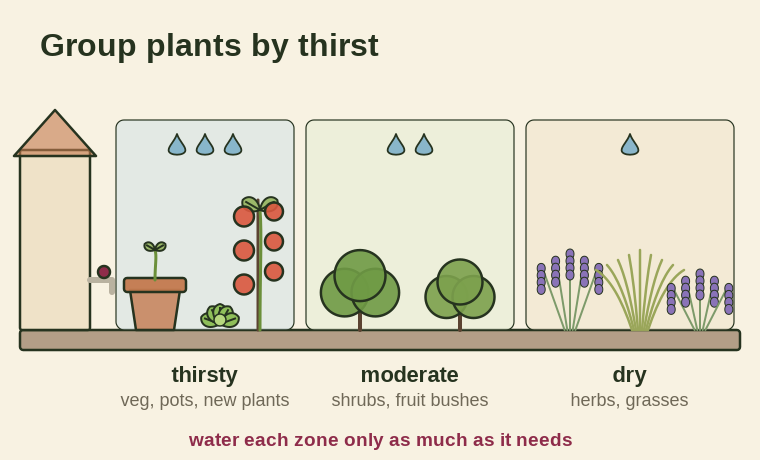
Water-Wise Gardening: Drought-Tolerant Plants and Smarter Watering
Grow a garden that needs far less water: drought-tolerant plants, grouping them by thirst, soil that holds moisture, deep watering, and alternatives to a thirsty lawn.
-
 Water & Energy
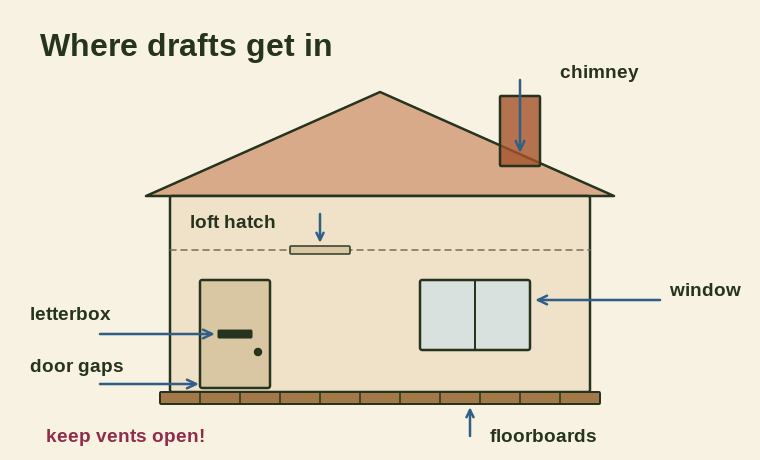
Draft-Proofing Your Home: Find and Seal Drafts the Safe Way
How to find drafts with simple flame-free tests, then seal doors, windows, letterboxes, keyholes, chimneys and floors, while keeping the ventilation a home needs.
-
 Water & Energy
How to Save Energy at Home: 15 Simple Steps Ranked by Impact
Where home energy actually goes, which changes save the most, and simple, low-cost steps for heating, cooling, hot water, lighting and appliances.
More in Water & Energy
- Water-Wise Gardening: Drought-Tolerant Plants and Smarter Watering
- Draft-Proofing Your Home: Find and Seal Drafts the Safe Way
- Greywater: How to Reuse Shower and Laundry Water in the Garden Safely
- Mulching to Save Water: The Easiest Way to Cut Garden Watering
- How to Save Water at Home: Where It Goes and 12 Ways to Use Less
- How to Save Energy at Home: 15 Simple Steps Ranked by Impact
- Drip Irrigation for Home Gardens: A Simple System You Can Install in a Day
- Rainwater Harvesting at Home: How to Set Up a Rain Barrel