
Draft-Proofing Your Home: Find and Seal Drafts the Safe Way
How to find drafts with simple flame-free tests, then seal doors, windows, letterboxes, keyholes, chimneys and floors, while keeping the ventilation a home needs.
On this page
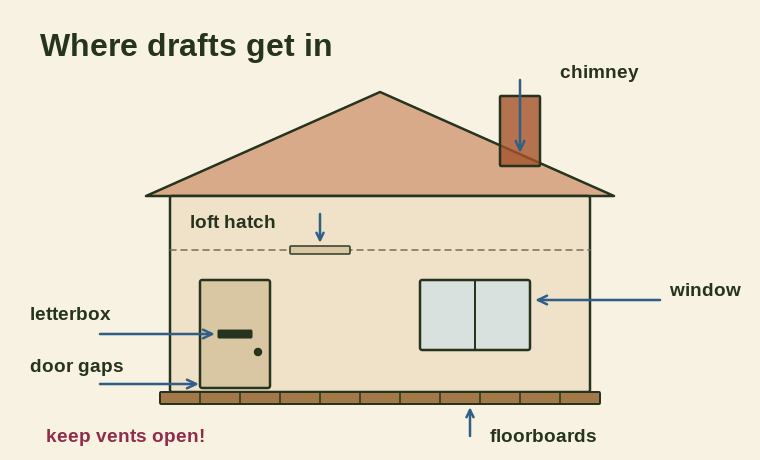
A cold draft along the floor or a whistle at the window means heated air is leaking out and cold air is coming in. Uncontrolled gaps around doors, windows, floors and chimneys can let a noticeable share of a home's heat escape, and they make rooms feel colder than the thermostat says, so people turn the heating up.
Draft-proofing is one of the cheapest and quickest energy improvements there is. Most fixes cost little, need only scissors and a screwdriver, and pay off in comfort straight away. The one thing to get right is the difference between an unwanted draft and the ventilation a home needs to stay healthy and safe.
Step 1: Find the drafts
Choose a cold, windy day, when air movement is strongest. Then try these simple tests:
- The hand test: wet the back of your hand and move it slowly around door and window frames, sockets on outside walls and skirting boards. Moving air feels distinctly cold.
- The tissue test: hold a strip of tissue paper or a light feather near suspected gaps. If it flutters, air is getting through.
- The paper test for doors and windows: close the door or window on a sheet of paper. If it slides out easily, the seal is not tight there.
- The light test: at dusk, with lights on in one room and off in the next, look for light showing around the edges of doors and loft hatches.
A thermal camera or an inexpensive infrared thermometer can also show cold spots, and some libraries and energy advice services lend them out.
Where drafts usually come from
| Where | Typical fix | Notes |
|---|---|---|
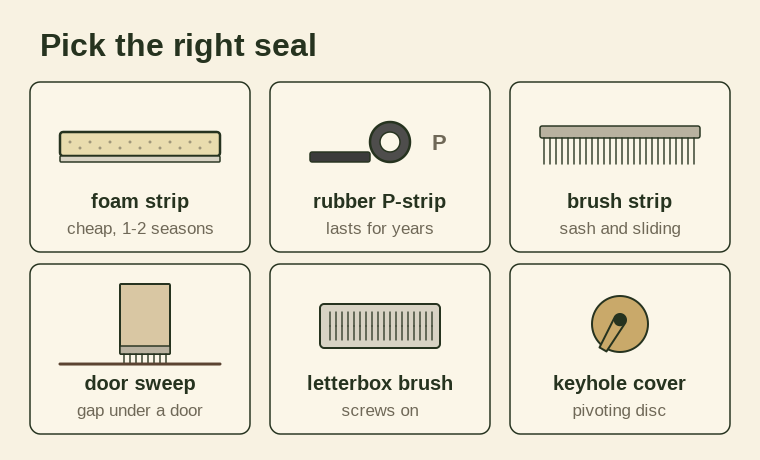
| Gaps around door edges | Rubber or foam strip inside the frame | Rubber P- or E-profile strips last much longer than foam |
| Gap under the door | Brush or rubber door sweep; fabric draft snake | Leave room for carpets to clear |
| Opening windows | Self-adhesive rubber or foam strip | Clean and dry the frame first |
| Sash and sliding windows | Brush strips | Brushes let parts slide while blocking air |
| Letterbox | Letterbox brush or flap | Quick screw-on fix |
| Keyhole | Keyhole cover (pivoting disc) | Very cheap |
| Unused chimney | Chimney balloon or removable chimney draft excluder | Must be removed before any fire is lit |
| Floorboards and skirting | Flexible filler or caulk | Use flexible products; wood moves |
| Pipes through walls | Silicone or expanding foam | For hot pipes, use a heat-rated product |
| Loft hatch | Foam strip around the frame, insulation on top | Heat rises, so this gap matters |
Step 2: Seal doors and windows
- Measure the gap. Close the door and check how wide the gap is between door and frame. Strips are sold by the gap size they fit, often from about 1 mm to 7 mm.
- Clean the frame with warm soapy water and let it dry. Adhesive strips fail on dusty or greasy surfaces.
- Fit the strip to the frame, not the moving door, pressing it in place as you peel off the backing. Avoid stretching it.
- Test the door. It should close with a little resistance and latch properly. If it does not, a thinner strip is needed.
- Fit a door sweep or brush strip along the bottom of external doors. For internal doors, a fabric draft excluder works well and can be sewn from old clothes (see what to do with old clothes) or from a sleeve stuffed with old t-shirt scraps.
Windows that are never opened can be sealed more permanently with clear caulk around the frame. Windows you open need flexible strips.
Step 3: Chimneys, floors and small gaps
An unused open fireplace can act like a hole in the roof. A chimney balloon or a removable chimney excluder blocks it, but it must be removed before lighting a fire, and a little airflow must remain to stop damp building up in the chimney. If in doubt, ask a chimney sweep.
Gaps between floorboards and under skirting boards can be filled with flexible filler or decorators' caulk. Fit keyhole covers and letterbox brushes, and seal gaps around pipes where they enter through outside walls.
Ventilation: what not to block
Homes need fresh air to remove moisture, cooking smells and pollutants, and fuel-burning appliances need air to burn safely. Never seal or cover:
- Air bricks and wall vents, including those under suspended floors.
- Trickle vents in window frames (close them in cold weather if needed, but do not tape them over).
- Vents for gas boilers, open-flued fires and wood stoves. These supply the air the appliance needs. Blocking them can cause dangerous carbon monoxide buildup.
- Kitchen and bathroom extractor fans, which remove moisture at its source.
Fit a carbon monoxide alarm in any room with a fuel-burning appliance. After draft-proofing, watch for condensation on windows or musty smells; if they appear, open windows briefly each day and use extractor fans more. Homes in damp climates and older houses with solid walls especially need a steady trickle of air.
Make it last
Foam strips are cheap but often wear out within a season or two. Rubber and brush strips last for years. Check seals each autumn, and replace any that are flattened or peeling. Combined with the other changes in our simple energy-saving steps, such as closing curtains at dusk and bleeding radiators, draft-proofing can make a home noticeably warmer for little money.
Common questions
Should I draft-proof if I rent? Most stick-on strips, keyhole covers and draft snakes are removable and unlikely to break a rental agreement, but ask before fitting anything screwed in.
Can a house be too airtight? Yes, if ventilation is blocked. Seal unwanted gaps, but leave vents, air bricks and extractor fans working.
Do curtains help? Thick, lined curtains closed at dusk reduce drafts and heat loss through windows. Tuck them behind radiators rather than over them.
Draft-proofing is a single afternoon's work for a whole winter of comfort. Find the gaps, seal what should be sealed, and leave the vents alone.
Keep reading
-
 Recycling
What to Do With Old Clothes: Donate, Resell, Recycle or Reuse
Where old clothes, shoes and household textiles should go: donating, reselling, textile banks, store take-back schemes, and what really can't be recycled.
-
 Water & Energy
How to Save Energy at Home: 15 Simple Steps Ranked by Impact
Where home energy actually goes, which changes save the most, and simple, low-cost steps for heating, cooling, hot water, lighting and appliances.
-
 Reuse & Upcycling
What to Do With Old T-Shirts: 8 No-Sew and Simple-Sew Upcycling Projects
Turn worn-out t-shirts into bags, rags, yarn, plant ties and more, plus how to decide what to donate, upcycle or send to textile recycling.
More in Water & Energy
- Greywater: How to Reuse Shower and Laundry Water in the Garden Safely
- Mulching to Save Water: The Easiest Way to Cut Garden Watering
- How to Save Water at Home: Where It Goes and 12 Ways to Use Less
- How to Save Energy at Home: 15 Simple Steps Ranked by Impact
- Drip Irrigation for Home Gardens: A Simple System You Can Install in a Day
- Rainwater Harvesting at Home: How to Set Up a Rain Barrel
- How to Keep Your Home Cool Without AC: Shade, Night Air and Fans
- Water-Wise Gardening: Drought-Tolerant Plants and Smarter Watering