
Raised Bed Gardening for Beginners: Size, Materials and Filling
How wide, long and deep to build a raised bed, which materials are safe for food, how to fill it cheaply with layers, and where to put it for sun, water and easy paths.
On this page
A raised bed is a box of good soil sitting on top of the ground. It sounds simple, and it is, but it solves a surprising number of problems at once: poor or compacted native soil, waterlogged ground, back strain, creeping grass and the classic beginner mistake of walking on the soil you want roots to grow in.
Raised beds also warm up earlier in spring and make a garden feel organized and manageable. This guide covers the decisions that matter most: how big to build, what to build with, how to fill it without spending a fortune, and where to put it.
Get the size right
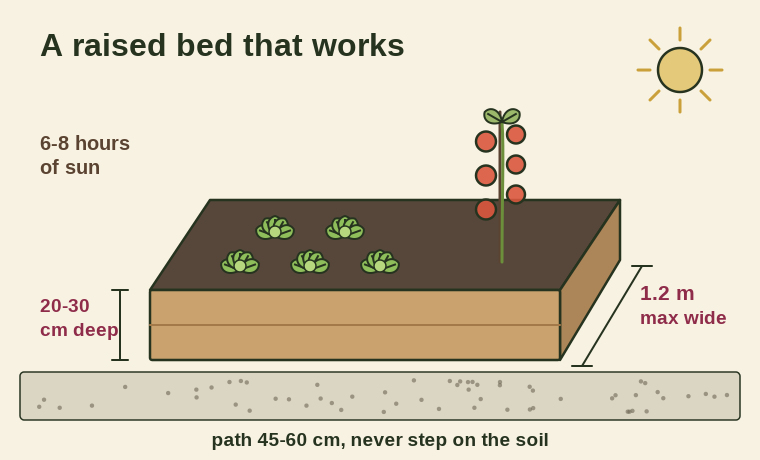
The most important measurement is width. You should be able to reach the middle from either side without stepping in.
| Measurement | Recommended | Why |
|---|---|---|
| Width (access from both sides) | 1.0 to 1.2 m | Reach the center comfortably |
| Width (against a wall or fence) | 60 to 75 cm | Reach from one side only |
| Length | Any, often 2 to 3 m | Longer beds are tempting to step across |
| Depth for most vegetables | 20 to 30 cm | Plus loosened soil below |
| Depth over paving or poor soil | 40 cm or more | Roots cannot go further down |
| Height for sitting or wheelchair use | 60 to 75 cm | Less bending |
| Path width | 45 to 60 cm, 90 cm for a wheelbarrow | Room to kneel and work |
Over ordinary ground, the soil below a raised bed is part of the root zone, so a 30 cm bed on loosened soil is plenty for almost every crop, including carrots and potatoes.
Choose a safe material
Because you will grow food in it, the frame material matters.
- Untreated rot-resistant wood such as larch, cedar or Douglas fir lasts roughly 5 to 15 years depending on climate and thickness. Thicker boards (at least 3.5 to 5 cm) last longer and bow less.
- Modern pressure-treated timber uses copper-based preservatives that many extension services consider acceptable for vegetable beds. If you want to be cautious, line the inside with heavy plastic sheeting, leaving the bottom open.
- Galvanized steel beds last a long time and warm up quickly. Choose ones with rolled edges.
- Bricks, stone or concrete blocks are permanent. Concrete can raise soil pH slightly at the edges.
Avoid old railway sleepers treated with creosote, and pressure-treated wood from before the mid-2000s, which was often treated with chromated copper arsenate (CCA), a preservative that contains arsenic. CCA was phased out for most home uses in the US and Europe in the early 2000s, but old decking, fence posts and salvaged lumber can still contain it. If you are reusing timber, our guide to upcycling wooden pallets explains how to check pallet stamps first.
Work out how much soil you need
Multiply length by width by depth in meters to get cubic meters, then multiply by 1,000 for liters. A bed 2.4 m long, 1.2 m wide and 30 cm deep holds 2.4 x 1.2 x 0.3 = 0.86 m³, or about 860 liters. That is a lot of bagged soil, which is why layering is popular.
Fill it in layers
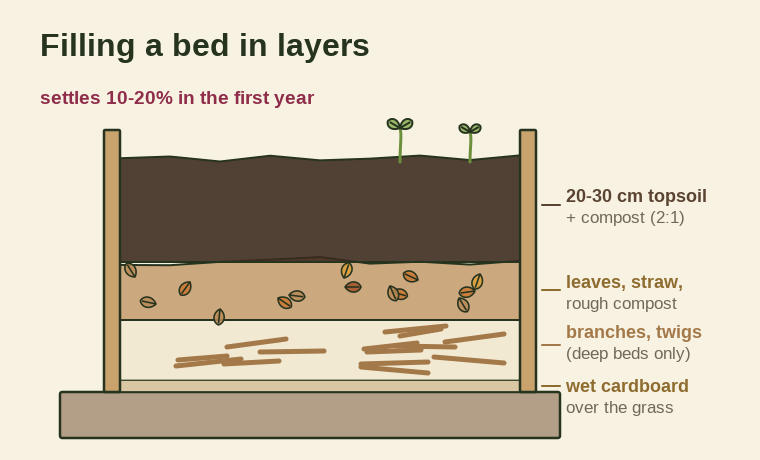
You do not need to fill a whole bed with expensive topsoil. A layered fill uses free materials at the bottom and saves the good stuff for the top, where roots do most of their feeding.
- Smother the grass. Cut it short and cover the ground inside the frame with plain brown cardboard, overlapping the edges by 15 cm. Wet it well.
- Add coarse material in deep beds. In beds over 40 cm deep, a bottom layer of small branches, twigs or old logs takes up space and slowly rots.
- Add a middle layer of half-rotted material. Leaves, straw, grass clippings and rough compost work well.
- Finish with 20 to 30 cm of growing mix. About two parts screened topsoil to one part compost is a good, affordable blend.
- Water and wait if you can. A week or two lets the layers settle before sowing.
If burrowing animals such as moles or gophers are a problem, staple galvanized wire mesh across the bottom of the frame before filling.
Pick the best spot
- Sun: most vegetables need 6 to 8 hours of direct sun. Leafy greens manage with 4 to 5.
- Water: place beds close to a tap or rain barrel. Beds drain fast and need watering more often than open ground in hot weather.
- Level ground: a sloping bed sheds water downhill. Dig the high end in or build up the low end.
- Orientation: running the long sides roughly north to south gives both sides of the bed similar light, though in a small garden fitting the space matters more.
- Away from big trees: their roots will quickly find rich, watered soil.
Plant it and keep it going
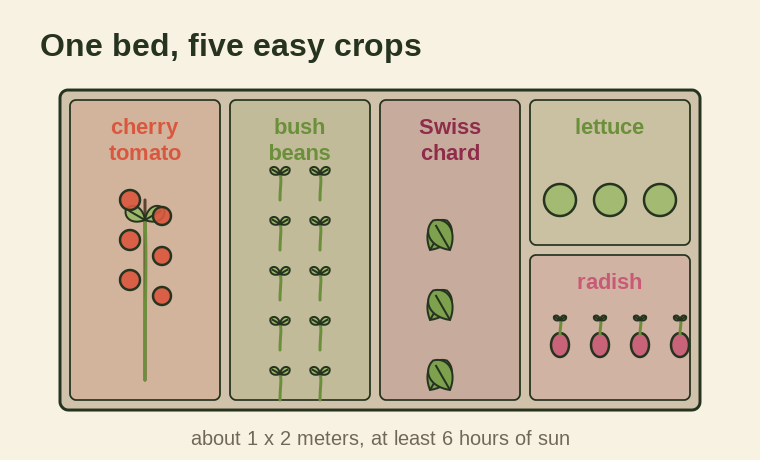
Because you never walk on the soil, you can plant closer than seed packets suggest for rows. Square-foot style spacing works well: one tomato per 30 cm square, four lettuces, sixteen radishes. Fast crops like lettuce and salad greens fill gaps between slower ones. For a first year, the easiest vegetables for beginners are a safe bet.
Each autumn or spring, top up with 3 to 5 cm of compost and mulch the surface. There is no need to dig; the soil structure improves year by year if left undisturbed.
Common questions
Do raised beds need a bottom? Not over soil. An open bottom lets roots go deeper and lets water drain away. On paving, beds need to be deeper, and a layer of coarse material helps drainage.
Should I line a wooden bed? Lining the inner sides with plastic sheeting can extend the life of untreated wood and acts as a barrier with treated wood. Never line the bottom with plastic, or the bed will waterlog.
How deep should a raised bed be for root vegetables? 30 cm on top of loosened native soil is enough for carrots, parsnips and potatoes. Over hard ground or paving, aim for 40 cm or more.
Can I fill a bed with only compost? It will grow plants, but pure compost shrinks a lot, can be too rich in nutrients and dries out fast. Mix it with topsoil.
Build your first bed narrow enough to reach across, fill it generously, put it in the sun near water and keep your feet out of it. Get those basics right and a raised bed is one of the easiest ways to grow food.
Keep reading
-
 Growing Food
Growing Lettuce and Salad Greens: Fresh Leaves for Most of the Year
How to grow lettuce and other salad greens from seed, with the main lettuce types, sowing depth, cut-and-come-again harvesting, bolting and succession sowing.
-
 Growing Food
Companion Planting: What Works, What's Folklore, and Easy Pairs to Try
Which plant pairings have real evidence behind them, which are garden folklore, and a simple chart of good and bad neighbors for common vegetables.
-
 Growing Food
10 Easiest Vegetables to Grow for Beginners (and How Not to Kill Them)
Ten forgiving crops for a first vegetable garden, with spacing, time to harvest and the one mistake to avoid for each.
More in Growing Food
- Growing Lettuce and Salad Greens: Fresh Leaves for Most of the Year
- How to Grow Tomatoes: A Beginner's Guide From Seed to Harvest
- Companion Planting: What Works, What's Folklore, and Easy Pairs to Try
- Regrow Vegetables From Kitchen Scraps: What Works and What's Just a Nice Idea
- How to Save Seeds From Your Garden: Tomatoes, Beans, Peppers and More
- 10 Easiest Vegetables to Grow for Beginners (and How Not to Kill Them)
- How to Start Seeds Indoors: From Tray to Transplant
- Crop Rotation for Small Gardens: A Simple 4-Bed Plan That Works