
12 Practical Ways to Reuse Cardboard Boxes at Home and in the Garden
Before you flatten that box for recycling, put it to work. Sheet mulching, seed trays, storage, compost browns, kids' projects and more, plus which cardboard to avoid.
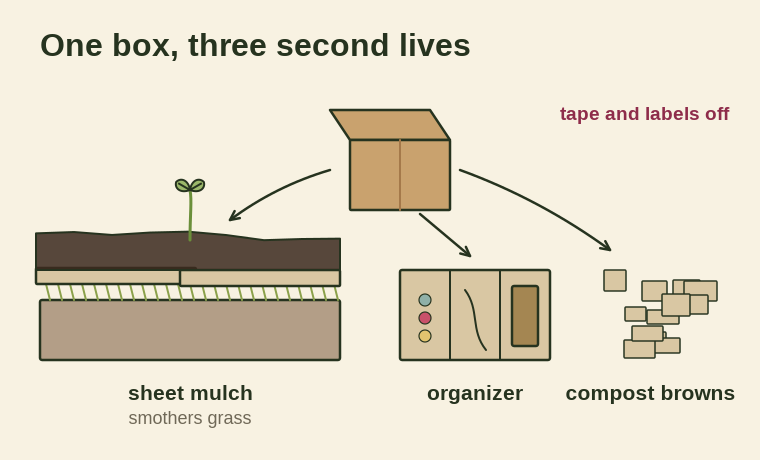
On this page
Online shopping means most homes now have a steady supply of cardboard boxes. Recycling them is good, but reusing them first is even better: cardboard that does a second job saves buying something else, and it can still be recycled or composted afterward.
Here are twelve uses that actually earn their keep, starting with the garden.
Before you start: which cardboard is safe?
Plain brown corrugated cardboard is the most useful, especially in the garden. Before reusing a box:
- Peel off plastic tape, labels and stickers. They don't break down and leave bits in soil and compost.
- Remove staples if it's going on the ground.
- Skip glossy, waxed or heavily printed boards for garden uses. Many coatings contain plastic.
- Skip boxes that held chemicals or oil.
In the garden
1. Sheet mulching (no-dig beds)
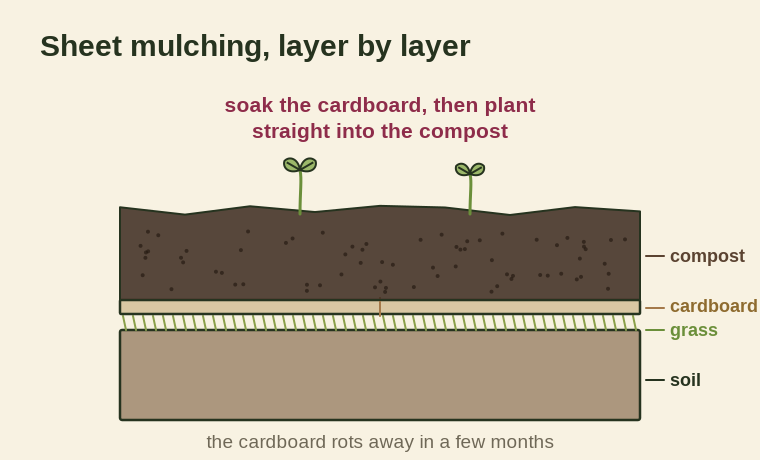
This is the single best garden use for cardboard. To turn a patch of lawn or weeds into a new bed without digging:
- Cut grass or weeds short and leave them where they fall.
- Lay cardboard over the area, overlapping the edges by 15 cm so no light gets through.
- Soak it thoroughly with water.
- Cover with 10 to 15 cm of compost, aged manure or leaf mold.
- Plant straight into the compost layer.
The cardboard blocks light and smothers what's underneath, then rots away within a few months while worms pull the compost down.
2. Compost browns
Shredded or torn cardboard is a perfect "brown" for the compost bin. It soaks up excess moisture and balances wet kitchen scraps. Tear it into palm-sized pieces and soak them first so they break down faster. Our compost ratio guide explains how much to add.
3. Weed barrier under paths
Lay cardboard under wood chips or gravel on garden paths. It suppresses weeds for a season or more and costs nothing.
4. Seed trays and pots
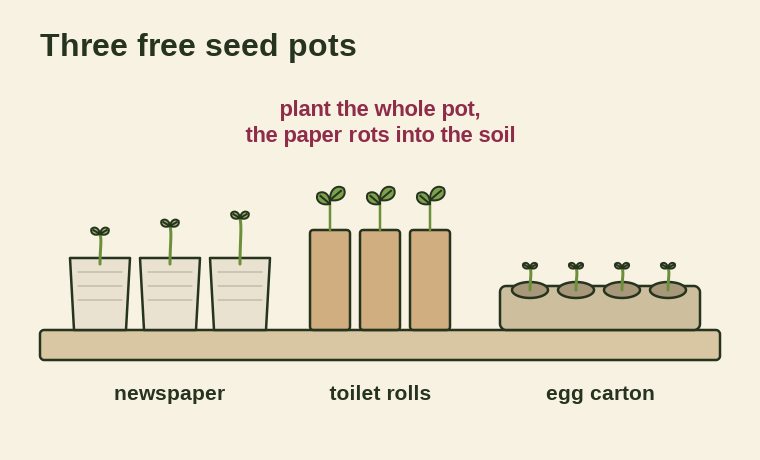
A shallow box lined with newspaper becomes a seed tray, and cardboard tubes and egg cartons make plantable pots. See our guide to newspaper and cardboard seed pots.
5. Frost cover
On a cold night, an upturned box over a tender plant traps enough ground heat to prevent light frost damage. Weigh it down and remove it in the morning.
6. Worm bin bedding
Shredded plain cardboard is excellent bedding for a worm bin. Worms love the corrugated layers.
Around the house
7. Drawer and shelf organizers
Cut boxes down to fit drawers and use the offcuts as dividers. Cover with leftover wrapping paper or fabric if you like. Perfect for socks, cables, tools and craft supplies.
8. Storage and moving
Strong boxes are worth keeping flat for moving, storing seasonal clothes, or sending parcels. Label the sides, not the top, so you can read them when stacked.
9. Floor and table protection
Flattened boxes protect floors when painting, repotting plants indoors or working on bikes. They're also handy as a mat under a car or a leaking appliance.
10. Cat scratcher
Cut corrugated cardboard into strips the same width, roll them tightly or stack them on edge in a shallow box, and glue. Cats love it, and it saves the sofa.
11. Kids' projects
Playhouses, castles, marble runs, puppet theaters and dolls' houses: a big box is one of the best toys there is. Use non-toxic glue and paint.
12. Gift boxes and packaging
Cut boxes down to size for gifts or reuse them for parcels. Old cardboard also makes good backing for mailing photos and documents.
When to recycle instead
Once a box is wet, greasy or torn beyond use, it still has value:
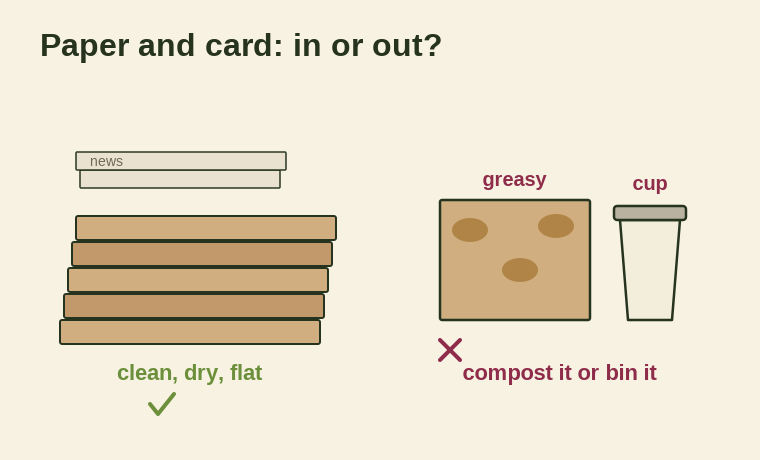
- Clean and dry: recycle it with paper and cardboard. Flatten it to save space.
- Greasy (like pizza boxes): tear off the clean parts to recycle; compost the greasy parts.
- Wet or soiled: compost it.
Our paper and cardboard recycling guide covers the details.
Common questions
Is the ink on cardboard safe for the garden? Most modern brown boxes use water- or soy-based inks and are considered safe. Avoid glossy, colorful packaging for vegetable beds.
How long does cardboard take to break down? Under mulch in damp soil, about 2 to 6 months. In a compost bin, a few months if torn and wet.
Will cardboard attract termites? It can in termite areas. Keep it away from house foundations and wooden structures.
A cardboard box doesn't have to go straight to the recycling bin. Use it once more, as mulch, storage or a seed tray, and recycle or compost what's left when it's done.
Keep reading
-
 Reuse & Upcycling
DIY Seed Pots From Newspaper, Toilet Rolls and Egg Cartons
Make free, plantable seed pots from paper you already have. Step-by-step folding instructions, which seeds suit each pot, and how to avoid mold and soggy pots.
-
 Recycling
Paper and Cardboard Recycling: What Goes In, What Doesn't, and Why
Which paper and card can be recycled, the common contaminants, how to prepare boxes, and how many times fiber can actually be recycled.
-
 Reuse & Upcycling
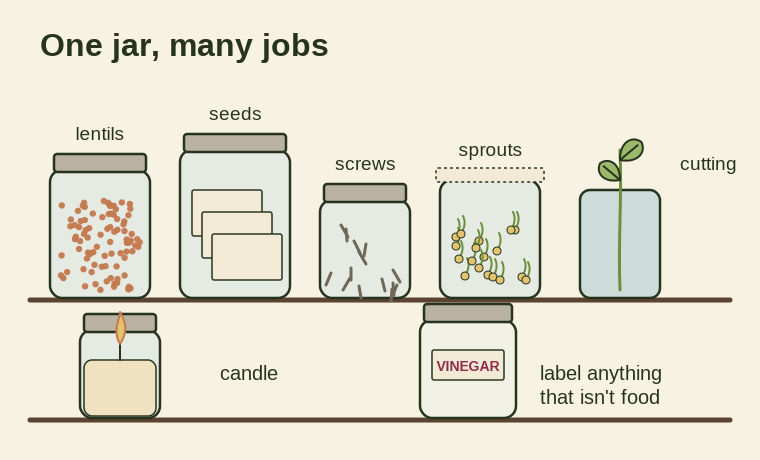
15 Practical Ways to Reuse Glass Jars Around the House
How to remove labels and smells from jars, plus fifteen genuinely useful second jobs for them in the kitchen, garden and workshop.
More in Reuse & Upcycling
- DIY Seed Pots From Newspaper, Toilet Rolls and Egg Cartons
- Visible Mending for Beginners: Darning, Patching and Sashiko-Style Stitches
- What to Do With Old T-Shirts: 8 No-Sew and Simple-Sew Upcycling Projects
- How to Make a Self-Watering Planter From a Plastic Bottle
- 15 Practical Ways to Reuse Glass Jars Around the House
- DIY Bird Feeders From Recycled Materials: 4 Easy Designs
- Upcycling Wooden Pallets: Safe Stamps, Prep and Simple Projects
- Reuse Tin Cans: Planters, Organizers and Lanterns Made Safely