
DIY Potting Mix: Simple Peat-Free Recipes for Pots, Seeds and Herbs
Make your own peat-free potting mix with compost, coir or leaf mold and perlite. Recipes for containers, seed sowing and herbs, plus why garden soil fails in pots.
On this page
Bagged potting mix is one of the biggest recurring costs of container gardening, and many bags still contain peat. Making your own is cheaper, lets you use compost and leaf mold you already have, and lets you adjust the mix to the plant: lighter for seeds, grittier for herbs, richer for hungry vegetables.
A good mix does three jobs at once. It holds water, it drains so roots can breathe, and it supplies some nutrients. Each ingredient in a homemade recipe covers one or more of those jobs, so once you understand them, you can mix with confidence.
Why not just use garden soil?
It seems logical to fill pots with soil from the garden, but it rarely works well:
- It compacts. Watering every day packs soil in a pot into a dense block, squeezing out the air roots need.
- It drains poorly. In a container there is no deep soil below to pull water down, so wet soil stays waterlogged at the bottom.
- It brings passengers: weed seeds, slugs, vine weevil larvae and soil diseases.
- It is heavy, which matters on balconies and for large pots you may want to move.
Garden soil does have a place: a small amount of good loam (up to about a quarter of the mix) can add weight and nutrients to big, long-term pots for shrubs. For most containers, leave it out.
The ingredients and what they do
| Ingredient | Main job | Notes |
|---|---|---|
| Sieved garden compost | Nutrients and soil life | Must be well finished; sieve out lumps |
| Coir (coconut fiber) | Holds water, light | Peat-free; rinse if it smells salty |
| Leaf mold | Holds water, improves structure | Free if you make your own |
| Perlite or pumice | Air and drainage | Perlite is very light; pumice is heavier and does not float |
| Vermiculite | Holds water and some nutrients | Good for seeds |
| Horticultural grit or coarse sand | Drainage and weight | For herbs and succulents; avoid fine play sand |
| Composted bark fines | Air and structure | Good in long-term shrub pots |
Coir usually comes as a compressed brick. Soak it in a bucket of warm water and it expands several times in volume; the packet tells you how many liters to expect. Our guide to making leaf mold shows how to produce your own free alternative.
Three base recipes
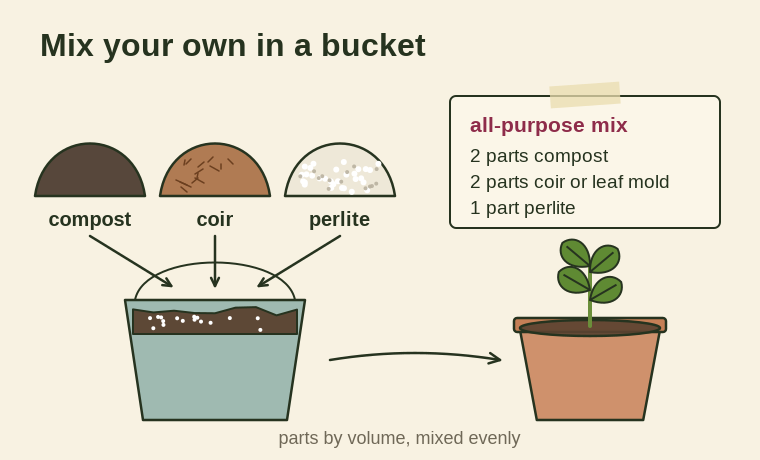
All recipes are in parts by volume, so a "part" can be a scoop, a bucket or a pot, as long as you use the same measure.
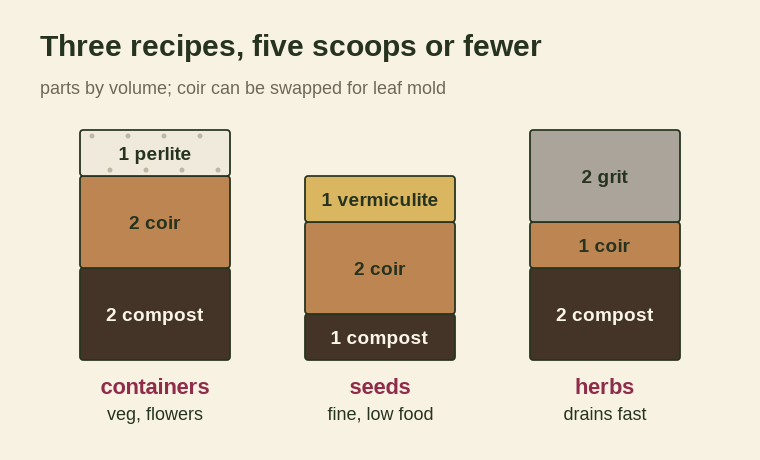
1. All-purpose container mix (vegetables, flowers, most pots) - 2 parts sieved compost - 2 parts coir or leaf mold - 1 part perlite or pumice
2. Seed-sowing mix (fine, low in nutrients) - 2 parts sieved coir or mature leaf mold - 1 part vermiculite or fine perlite - up to 1 part finely sieved, well-rotted compost
Seedlings need few nutrients at first, and too rich a mix can harm them. Sieve everything through a 5 mm mesh for small seeds. See our guide to starting seeds indoors for the next steps.
3. Herb and Mediterranean mix (rosemary, thyme, sage, oregano) - 2 parts compost - 1 part coir - 2 parts grit or perlite
These plants dislike wet roots, so this mix drains fast. Our balcony herb garden guide explains which herbs prefer it and which, like basil and parsley, are happier in the all-purpose mix.
How to mix a batch
- Work outdoors or on a tarp, and dampen dusty ingredients like perlite and dry coir first to keep the dust down.
- Measure each ingredient with the same container.
- Mix thoroughly with a trowel or your hands until the color is even.
- Check the moisture. Squeeze a handful: it should hold together, then crumble when poked, with no water dripping out.
- Store leftovers in a covered bin or a reused compost bag, and use within a few months.
Feeding a homemade mix
Compost-based mixes carry some nutrients, but containers have a small root space and frequent watering washes nutrients out. For hungry crops like tomatoes, peppers and squash, start feeding about four to six weeks after planting. A homemade comfrey liquid feed or a diluted organic tomato feed works well. Mixing in a little worm compost (around one part in ten) also adds slow-release nutrients if you keep a worm bin.
Coir contains very little nutrition of its own and holds some calcium and magnesium tightly, so mixes high in coir benefit from regular feeding.
Peat-free and why it matters
Peat bogs store large amounts of carbon and support rare wildlife, and digging them up releases that carbon. Peat-free mixes based on compost, coir, leaf mold and bark now perform well, and some countries are phasing out peat in garden products. The recipes above use no peat at all.
Peat-free mixes behave slightly differently: the surface can look dry while lower layers are still moist. Check by pushing a finger a few centimeters in before watering, and water less often but thoroughly.
Common questions
Can I reuse old potting mix? Yes, for a different type of plant. Remove roots, refresh it with about one-third fresh compost, and avoid reusing mix from plants that were diseased.
Do I need to sterilize compost? Not usually for outdoor pots. For seed sowing, sieving and using well-finished compost is enough for most gardeners.
Is my mix too wet? If water sits on top or the pot stays heavy for days, add more perlite or grit, and make sure the pot has drainage holes, as described in our container growing guide.
Mixing your own takes ten minutes and a bucket, and it puts your compost heap to work in every pot you own. Start with the all-purpose recipe and adjust as you learn what your plants like.
Keep reading
-
 Composting
How to Make Leaf Mold: Turn Fallen Leaves Into Free Soil Conditioner
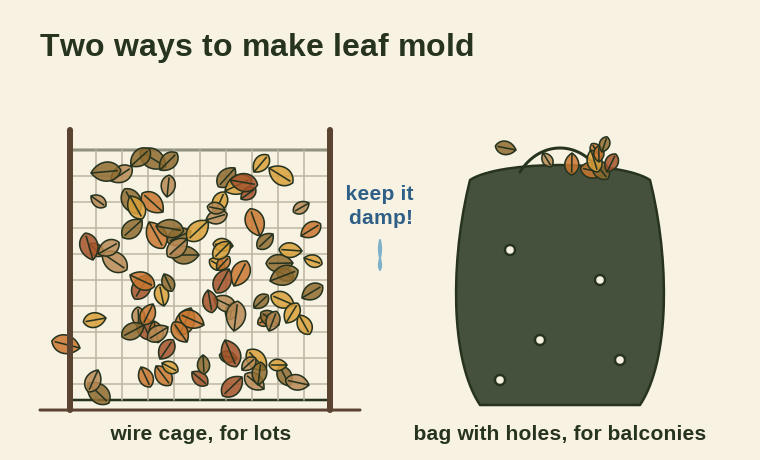
Leaf mold is what autumn leaves become when you simply let them rot. How to make it in a bag or a cage, how long it takes, and the best ways to use it.
-
 Small-Space Gardening
Growing Vegetables in Containers: Pot Sizes, Soil Mix and Watering
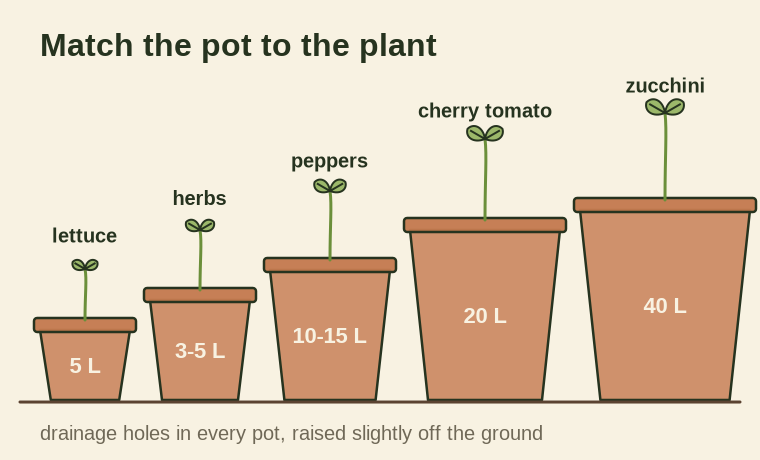
How big each pot should be, how to mix a potting soil that doesn't compact, and a watering routine that keeps container crops healthy.
-
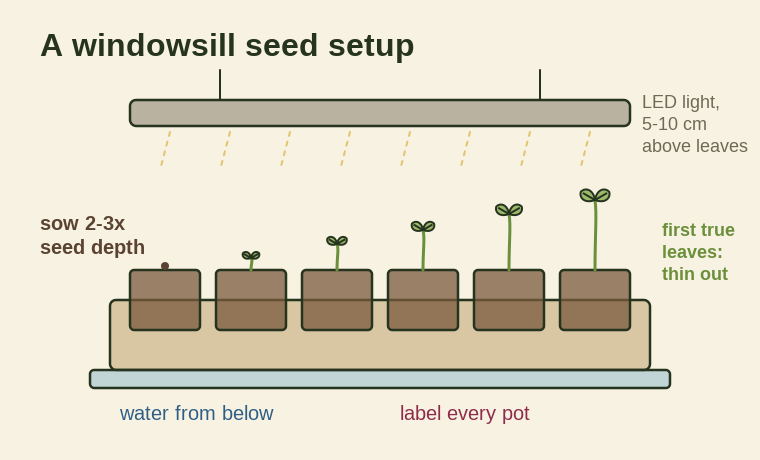 Growing Food
How to Start Seeds Indoors: From Tray to Transplant
Containers, seed-starting mix, light, water and timing. A step-by-step guide to raising strong vegetable seedlings on a windowsill or under a lamp.
More in Small-Space Gardening
- How to Grow Strawberries in Pots, Baskets and Window Boxes
- How to Grow Potatoes in Bags, Buckets and Containers
- How to Grow Microgreens on a Windowsill in 7 to 14 Days
- Build a Vertical Garden From Recycled Materials: Pallets, Bottles and Gutters
- How to Grow a Balcony Herb Garden That Lasts All Year
- Growing Vegetables in Containers: Pot Sizes, Soil Mix and Watering
- Grow Lights for Indoor Plants: A Simple Guide for Seedlings and Herbs
- Growing Peppers and Chillies in Pots: Warmth, Feeding and Overwintering