
How to Grow Strawberries in Pots, Baskets and Window Boxes
Strawberries are one of the best fruits for balconies. Which types to choose, the right containers and soil, watering, feeding, runners, and keeping plants going for three years.
On this page
Strawberries are made for small spaces. The plants are compact, they look pretty spilling over a pot, and growing them off the ground keeps the fruit clean and away from slugs. Even a single window box can give you handfuls of berries through early summer.
Choose the right type
| Type | When it fruits | Good for |
|---|---|---|
| June-bearing (summer-fruiting) | One big crop over 2 to 3 weeks in early summer | Jam, freezing, a big harvest at once |
| Everbearing | Two or three smaller crops, early summer to autumn | Pots and balconies; a few berries often |
| Day-neutral | Fruits steadily while temperatures are mild | Long, mild seasons and containers |
| Alpine (wild) | Small, intensely flavored berries all summer | Shade, edges, window boxes |
For containers, everbearing or day-neutral varieties give the longest picking season. Alpine strawberries are the best choice if your balcony gets only a few hours of sun.
Containers that work
Strawberries have shallow roots, so containers don't need to be deep, but they do need enough soil to hold water.
- Pots: about 20 to 30 cm wide holds one to three plants.
- Window boxes and troughs: plant 20 to 25 cm apart.
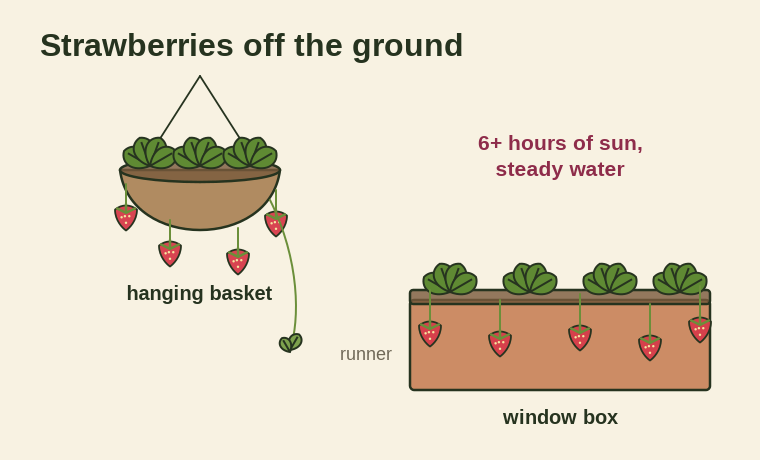
- Hanging baskets: 3 to 5 plants in a 35 cm basket. Line it to hold moisture.
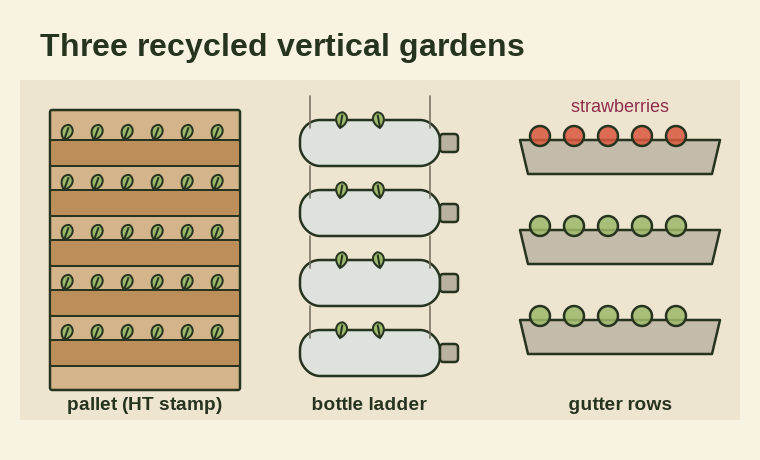
- Strawberry towers and gutters: great for walls. Our vertical garden guide shows how to make one from an old gutter or bottles.
- Grow bags: an opened compost bag laid flat holds about six plants.
Every container needs drainage holes. Strawberries hate sitting in water.
Soil and planting
Use a good multipurpose potting mix, ideally with some homemade compost or well-rotted manure mixed in. Never use garden soil in pots; it packs down and drains badly.
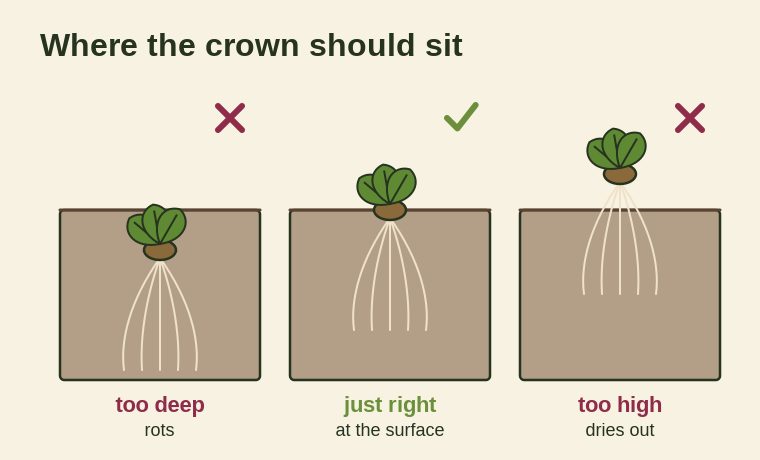
The most important planting detail is the crown, the thick point where the leaves meet the roots:
- Spread the roots out in the hole.
- Set the crown exactly at soil level.
- Too deep and it rots; too high and it dries out.
- Firm the soil and water well.
Plant in spring or early autumn. Autumn-planted strawberries settle in over winter and fruit well the following year.
Sun, water and feeding
- Sun: at least 6 hours for big crops. A south or west-facing balcony is ideal.
- Water: keep the soil evenly moist, especially when flowering and fruiting. Containers can need water every day in summer. Water the soil, not the fruit, to avoid mold. A self-watering bottle planter helps if you travel.
- Feed: once flowers appear, give a high-potassium liquid feed every one to two weeks. Homemade comfrey tea works well.
- Mulch: a little straw under the fruit keeps it clean and dry, which is how strawberries got their name.
Runners: free plants
Strawberry plants send out long stems called runners, with baby plants along them.
- If you want fruit, cut runners off as they appear so the plant puts its energy into berries.
- If you want new plants, pin a runner's baby plant into a small pot of soil with a bent wire or hairpin. After three to four weeks it will have roots; cut it from the parent.
Strawberry plants are most productive for about three years. Rooting a few runners each summer means you always have young plants ready to replace the old ones, for free.
Common problems
| Problem | Likely cause | Fix |
|---|---|---|
| Gray fuzzy mold on fruit | Damp, crowded plants | Space plants; water at the base; pick moldy fruit off |
| Berries eaten by birds | Birds love them too | Cover with netting once fruit colors |
| Small, few berries | Not enough sun or feed; old plants | Move to sun; feed; replace after 3 years |
| White powder on leaves | Powdery mildew, often from dry roots | Water consistently; improve airflow |
| Holes in fruit | Slugs or snails | Pots and baskets keep most away; check at dusk |
After fruiting
When the main crop is over, cut off old, tatty leaves to let new growth through, remove straw, and give a feed. In cold winters, move pots against a sheltered wall or wrap them; roots in containers are more exposed than roots in the ground.
Common questions
Can I grow strawberries indoors? Yes, on a very sunny windowsill, but you may need to pollinate flowers by brushing them gently with a small paintbrush.
How many plants do I need? Each healthy plant gives roughly 200 to 500 grams of fruit a season. Six to ten plants keep a family in fresh berries.
Can I grow from supermarket strawberries? The seeds rarely produce good plants. Buy certified plants or use runners.
A few pots of strawberries are one of the most rewarding things you can grow in a small space. Give them sun, steady water and a feed when they flower, and you'll be eating berries straight from the balcony.
Keep reading
-
 Small-Space Gardening
Build a Vertical Garden From Recycled Materials: Pallets, Bottles and Gutters
Three vertical garden builds using reclaimed materials, with what to grow in each, how to water them, and the safety checks to do first.
-
 Small-Space Gardening
How to Grow a Balcony Herb Garden That Lasts All Year
Which herbs suit sun, shade and wind, how to group them by water needs, and how to harvest so plants keep producing instead of fading.
-
 Small-Space Gardening
Growing Vegetables in Containers: Pot Sizes, Soil Mix and Watering
How big each pot should be, how to mix a potting soil that doesn't compact, and a watering routine that keeps container crops healthy.
More in Small-Space Gardening
- How to Grow Potatoes in Bags, Buckets and Containers
- How to Grow Microgreens on a Windowsill in 7 to 14 Days
- Build a Vertical Garden From Recycled Materials: Pallets, Bottles and Gutters
- How to Grow a Balcony Herb Garden That Lasts All Year
- Growing Vegetables in Containers: Pot Sizes, Soil Mix and Watering
- Grow Lights for Indoor Plants: A Simple Guide for Seedlings and Herbs
- Growing Peppers and Chillies in Pots: Warmth, Feeding and Overwintering
- DIY Potting Mix: Simple Peat-Free Recipes for Pots, Seeds and Herbs