
Growing Peppers and Chillies in Pots: Warmth, Feeding and Overwintering
How to grow sweet peppers and chillies in containers: sowing temperatures, pot size, pollinating flowers indoors, feeding, harvesting and keeping plants over winter.
On this page
Peppers and chillies are among the best crops for containers. The plants are compact, ornamental and productive, and growing them in pots lets you chase the sun across a patio or bring them indoors when nights turn cold. A single healthy chilli plant can produce dozens of pods in a season.
They are, however, warm-climate plants. Most problems with peppers come down to one thing: they were too cold at some point. Give them heat early, plenty of sun and steady care, and they are surprisingly easy.
Sweet peppers, chillies and how long they take
All the common types belong to the genus Capsicum. Sweet bell peppers and most familiar chillies, such as jalapeño and cayenne, are Capsicum annuum. The very hot habanero and scotch bonnet types are Capsicum chinense, which grow more slowly and need an even longer, hotter season.
| Type | Pot size | Sowing to first harvest | Notes |
|---|---|---|---|
| Compact ornamental chillies | 3 to 5 liters | About 4 months | Good on windowsills |
| Jalapeño, cayenne | 8 to 10 liters | 4 to 5 months | Reliable and productive |
| Sweet bell peppers | 10 to 15 liters | 4 to 5 months, longer for red | Need support when fruiting |
| Habanero, scotch bonnet | 15 to 20 liters | 5 to 6 months | Need most heat, sow earliest |
If your summers are short or cool, choose varieties described as early or compact, and favor smaller chillies over large bell peppers.
Sowing: warmth first
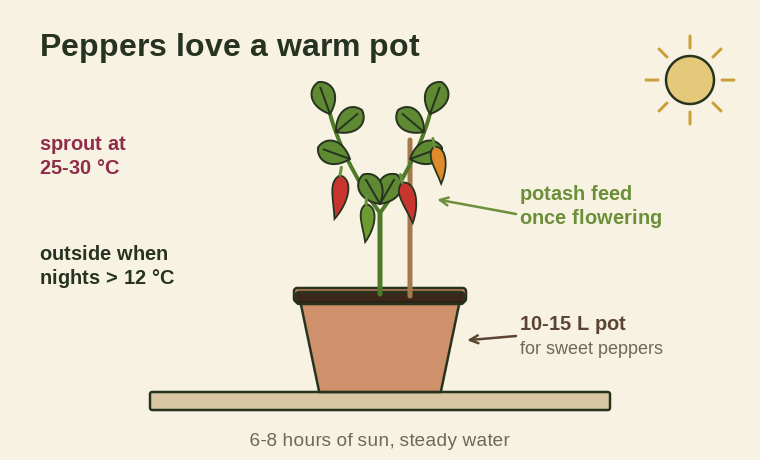
Pepper seeds want warmth to germinate, ideally 25 to 30 °C. At room temperature they can take three weeks or more, and some never come up. A heated propagator or a warm spot (not directly on a radiator) makes a big difference.
- Sow early. Start 8 to 10 weeks before your last frost for sweet peppers and mild chillies, and up to 12 weeks for very hot types.
- Sow shallowly, about 5 mm deep, in fine seed mix kept moist but not wet.
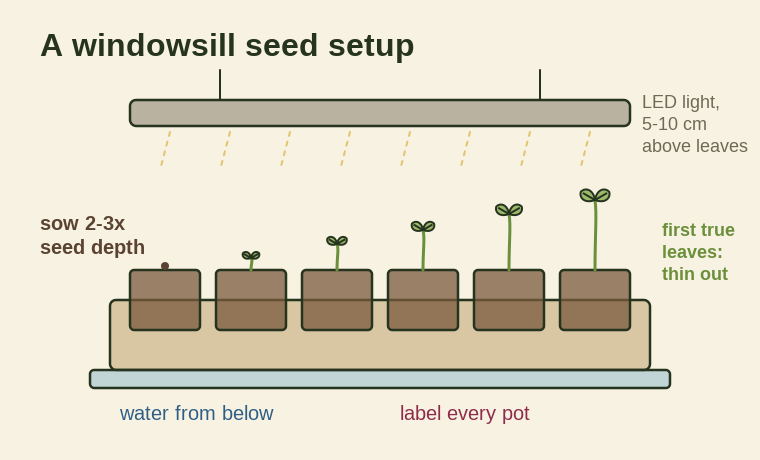
- Give strong light as soon as seedlings appear, or they will stretch. Our guide to starting seeds indoors covers light and watering.
- Pot on into 9 cm pots when the first true leaves appear, then into final containers when roots fill the pot.
- Move outside only when nights stay above about 12 °C. Harden plants off over a week first.
Pot, mix and position
Peppers like a snug pot rather than a huge one, but too small means constant watering and stunted plants. Use the sizes in the table as a guide, make sure there are drainage holes, and use a good peat-free mix; a homemade potting mix with 10 to 20 percent worm castings mixed in works well.
Put the pot in the warmest, sunniest spot you have: a south-facing wall, a greenhouse, a conservatory or a bright windowsill. Peppers need at least 6 to 8 hours of sun. Dark-colored or terracotta pots warm the roots, which peppers enjoy, but they also dry out faster.
Flowers and pollination
Pepper flowers are self-fertile: each flower has both male and female parts. Outdoors, wind and insects move the pollen. Indoors, help them by gently flicking the stems or tapping each open flower once a day, or by dabbing inside the flowers with a small soft paintbrush.
Flowers that drop without setting fruit usually point to stress: nights below about 13 °C, days above about 32 °C, dry roots or very low humidity. Shade plants on very hot afternoons and keep watering steady.
Watering and feeding
Water when the top 2 to 3 cm of mix feels dry, then water thoroughly until it runs out of the bottom. Pots in full summer sun may need watering daily. Uneven watering can cause blossom end rot, the same sunken dark patch seen on tomatoes.
Feed every 1 to 2 weeks once the first flowers open, using a high-potash liquid feed such as tomato feed or homemade comfrey liquid fertilizer. Too much nitrogen gives lush leaves and few fruits. Before flowering, a balanced feed or a top dressing of worm castings is enough.
Tall plants and heavy bell peppers need a short cane or stake to stop them snapping.
Harvesting
Green peppers are simply unripe. You can pick them green, which encourages the plant to set more fruit, or wait for them to ripen to red, yellow or orange, which takes several more weeks and gives a sweeter flavor. Chillies generally get hotter and fruitier as they ripen. Cut fruits with scissors or a knife rather than pulling, because branches snap easily.
Wear gloves when handling and chopping very hot chillies, and keep your hands away from your eyes.
Overwintering a pepper plant
Peppers are short-lived perennials, not true annuals. Overwintering a plant gives you a head start and earlier fruit the following year, and it works especially well for slow chillies.
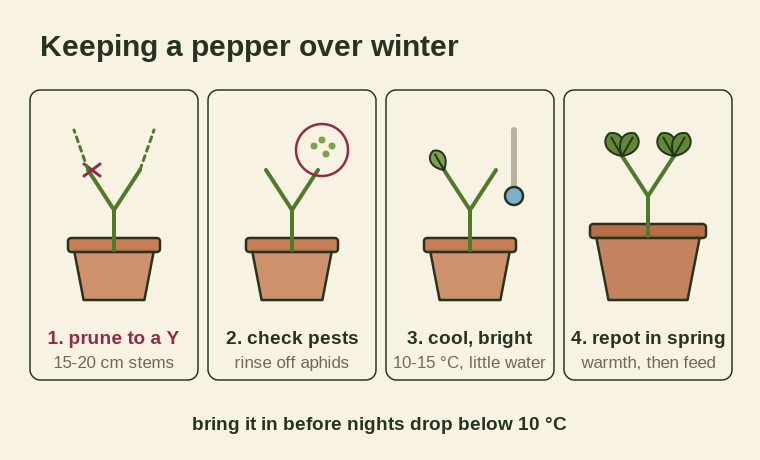
- Bring the plant in before frost, once night temperatures fall below about 10 °C.
- Prune to a simple Y-shaped framework of branches, leaving stems about 15 to 20 cm tall.
- Check for pests, especially aphids and spider mites, and rinse the plant if needed.
- Keep it cool and bright, around 10 to 15 °C, on a windowsill or in a frost-free greenhouse.
- Water sparingly, just enough to stop the mix drying out completely.
- In spring, repot into fresh mix, move it somewhere warmer and start feeding as new leaves grow.
Common questions
Why are my pepper leaves turning yellow? Lower leaves yellowing usually means hunger, often for nitrogen or magnesium, or overwatering in cold conditions. Check drainage first, then feed.
Can peppers grow indoors all year? Yes, on a very bright windowsill or under grow lights, compact chillies can fruit indoors. Hand-pollinate and watch for aphids.
Why are my chillies not hot? Heat depends on variety, ripeness and conditions. Fully ripe fruit grown in warm, sunny, slightly dry conditions tend to be hotter.
Can I grow peppers with tomatoes? Yes, they share similar needs for sun, warmth and potash-rich feeding, so they are easy to care for side by side. See our tomato growing guide.
Start early, keep them warm, give them sun and a steady supply of water and potash, and a pot of peppers will keep producing until the first cold nights, or longer if you bring it inside.
Keep reading
-
 Growing Food
How to Grow Tomatoes: A Beginner's Guide From Seed to Harvest
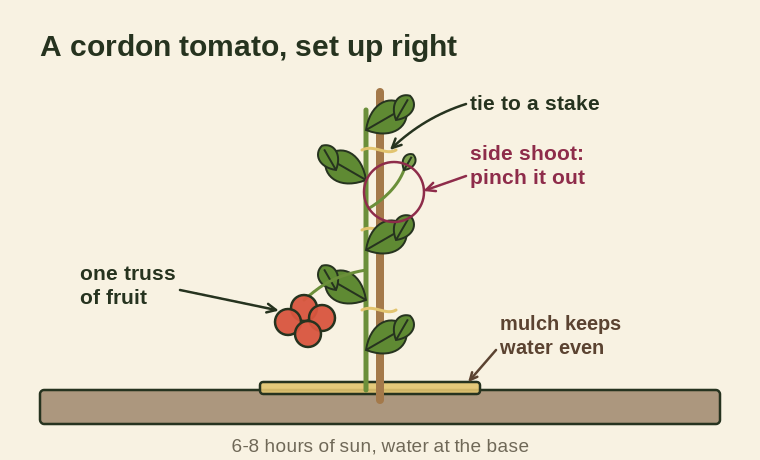
Choosing varieties, when to plant, staking, watering, feeding, pinching side shoots, and fixing the common problems like split fruit, blossom end rot and blight.
-
 Small-Space Gardening
Growing Vegetables in Containers: Pot Sizes, Soil Mix and Watering
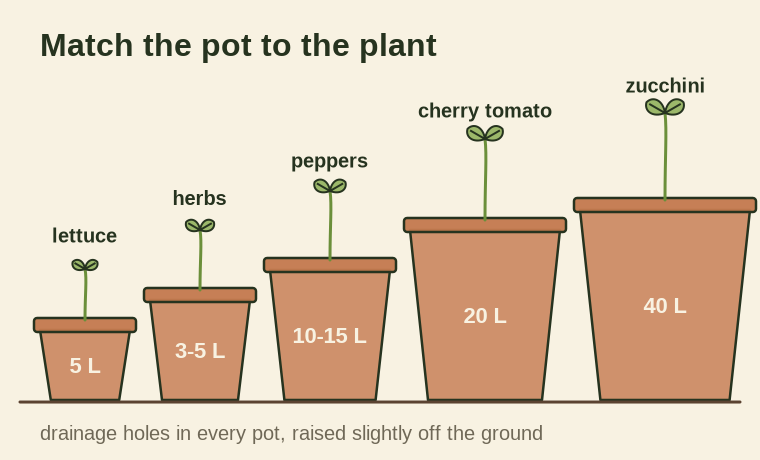
How big each pot should be, how to mix a potting soil that doesn't compact, and a watering routine that keeps container crops healthy.
-
 Growing Food
How to Start Seeds Indoors: From Tray to Transplant
Containers, seed-starting mix, light, water and timing. A step-by-step guide to raising strong vegetable seedlings on a windowsill or under a lamp.
More in Small-Space Gardening
- DIY Potting Mix: Simple Peat-Free Recipes for Pots, Seeds and Herbs
- How to Grow Strawberries in Pots, Baskets and Window Boxes
- How to Grow Potatoes in Bags, Buckets and Containers
- How to Grow Microgreens on a Windowsill in 7 to 14 Days
- Build a Vertical Garden From Recycled Materials: Pallets, Bottles and Gutters
- How to Grow a Balcony Herb Garden That Lasts All Year
- Growing Vegetables in Containers: Pot Sizes, Soil Mix and Watering
- Grow Lights for Indoor Plants: A Simple Guide for Seedlings and Herbs